Canadian Jewelry Trends: What's In Right Now
In this guide
Jewelry trends in Canada have a slightly different rhythm than the US or UK. Canadian buyers tend to favour pieces that survive cold winters, humid summers, frequent hand-washing, and daily shower exposure — which means waterproof, hypoallergenic, and tarnish-free pieces hold their value here long after flashier trends have moved on. Still, trends matter. What's popular in Canadian jewelry right now reflects a specific blend of global fashion movements, Canadian-made designer influence, and practical durability requirements unique to our climate. That blend produces something distinctive: trends that look like they do anywhere else — bold gold chains, sculptural earrings, personalized charm bracelets — executed in materials that hold up to Canadian daily reality.
This guide covers the Canadian jewelry trends dominating Canadian wardrobes right now, what to invest in versus skip, and how to translate global trends into pieces that actually work for Canadian daily life. Whether you're in Toronto, Vancouver, Montreal, Calgary, Halifax, or anywhere in between, these are the styles worth paying attention to — and the ones worth building a collection around. We've pulled these trends from actual Canadian buying patterns, what's ranking on Canadian searches, and what's showing up in the daily rotation of Canadian customers who've been wearing their pieces for months.
The Overall Direction: Bold but Wearable
The biggest shift in Canadian jewelry taste right now is the move from delicate minimalism toward bold, sculptural pieces that still work for daily wear. The dainty-chain era that dominated 2022-2024 hasn't disappeared, but it's been joined by thicker chains, wider bands, larger hoops, and more visible jewelry. Canadian buyers want pieces that register at a glance — not jewelry you have to lean in to see.
At the same time, practicality is non-negotiable. Trends that require removing jewelry every day (delicate pieces that can't survive a shower, statement earrings too heavy for 8 hours of wear, rings that scratch against keyboards) are getting less traction here than they would in warmer or more style-focused markets. The pieces winning in Canada are the ones that are both on-trend and actually livable. It's not a compromise between fashion and function — it's a genuine shift in what Canadians consider tasteful. Pieces that quietly survive everything you throw at them carry their own kind of luxury.
The pieces winning in Canada are the ones that are both on-trend and actually livable.
— The Glozya Journal
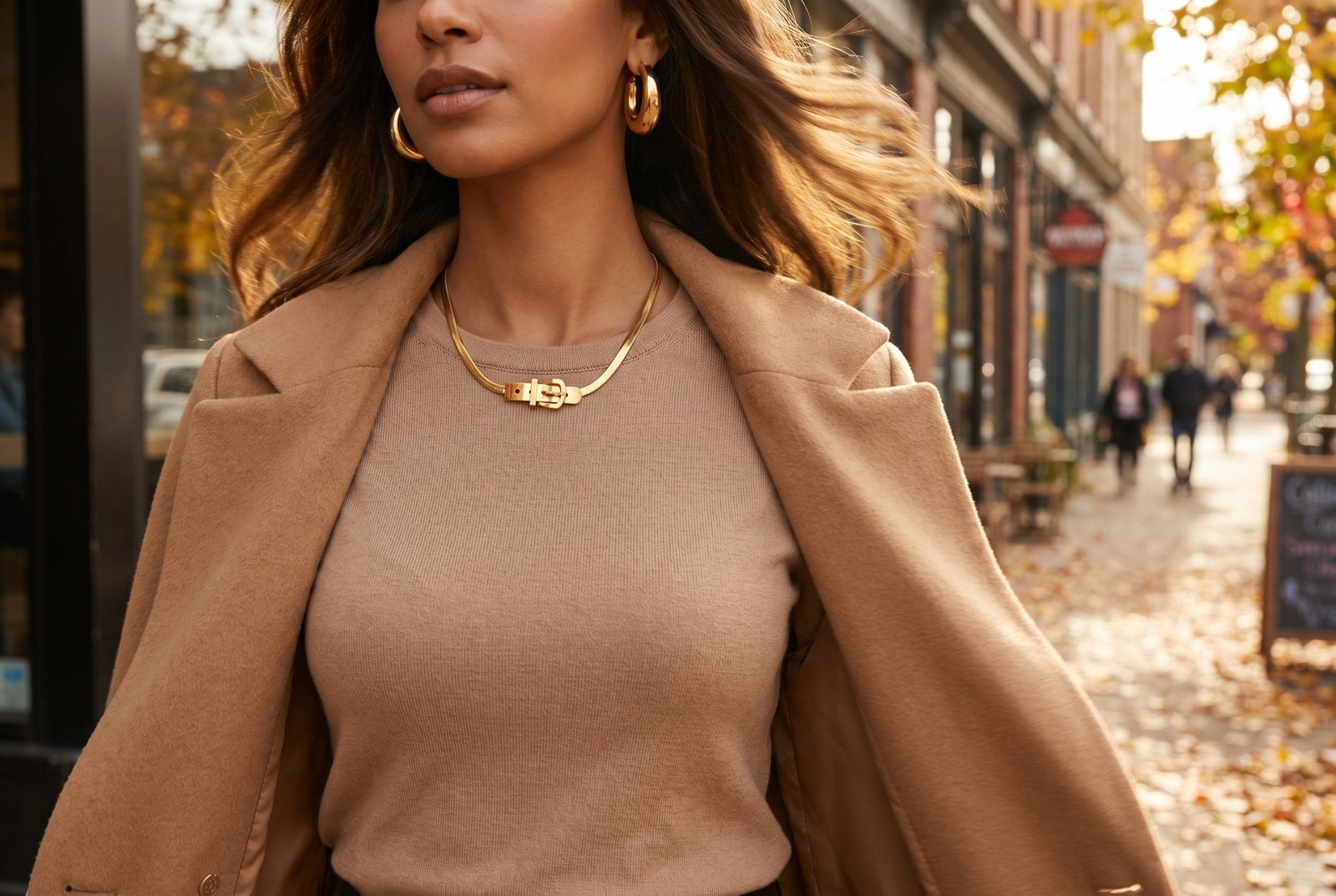
What Canadians Are Actually Wearing Right Now
Three specific style categories are dominating Canadian wardrobes through 2026. Each reflects the "bold but wearable" direction but in a slightly different way.
Layered chains and stacks
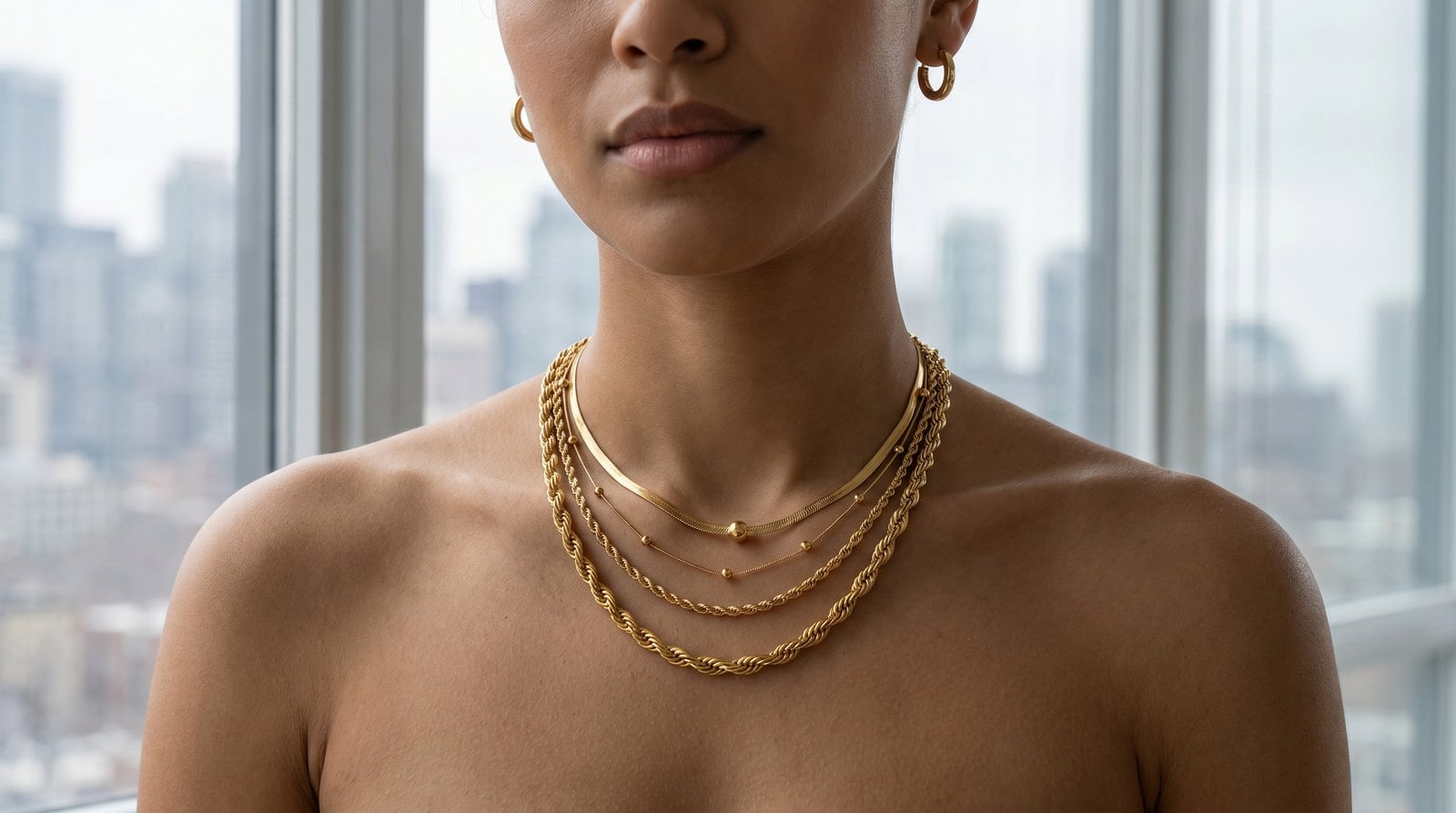
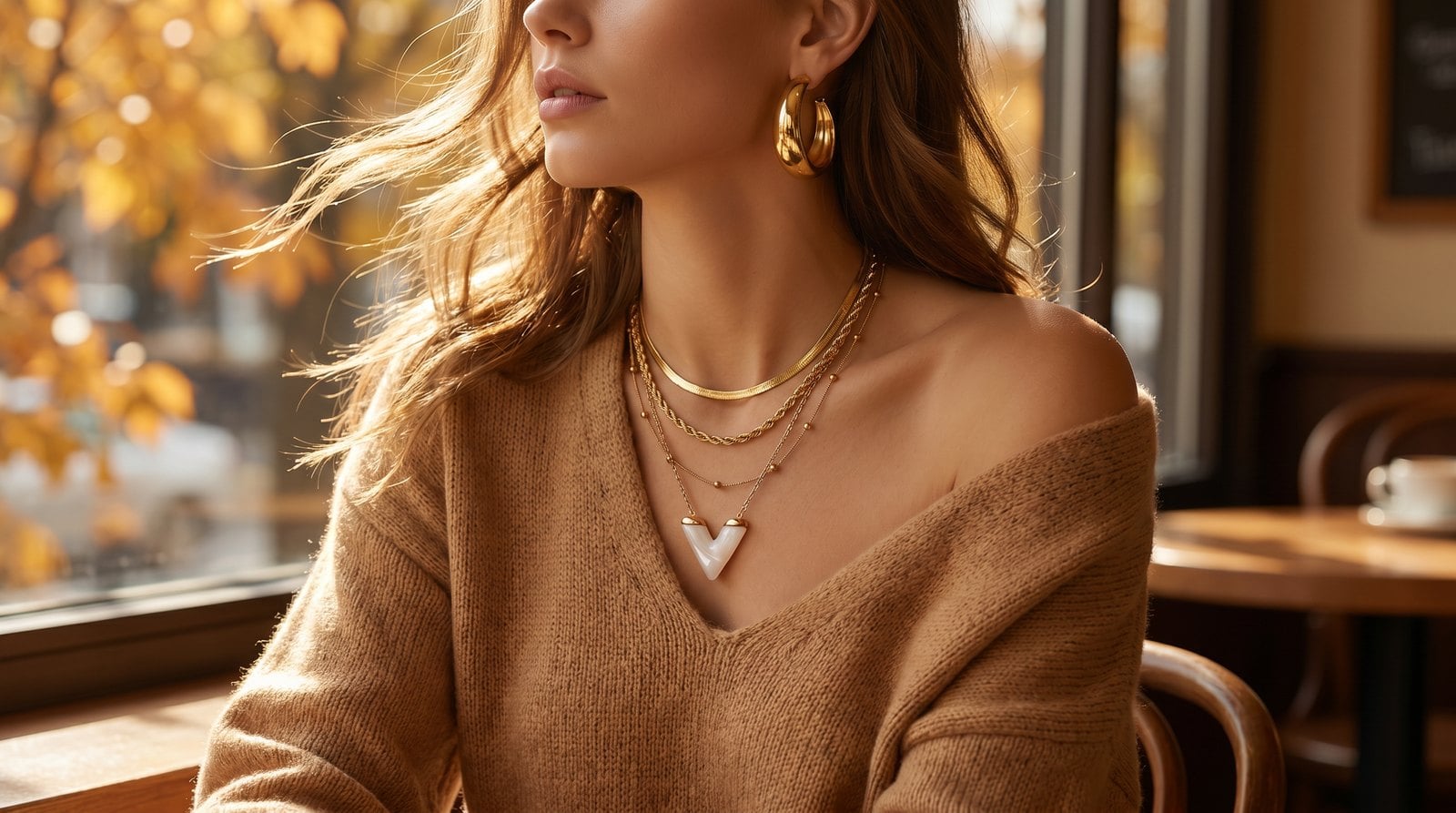
Layering continues to dominate Canadian jewelry styling through 2026, but the specific execution has shifted. Where 2023's layered look leaned toward three thin, dainty chains of varying lengths, the current layered style features mixed textures and thicknesses — a thicker herringbone or curb chain paired with one or two finer pendants. The visual effect is intentional rather than fussy, and the practical benefit is that one stack works across multiple outfits. See our layered necklace sets for pieces built specifically around this mixed-thickness principle.
This works especially well for everyday Canadian wear because:
- Mixed-thickness stacks feel intentional rather than fussy — perfect for work wardrobes and client-facing roles
- Stacking distributes visible weight across the neckline, balancing out a heavier winter sweater, scarf, or turtleneck
- Adding or removing a single layer lets one stack work for multiple occasions without restyling from scratch
- Waterproof layered pieces can be worn continuously without the hassle of taking them off for showers, workouts, or dishwashing
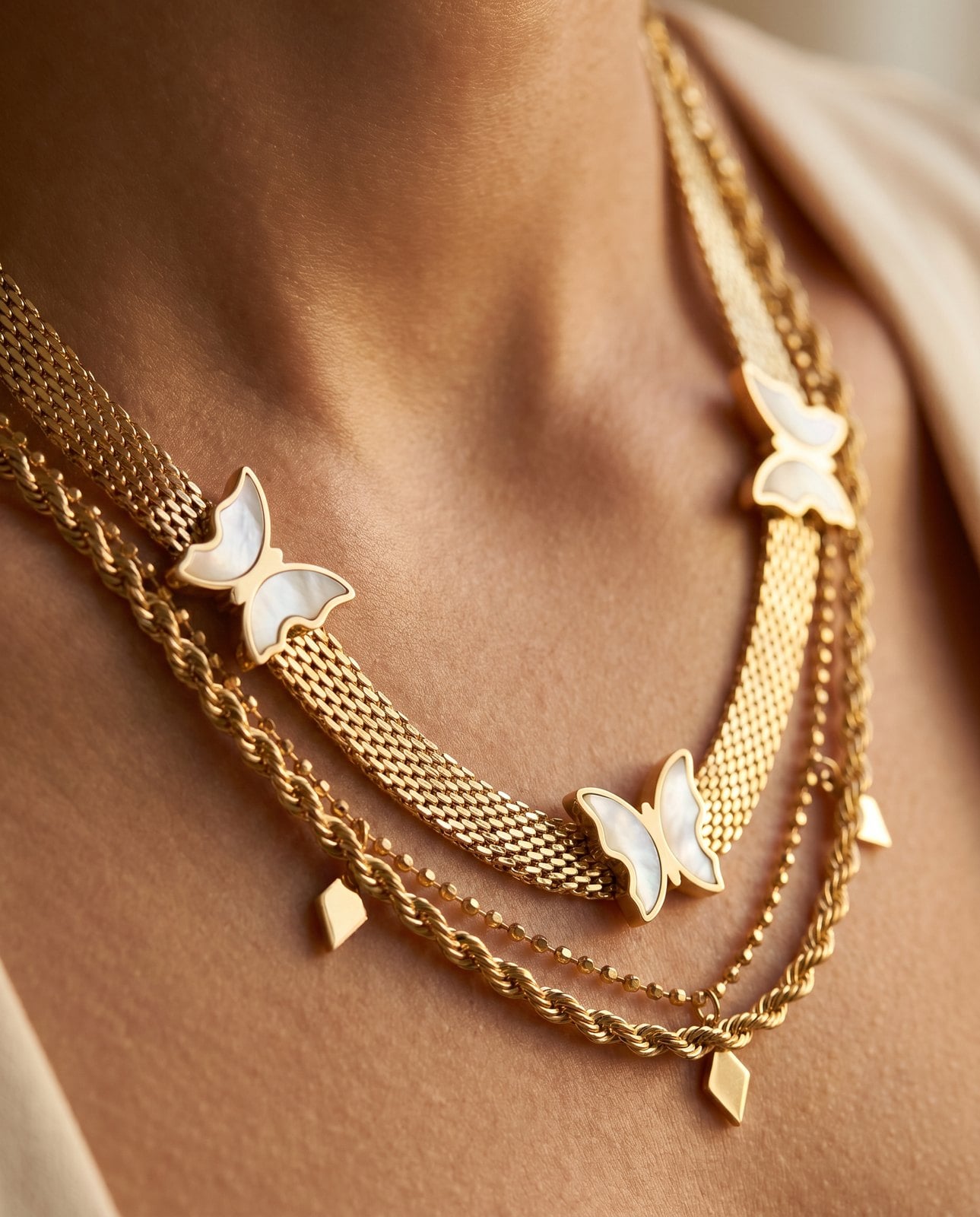
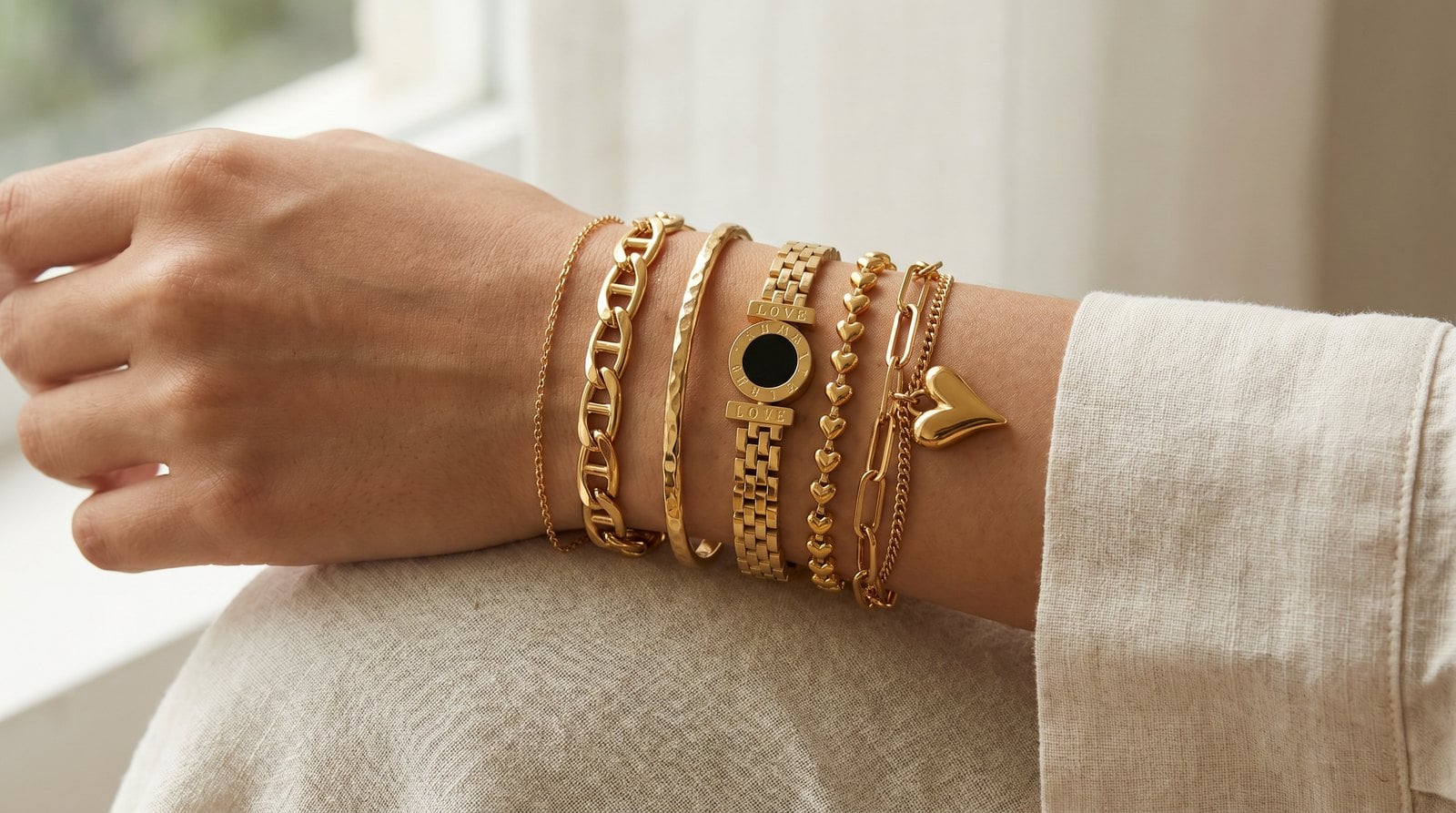
For bracelets, the same principle applies. Stacking two or three bracelets in different styles (a thicker chain with a thinner charm bracelet, or a bangle with a delicate chain) creates visual interest without requiring commitment to a single statement piece. Our layered bracelet sets are designed specifically for this — waterproof stainless steel bases mean you can layer and forget about them. For more on building a stack that actually works, read our guide on bracelet stacking ideas.
Statement earrings going mainstream
Large hoops and sculptural statement earrings have crossed over from "event wear" into "everyday wear" in Canadian style right now. The key shift is in what makes an earring "statement" — it's less about elaborate drop earrings with gemstones and more about architectural shapes and proportions. Think substantial but simple, clean but bold.
The specific styles working in Canadian wardrobes:
- Oversized gold hoops — wider than classic hoops, sometimes flat or twisted, worn singly rather than stacked in multiple piercings
- Sculptural studs — small but with interesting shapes (knots, organic curves, geometric facets) that make a statement without dangling
- Chunky drop earrings — solid shapes rather than delicate chains, substantial enough to be noticed from across a room
- Asymmetric pairs — two different earrings worn together as an intentional design choice, not a lost-earring accident
- Mixed-size pairs — a stud in one ear with a small drop in the other, reading as deliberate and modern
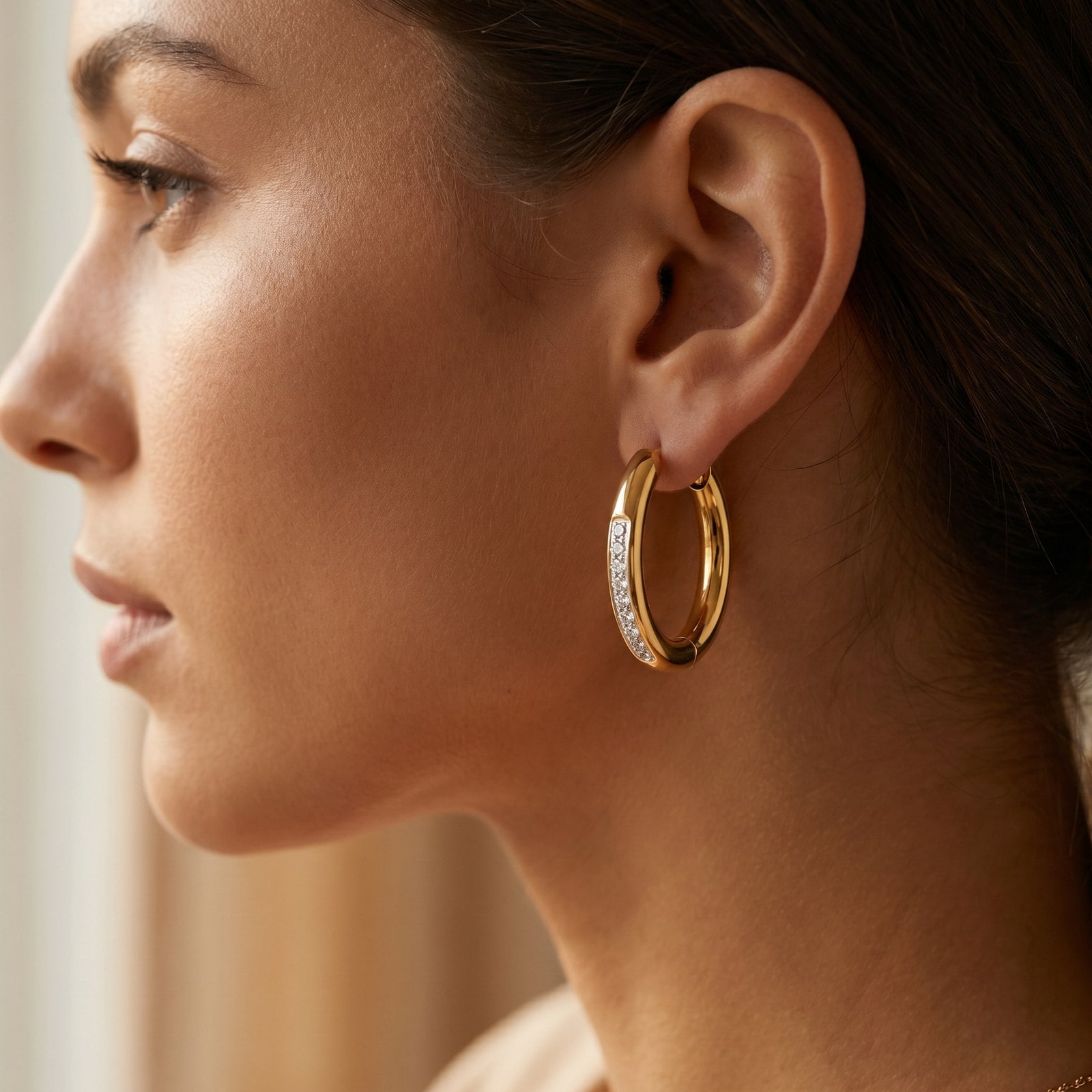
What makes this trend specifically Canadian-friendly is the focus on hypoallergenic materials. Statement earrings worn for 8+ hours daily need to be safe for sensitive ears, and nickel-safe stainless steel bases with 18K gold plating deliver that combination. Heavy traditional statement earrings often contain brass, copper alloys, or nickel that causes reactions after extended wear — exactly the conditions Canadian offices, commutes, and long winters create. See our hypoallergenic hoop earrings for the oversized gold hoops that define this trend, or browse sculptural stud earrings for the architectural shapes working best for daily wear. The full hypoallergenic earrings collection covers every style without irritating sensitive skin.
Charm bracelets making a comeback
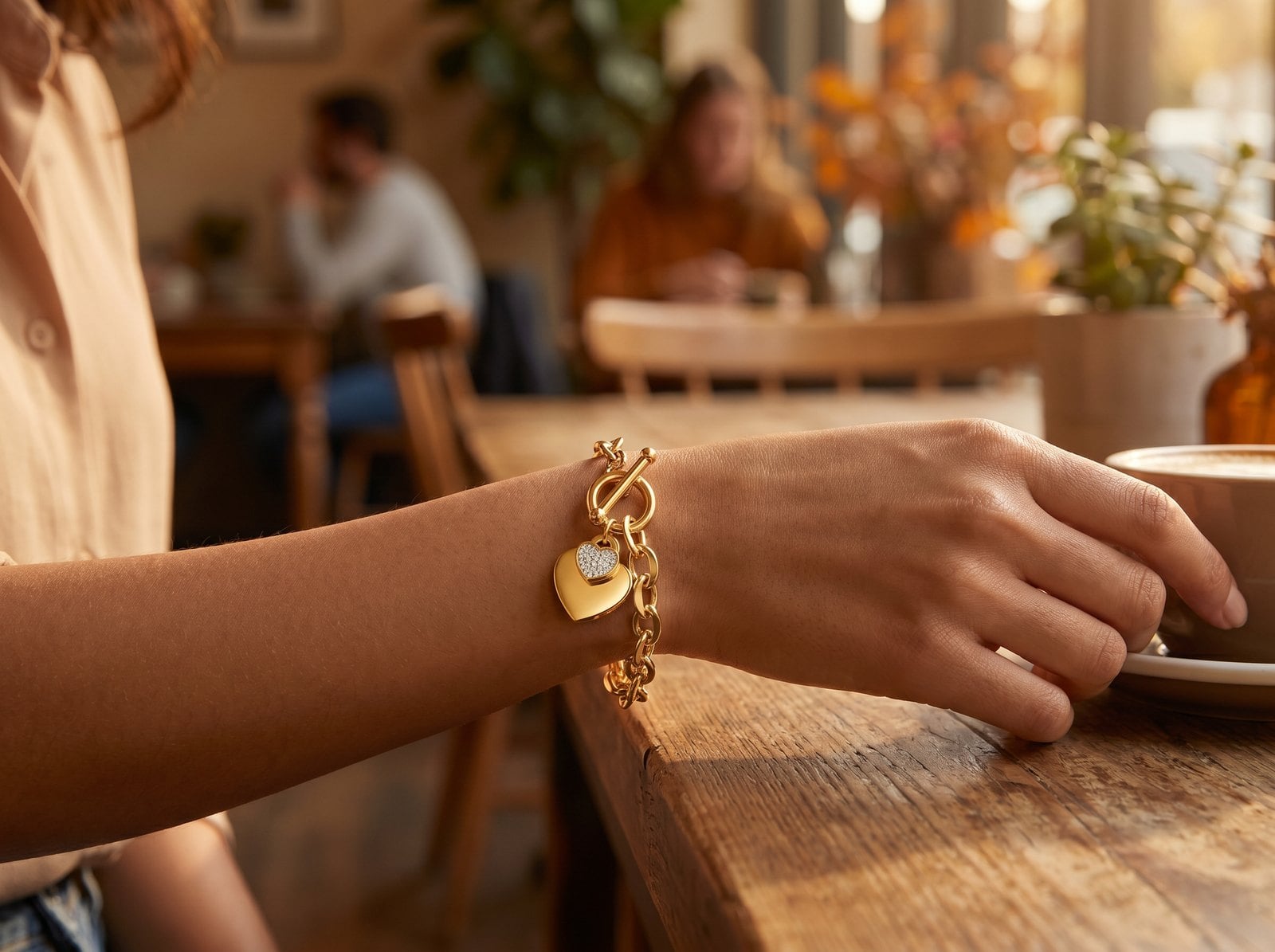
Charm bracelets are having a full revival in Canadian style, reimagined from their 1990s iteration. The 2026 version is more restrained — typically one charm-focused bracelet worn alone or paired with a single chain, rather than the overloaded multi-charm look of decades past. The charms themselves are smaller, more abstract, and more personal.
What's driving the comeback: personalization matters more than ever — jewelry that signals identity (birthstones, initials, meaningful symbols, travel coordinates) resonates with younger Canadian buyers more than generic pieces. Social media sharing plays a role too, since distinctive charm bracelets photograph well and become conversation starters. And charm pieces are ideal for milestone gifts (birthdays, graduations, travel memories, engagement, motherhood), making them a natural choice for gift-giving across generations.
There's also a sentimental undertone at play. After several years of pandemic-era life that pushed people toward "forever pieces" and away from fast-fashion turnover, charm bracelets fit the mood of buying things that mean something. The piece you build over years reads different than the piece you bought impulsively — and that difference is showing up in what Canadians are shopping for.
The current style leans toward subtle charms — hearts, small stars, tiny initials, delicate shapes — attached to a substantial chain base rather than a delicate one. Charm bracelet styles at Glozya use waterproof stainless steel chains so the piece survives daily wear, which matters for charm bracelets specifically since people tend to wear them constantly without ever taking them off. For motif-specific layering rules and three real outfit pairings for heart pieces, see our heart jewelry styling guide.
Core direction
Bold but wearable
Canadian buyers are moving toward pieces that register visually but still work for offices, commutes, showers, winters, and daily routines.
Winning categories
3 trends
Layered chains, statement earrings, and refined charm bracelets are the strongest trend categories through 2026.
The Materials Shift: Gold, Mixed Metals, and What's Fading
What's happening at the materials level matters as much as what's happening at the style level. Canadian buyers are consolidating around a few specific material choices that reflect both aesthetic preferences and practical requirements.
Gold dominates, with mixed metals rising
Gold — specifically warm yellow gold tones — continues to dominate Canadian jewelry preferences through 2026. Rose gold has cooled significantly from its 2020-2022 peak, and silver remains a strong but secondary choice. Yellow gold is the default "safe" answer for Canadian buyers across age groups, from university students buying their first real pieces to women in their 60s refreshing a collection.
That said, mixed metals are gaining serious traction for the first time in years. The specific mix that's working is yellow gold with silver or white gold — not a random blend but intentional pairings that feel modern rather than indecisive. The mixed-metal look that feels current right now has clear composition rules: one dominant tone (usually yellow gold) with a secondary metal used as a deliberate accent, not equal measure.
How this translates to shopping:
- A yellow gold statement piece paired with simpler silver everyday pieces
- Two-tone bracelets where the gold and silver coexist within a single piece
- Layered chains where one is yellow gold and another is silver-tone
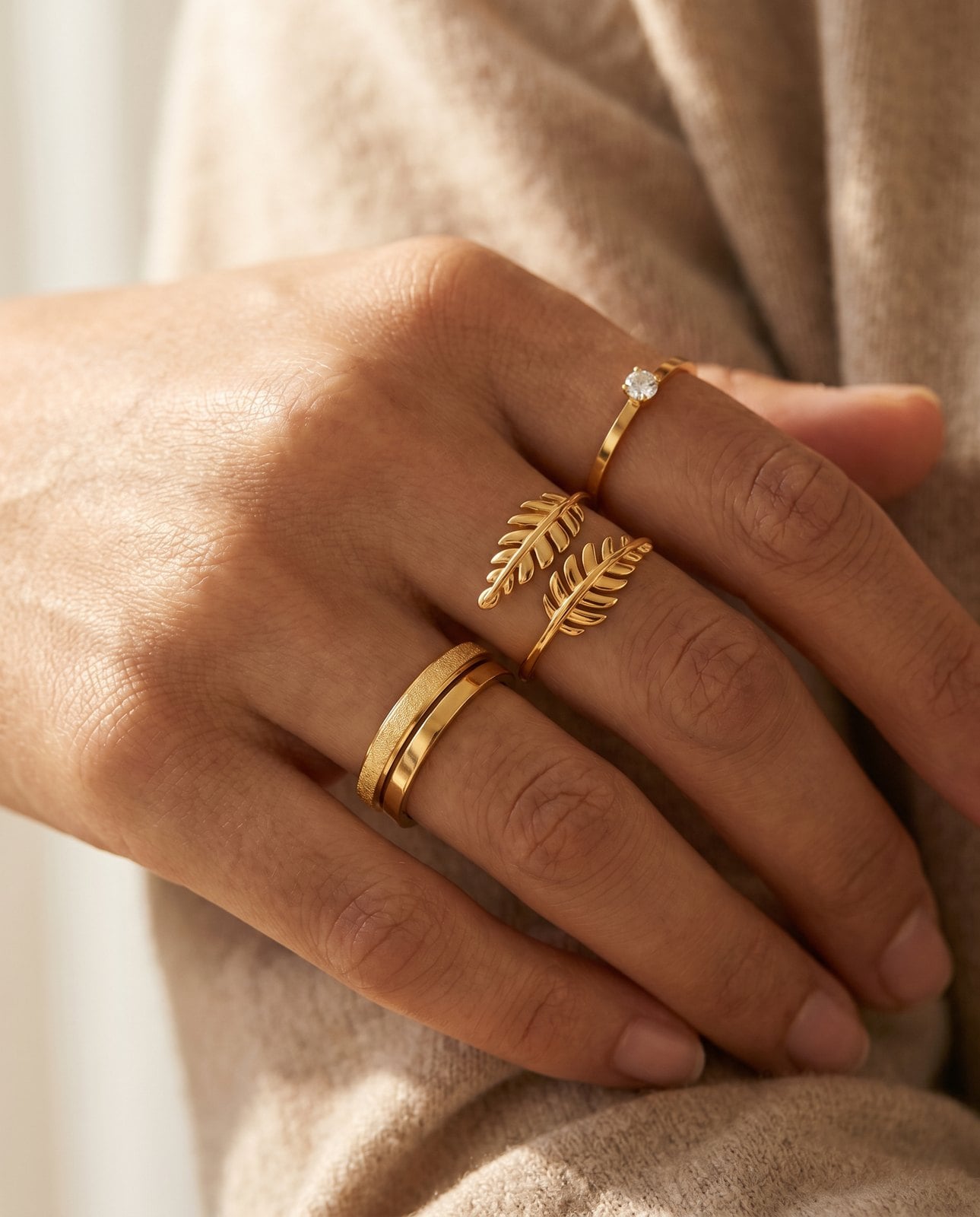
- Ring stacks mixing gold plated and stainless steel pieces on the same finger or across adjacent fingers
- Earrings where one metal is used as a frame and the other as an accent
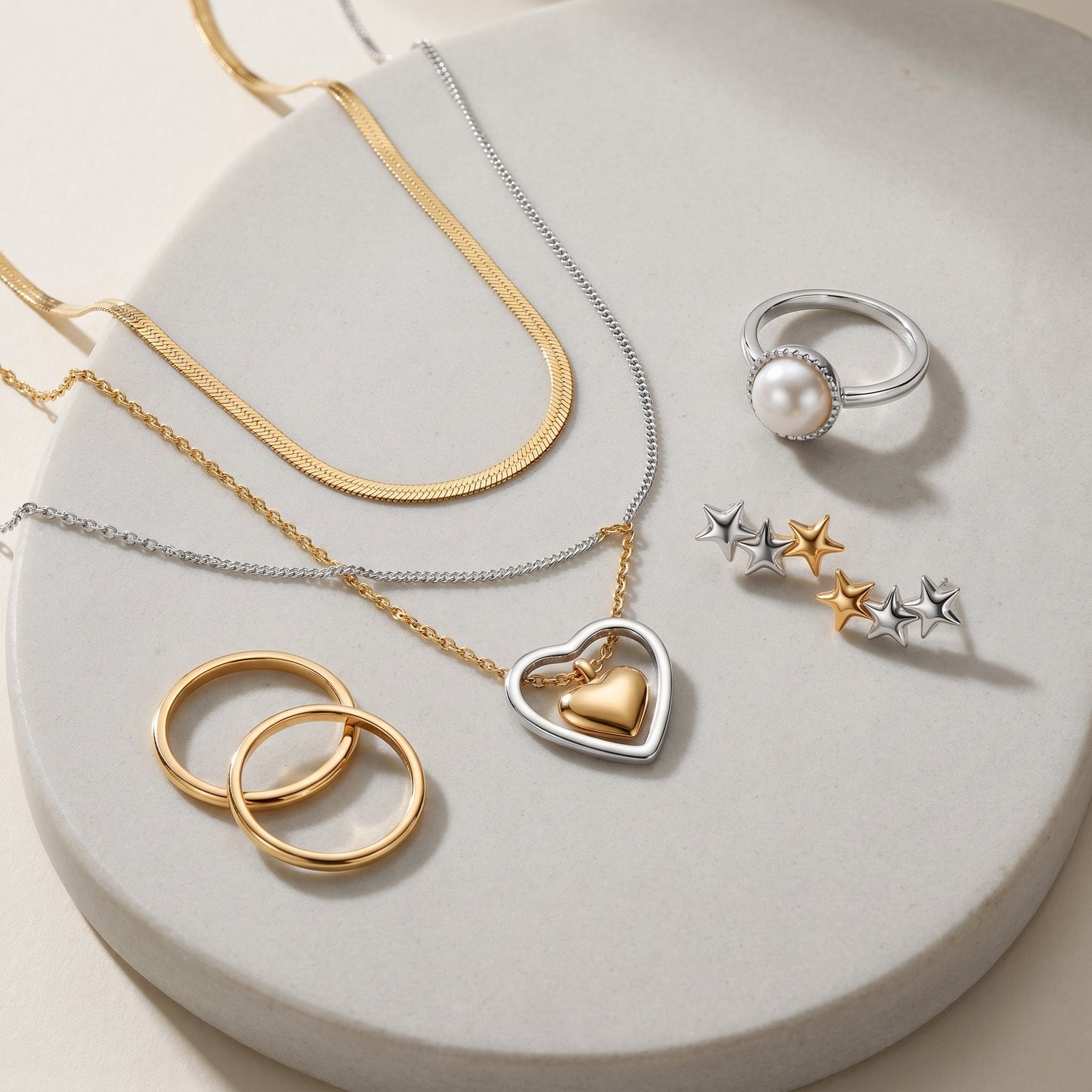
18K gold plated pieces give you that warm tone at an accessible price point, without the fine-gold investment. Read more on what that means for durability in our guide on what 18K gold plated jewelry really is, and see the 14K vs 18K gold plated comparison for why 18K specifically hits the sweet spot of color richness versus real-world durability.
The Baseline Shift: Waterproof and Hypoallergenic Expected
This is where Canadian trend preferences diverge most noticeably from other markets. Two features that were premium selling points even two years ago — waterproof construction and hypoallergenic materials — have become baseline expectations for serious Canadian buyers. If a piece doesn't clear both bars, it's increasingly seen as disposable fashion jewelry rather than a real purchase.
Waterproof as the new standard
Waterproof and shower-safe jewelry has moved from "a nice bonus" to "an expected feature" for Canadian buyers. The trend is driven by practical realities more than fashion. Canadian winters mean layers of clothing and bags, so pieces that constantly require removal and re-application become annoying within days. Humidity in Toronto summers and west-coast rainy seasons means jewelry is constantly exposed to moisture whether you planned for it or not. Active lifestyles — workouts, outdoor activities, beach days at Wasaga or Tofino, ski trips at Whistler or Blue Mountain — favour jewelry that can handle water and sweat without damage. And Canadian skin sensitivities (higher rates of nickel allergy than some markets) favour hypoallergenic pieces that also happen to tolerate water.
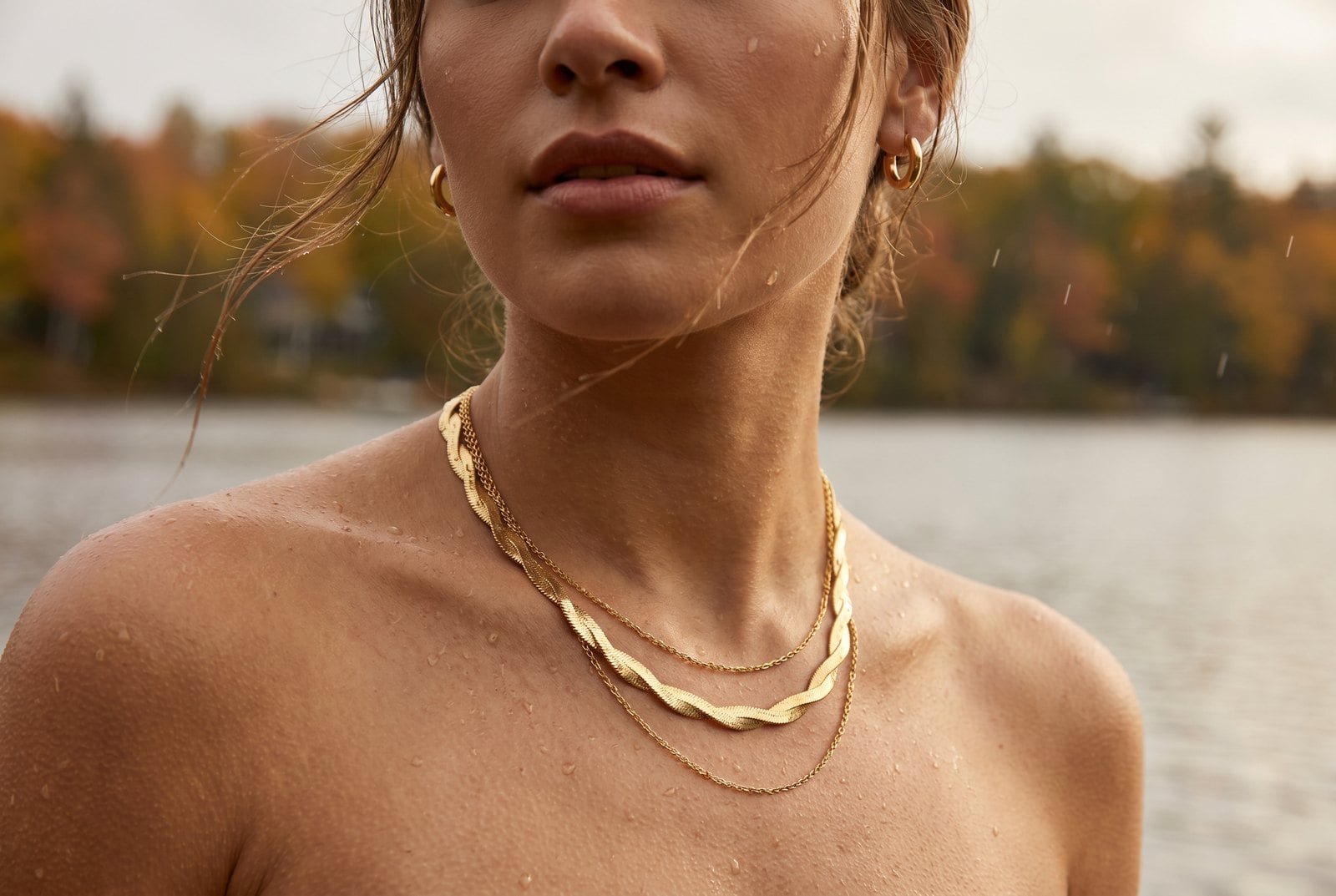
The intersection of "trendy" and "waterproof" is where brands built on stainless steel bases with 18K gold plating have a distinct advantage in the Canadian market. Pieces that look like fine gold but handle pool water, shower water, and sweat are the ones Canadian buyers are increasingly defaulting to. What used to be a feature you had to go looking for is now what Canadian shoppers assume they're getting unless told otherwise. The technical reasons that PVD-bonded 18K gold on 316L survives water exposure where traditional plating fails are detailed in our waterproof gold jewelry guide for Canada.
Hypoallergenic everything
Related to but distinct from the waterproof trend: hypoallergenic as a baseline expectation. Canadian buyers — especially those who've dealt with skin reactions to cheap fashion jewelry in the past — are increasingly filtering their jewelry shopping by skin-safety first, then style second. The order matters. Style is negotiable; an earring that turns your earlobe red is not.
The specific sensitivities driving this: nickel allergy is more prevalent in Canada than often assumed — Health Canada estimates 10-20% of Canadian women react to nickel-containing jewelry. Sensitive earlobes, especially for anyone with multiple piercings, require materials that don't inflame over a full day of wear. And skin conditions like eczema or contact dermatitis make metal sensitivity more common across the general population. Someone who had no reactions to cheap earrings at 20 may develop sensitivity by 35, and that sensitivity doesn't go away.
This trend disproportionately benefits brands that build on 316L hypoallergenic stainless steel — a corrosion-resistant grade that's safe for sensitive skin. For the full breakdown, see our guide on hypoallergenic stainless steel jewelry. Every piece across the Glozya catalog uses this base specifically because we built the brand around the reality that Canadian buyers have sensitive skin and want jewelry that works with it, not against it.
Adjustable and size-inclusive designs
Adjustable rings, extender chains, and size-flexible pieces are moving from "nice option" to "expected feature" in Canadian jewelry. Part of this is practical — Canadian winters cause finger swelling and shrinking that make fixed-size rings frustrating to wear year-round — and part is a broader inclusivity shift in fashion overall.
What to look for: adjustable rings with open-back designs or sliding bands that fit a range of finger sizes, chain extenders on necklaces so a single piece works at 16", 18", and 20" lengths, adjustable cord bracelets for pieces that need to fit over a winter sleeve or just the wrist, and one-size statement pieces designed to fit without traditional sizing. This trend specifically benefits gift-giving — adjustable pieces eliminate the risk of sizing wrong, which makes them safer gift choices for holidays, birthdays, and milestone occasions. Adjustable rings in particular have become a major Canadian gift category for this exact reason.
| Material or design shift | Why it matters in Canada | Where to apply it |
|---|---|---|
| Warm yellow gold | It remains the safest foundational tone across age groups and outfit types. | Use as the base for chains, hoops, rings, and daily pieces. |
| Mixed metals | Yellow gold with silver or white gold feels modern when one tone stays dominant. | Use as an accent strategy in layered chains, ring stacks, and earrings. |
| Waterproof construction | Showers, humidity, snow, sweat, and hand-washing make water exposure unavoidable. | Prioritize stainless steel bases with quality 18K gold plating. |
| Hypoallergenic materials | Sensitive skin and nickel reactions make skin safety a purchase filter, not a bonus. | Use 316L stainless steel for earrings, necklaces, bracelets, and rings. |
| Adjustable design | Seasonal swelling and gift-giving uncertainty make flexible sizing more useful. | Choose adjustable rings, extender chains, and size-flexible bracelets. |
How to Build a Canadian Jewelry Collection Right Now
If you're starting fresh or refreshing your collection around current trends, here's the order that makes sense for Canadian buyers. This is the sequence that gives you the most versatility for the money, with each piece earning its place before you add the next.
- Start with one substantial chain necklace. A herringbone, curb, or box chain in warm yellow gold tone that works alone or as the base layer for stacks. This is the foundation of most current styling trends — get one good one before buying anything else. Expect to wear it daily for years if it's built right. If you already have a simple chain, consider adding a pendant necklace as your second piece instead — it adds a focal point to any layered stack without competing with the base chain.
- Add one pair of statement earrings. Either oversized hoops or sculptural studs, depending on your daily style. Choose hypoallergenic for daily wear. These become the earrings you reach for most mornings without thinking about them. If you have sensitive ears, do not compromise on this — a cheap pair will drive you back to buying replacements within months.
- Add one layered bracelet set or stackable set. Two or three bracelets that work together in varying weights. Waterproof matters here because bracelets see more water exposure than any other piece — hand-washing alone puts them underwater multiple times per day.
- Add one adjustable ring. For flexibility across seasons and settings. Minimalist designs are easiest to style across different outfits. Adjustable is especially important for Canadian winters when finger sizes fluctuate.
- Add charm or personal pieces over time. A charm bracelet, an initial necklace, or a birthstone ring — pieces that reflect personal meaning rather than just following trends. These are the pieces you'll still wear in ten years when current silhouettes have moved on.
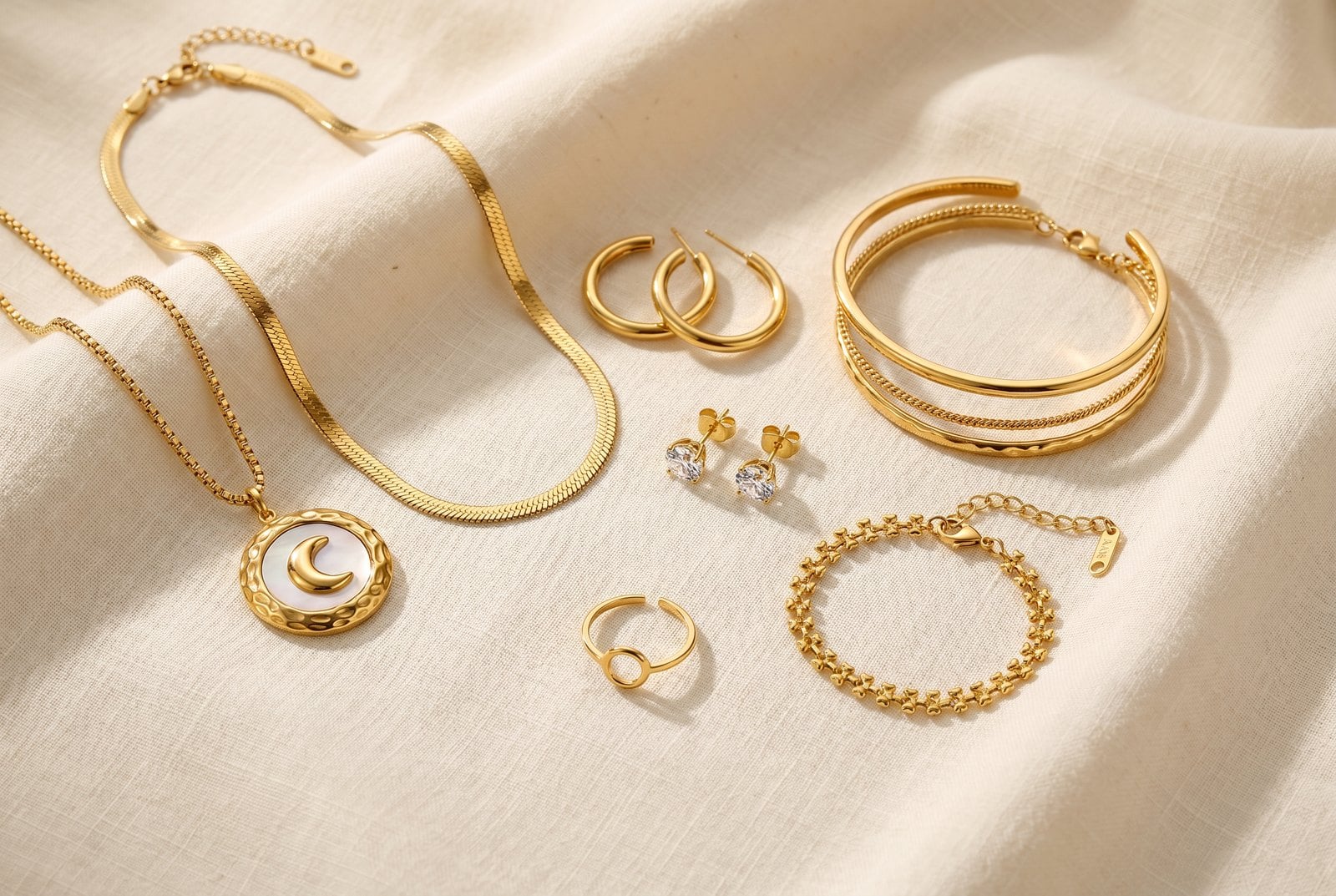
Browse new releases for the latest arrivals that hit these trends, check our current flash sale for discounted pieces, or explore by category: bracelets, earrings, necklaces, and adjustable rings. All pieces are waterproof, hypoallergenic, and ship free across Canada on orders over $75.
Trends to Skip
Not every jewelry trend crosses cleanly into Canadian life. Here's what to approach with caution, whatever fashion media is telling you.
- Ultra-delicate minimalist chains had their moment, and they still work as everyday base layers, but investing in multiple extremely thin pieces can feel dated now that bolder styles have taken over. One or two thin chains for layering is plenty. Don't build a whole collection around pieces that read as "early 2020s" five years from now.
- Cheap fashion brass jewelry — regardless of what's trending — doesn't survive Canadian winters, humid summers, or daily shower exposure. If the base metal is brass or copper, the piece will tarnish and degrade within months. A $20 statement piece that dies in six months is more expensive per wear than a $60 piece that lasts three years. Stick to stainless steel bases regardless of the price point. Even well-built pieces need basic upkeep to stay looking new — see our guide on making gold plated jewelry last longer for the care habits that matter.
- Ultra-bold statement pieces for daily wear — some of the most trend-forward pieces in 2026 fashion media are genuinely not designed for 8-hour daily wear. A giant cocktail ring looks incredible in photos but becomes awkward during a workday of typing. Save truly bold pieces for occasions; build your daily rotation around wearable-trend pieces that won't catch on sleeves, scratch screens, or tangle in hair.
- Trend-locked pieces with year numbers or specific seasonal references — pieces marked with specific year numbers or trend-moment references date themselves quickly. Invest in versions of trends that read as "current" without being literally labeled "2026." A piece that says "2024 Summer Vibes" on the packaging was already outdated the day you bought it.
What This Means for Canadian Shoppers
Jewelry trends in Canada right now are genuinely good for buyers who want pieces that last. The direction of travel — bolder but wearable, personalized over generic, waterproof and hypoallergenic as expected baselines — aligns with how Canadians actually live, which means trend-correct purchases also happen to be durability-correct purchases. That's a rare alignment in fashion, where trends often demand sacrifices in comfort or longevity. It hasn't always been this way — the 2021-2023 trend cycle toward ultra-delicate minimalism produced a lot of pieces that genuinely didn't survive daily Canadian wear. The current direction is more forgiving, and more forgiving trends produce collections that last.
The practical buying rules that follow from these trends:
- Prioritize stainless steel bases over brass, regardless of how trendy a piece looks
- Choose 18K gold plating for color richness — see our guide on 14K vs 18K gold plated jewelry for why
- Buy pieces that work for your daily life, not just special occasions
- Favor brands that clearly disclose base metals, plating details, and warranty information — read about Glozya's materials and standards for the level of transparency worth expecting
- Build your collection intentionally — one category at a time — rather than buying fast-fashion pieces that won't last
- Pay attention to durability-focused reviews from customers who've had pieces for 6+ months, not just unboxing content from people who got the piece last week
Trends come and go, but a well-built piece over hypoallergenic stainless steel with proper 18K gold plating will outlast the trend that inspired you to buy it — which is, at the end of the day, the whole point of investing in jewelry that reflects you. The pieces that earn their spot in your daily rotation aren't the ones that photograph best on launch day. They're the ones you reach for three years in, worn thin in the right places, still looking like gold. That's the real Canadian jewelry standard, trends aside.
About the Author

Mohammad Aftab is the founder of Glozya, a Canadian 18K gold-plated jewelry brand he launched in 2023. He has over a decade of experience in e-commerce, email marketing, and brand design across DTC, retail, and digital media. He writes about jewelry care, style, and the everyday details that make a piece worth keeping.