Bracelet Stacking Ideas That Work for Canadian Daily Wear
In this guide
Bracelet stacking has moved from "special occasion styling" to "daily jewelry wardrobe" for Canadian women through 2026. The shift matters because a daily stack sees things a special-occasion stack doesn't — showers, hand-washing every hour, winter scarves and sweaters, cold-to-warm temperature cycles, and the kind of wear that breaks down cheap jewelry within months. A bracelet stack that actually works for Canadian daily life needs two things most styling guides skip: waterproof construction on every piece, and hypoallergenic base metals that won't turn your wrist green or leave a mark under a watch band.
This guide covers how to build a bracelet stack you'll actually wear every day — not just photograph once and retire to a jewelry box. You'll find specific combinations that work, mistakes that Canadian buyers make, and the underlying principles that separate a good stack from one that looks cluttered or dated. Every piece mentioned here works with 18K gold plated stainless steel bracelets built for continuous wear, which is the format that most reliably survives Canadian conditions. If you're starting a stack from scratch, this is the order that makes sense.
The Core Principle: Stacks Are About Rhythm, Not Volume
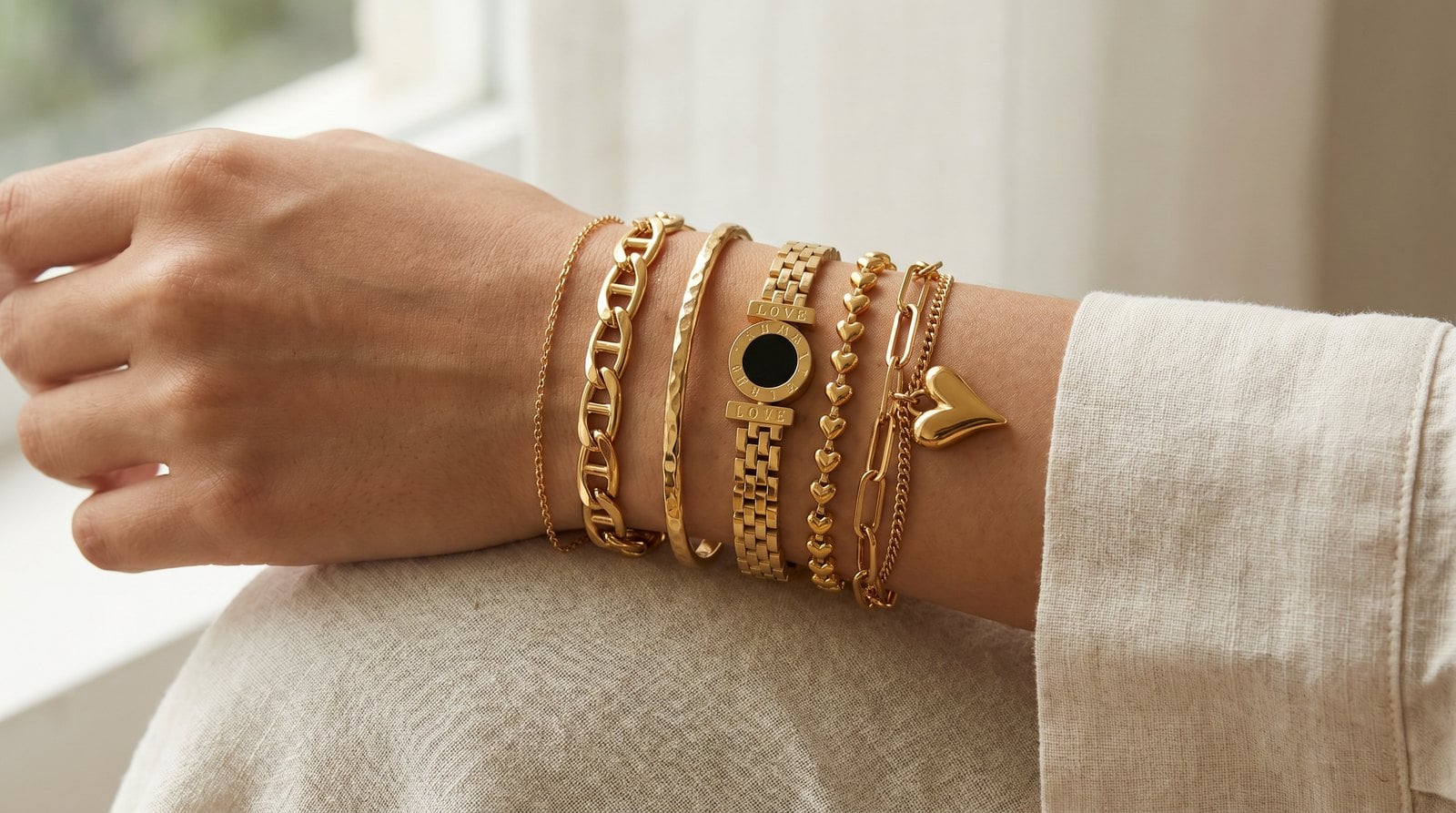
Most bracelet-stacking failures come from treating the stack as "more is more." The pieces pile up, nothing reads as intentional, and the wrist looks cluttered rather than curated. A good stack has rhythm — a clear focal point, visual weight distribution, and space between pieces that lets each one contribute something different.
The practical rule most stylists converge on is that stacks work best with an odd number of bracelets — typically three, five, or seven. Odd numbers create visual interest because nothing pairs up symmetrically; your eye moves across the stack rather than stopping at a static pairing. Three is the minimum to read as a "stack" rather than a pairing. Five is where most daily-wear stacks settle. Seven is festive or layered-festival territory, not everyday.
Daily minimum
3 pieces
Three bracelets are enough to read as a stack rather than a simple pairing.
Daily sweet spot
5 pieces
Five bracelets are where most Canadian daily-wear stacks settle without looking overcrowded.
Occasion limit
7 pieces
Seven bracelets can work for festive or layered looks, but it is usually too much for everyday wear.
Beyond the count, the three variables that matter most are:
- Weight distribution — combining thicker and thinner pieces so the stack has hierarchy, not a uniform density
- Texture variation — mixing smooth chains with textured cuffs, rope chains with flat bangles, or beaded pieces with plain chains
- Focal point — one piece that anchors the stack, whether through size, detail, or sentimental weight like a charm piece
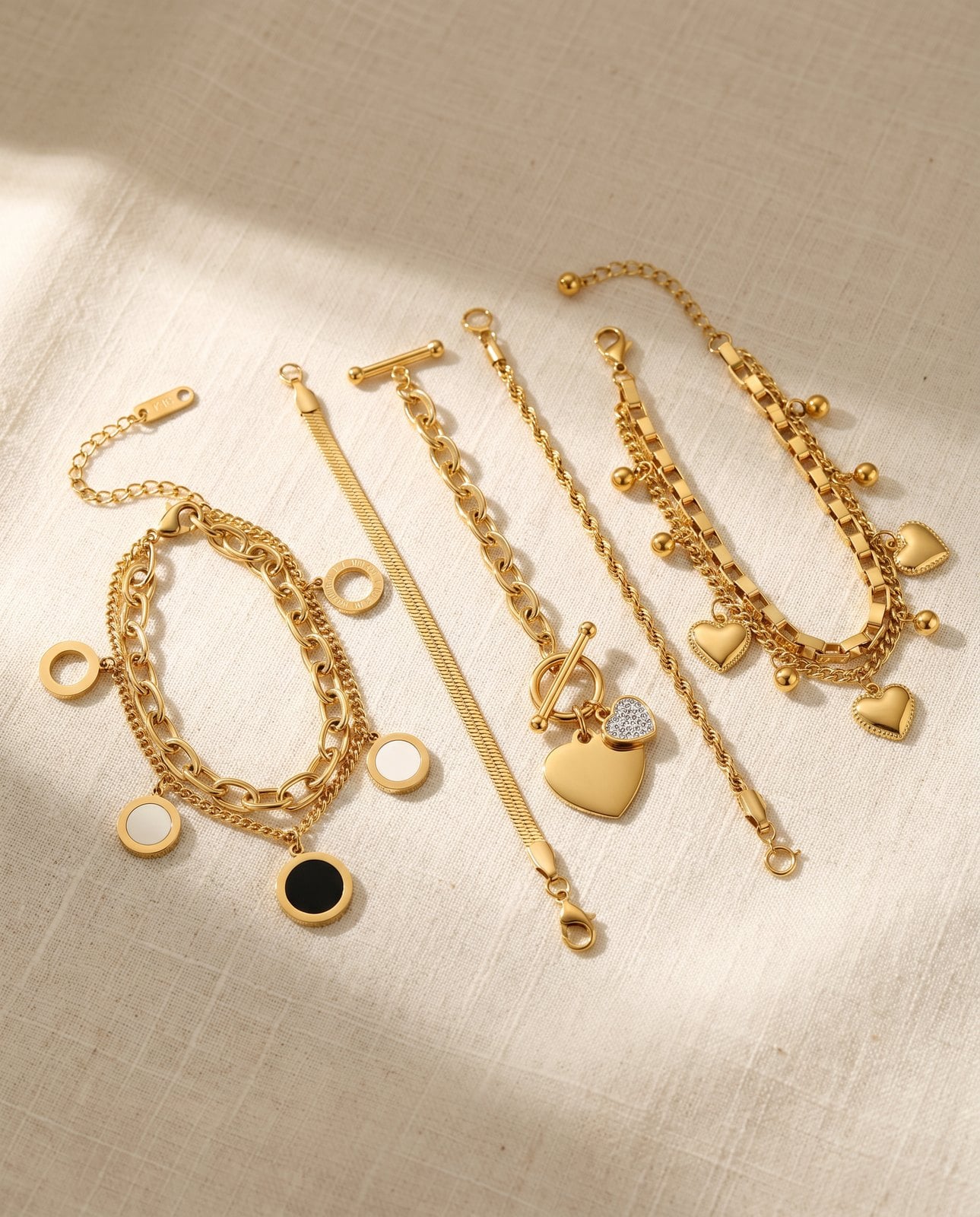
When you look at a stack and it reads as "intentional," these three variables are almost always working together.
— The Glozya Journal
When a stack reads as "messy," usually one of them is missing.
How to Build the Stack
Once you understand the core principle, building the stack becomes a sequence of specific choices — anchor first, then supporting pieces, then texture variation. Each step builds on the one before.
Start with your base: the anchor bracelet
Every stack needs an anchor — the piece that defines the stack's overall mood and scale. This is the first bracelet you put on, and the one that determines whether your stack leans delicate, bold, or somewhere between.
For Canadian daily wear, the best anchor choices are substantial but not statement-loud:
- A thicker chain bracelet (herringbone, curb, or box link, around 4-6mm width) in warm yellow gold tone — versatile across outfits, sturdy enough to survive daily wear, visible but not dominant
- A thin bangle or cuff with some weight to it — adds structure without chain movement, sits cleanly under a watch or next to other pieces
- A focal charm bracelet if personalization is your priority — a chain base with one or two meaningful charms that you're not planning to remove
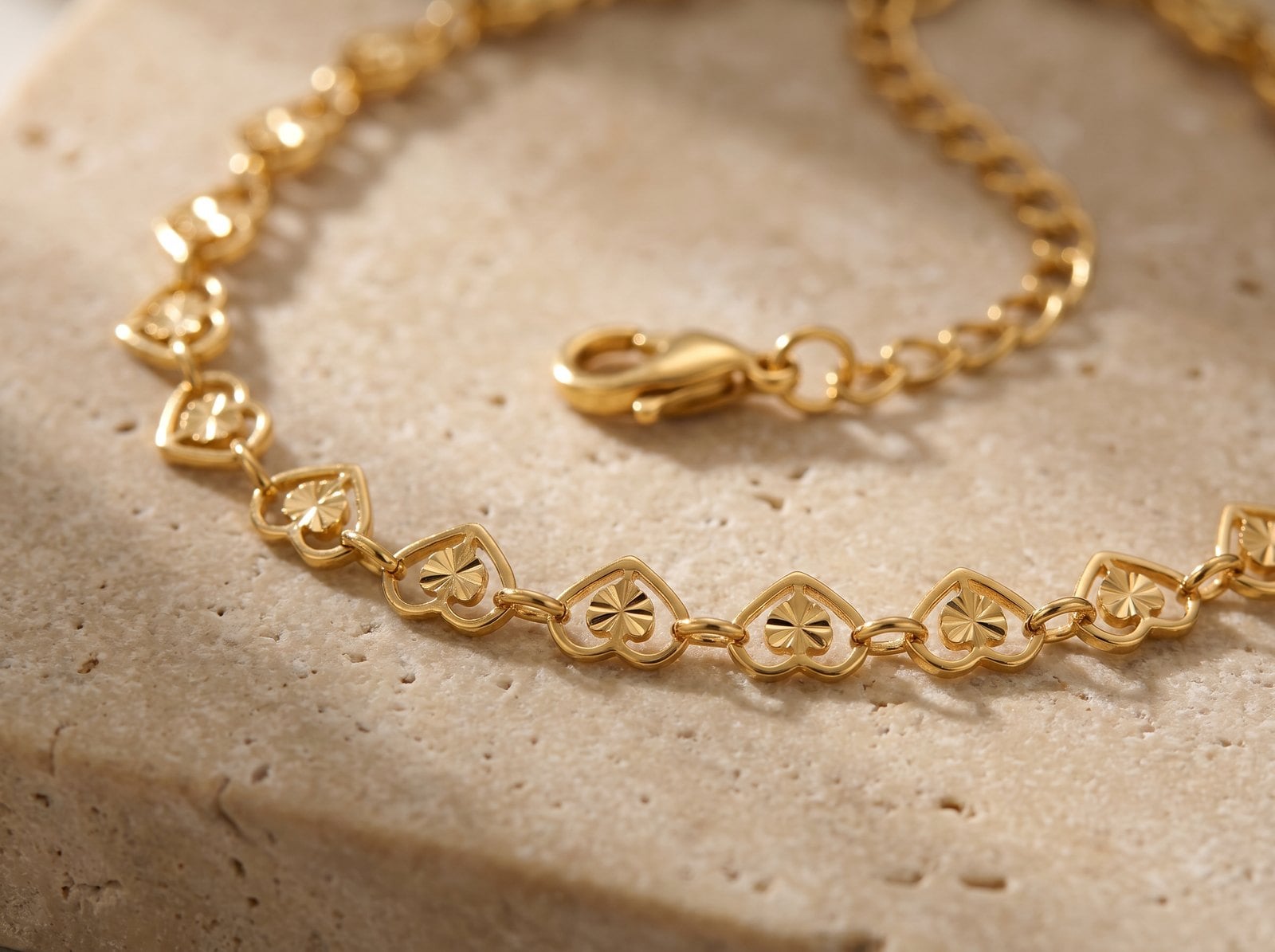
What to avoid as your anchor: pieces that are too delicate (they'll visually disappear once other bracelets are added), pieces that are too bold (they'll dominate the stack and make additional pieces feel like clutter), or pieces with moving parts that tangle with other bracelets.
Our waterproof bracelet collection is built on 316L hypoallergenic stainless steel with 18K gold plating — meaning your anchor piece survives showers, workouts, and the handwashing that defines Canadian daily life. This matters for the anchor specifically because if the anchor fails (tarnishes, turns your wrist, or breaks), the whole stack comes off.
Build outward: the stacking formula that works
Once you have an anchor, the question becomes what to layer around it. The formula that works most reliably for 3-to-5 piece stacks follows this pattern.
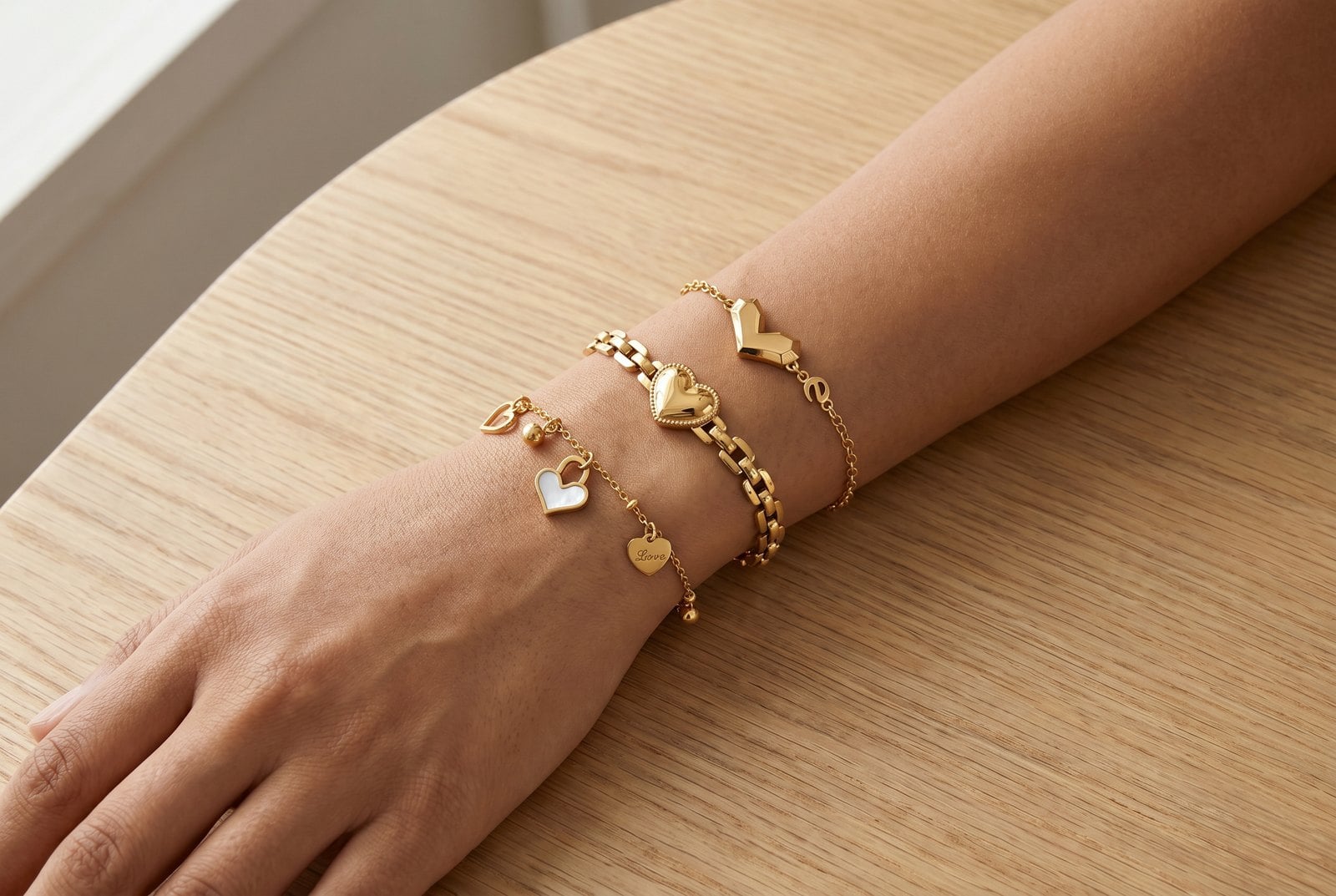
- Position 1 (closest to hand): A thinner chain or delicate bracelet. This sits at your wrist bone and creates a lighter visual starting point. Delicate pieces here read as intentional framing rather than as "not enough bracelet."
- Position 2 (middle): Your anchor piece. The thickest or most visually substantial bracelet in the stack. Sits in the middle so it reads as the center of gravity.
- Position 3 (up the arm): A medium-weight piece with different texture than the anchor. If your anchor is smooth, go with texture. If your anchor is chain, consider a bangle or beaded piece.
That's the three-piece foundation. For a five-piece stack, add:
- Position 4: Another delicate piece, either a thin chain or a minimal bangle, sized to match position 1 but different in texture or design.
- Position 5 (highest): A charm or personal piece that adds the sentimental layer. This is where identity pieces sit — an initial charm, a birthstone bracelet, a meaningful symbol. Placed at the top of the stack so it catches the eye at the peak of the rhythm.
Texture variation: what actually creates visual interest
If every bracelet in your stack has the same surface texture — all smooth chains, for example, or all plain bangles — the stack reads as uniform rather than layered. The human eye reads sameness as "one big bracelet" rather than "a stack of distinct pieces." Texture variation fixes this.
The easiest ways to vary texture:
- Chain patterns — mix a flat herringbone with a rope chain, or a curb chain with a box chain. Even within "chains only" stacks, changing the link pattern creates the visual separation between pieces
- Smooth versus textured — pair a smooth bangle with a beaded or hammered piece. The contrast gives each bracelet its own visual identity
- Flat versus dimensional — a flat chain bracelet next to a rope chain or a twisted bangle creates depth. Your wrist doesn't look like it's wearing a single wide cuff
- Matte versus polished — all within the same metal tone, mixing finishes creates subtle texture variation without introducing a new color
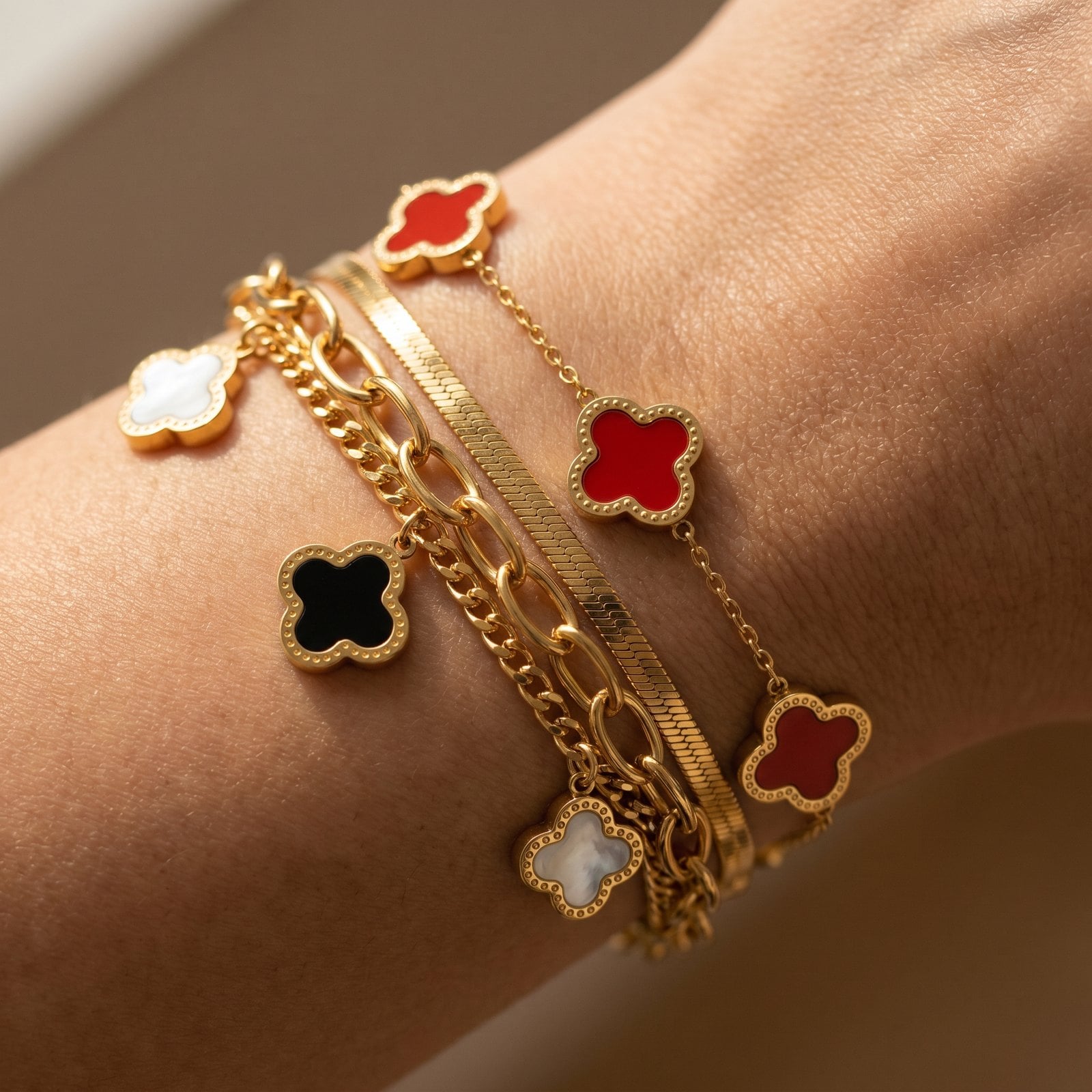
A useful test: if you put a finger between each bracelet in your stack, can you describe what's different about the piece on each side? If yes, the texture variation is working. If every piece feels similar, your stack is missing this variable.
| Stack position | Best piece type | Visual role | Daily-wear note |
|---|---|---|---|
| Position 1 | Thin chain or delicate bracelet | Creates a lighter starting point closest to the hand | Works best when it frames the anchor instead of competing with it |
| Position 2 | Anchor bracelet | Defines the mood, scale, and center of gravity | Choose something substantial but not statement-loud |
| Position 3 | Medium-weight textured piece | Adds contrast and structure | Use a different texture than the anchor |
| Position 4 | Thin chain or minimal bangle | Balances the first delicate layer | Match scale to Position 1 but vary design |
| Position 5 | Charm or personal piece | Adds identity and story | Best added gradually rather than bought all at once |
Mixed Metals: The 2026 Approach
One of the biggest shifts in bracelet stacking through 2026 is the return of mixed metals as an intentional design choice. For years, the rule was "pick your metal and stick to it." That rule has dissolved. The current approach is deliberate mixing — yellow gold as the dominant tone with silver or white gold as a secondary accent, or two-tone bracelets that do the mixing within a single piece.
What makes mixed metals look intentional rather than indecisive:
- Dominant plus accent — not 50/50 mixing. One metal should be the primary voice, the other a supporting accent. A stack of 4 gold bracelets plus 1 silver reads better than 2 gold plus 2 silver plus 1 mixed, which reads as confused
- Consistent finishes — all brushed, or all polished, or all matte. Mixing metals and finishes at the same time creates too many variables for the stack to hold together
- Two-tone bridge pieces — a bracelet that incorporates both metals in a single design (like a gold chain with silver accent links) bridges the mixed tones and makes the rest of the stack cohere
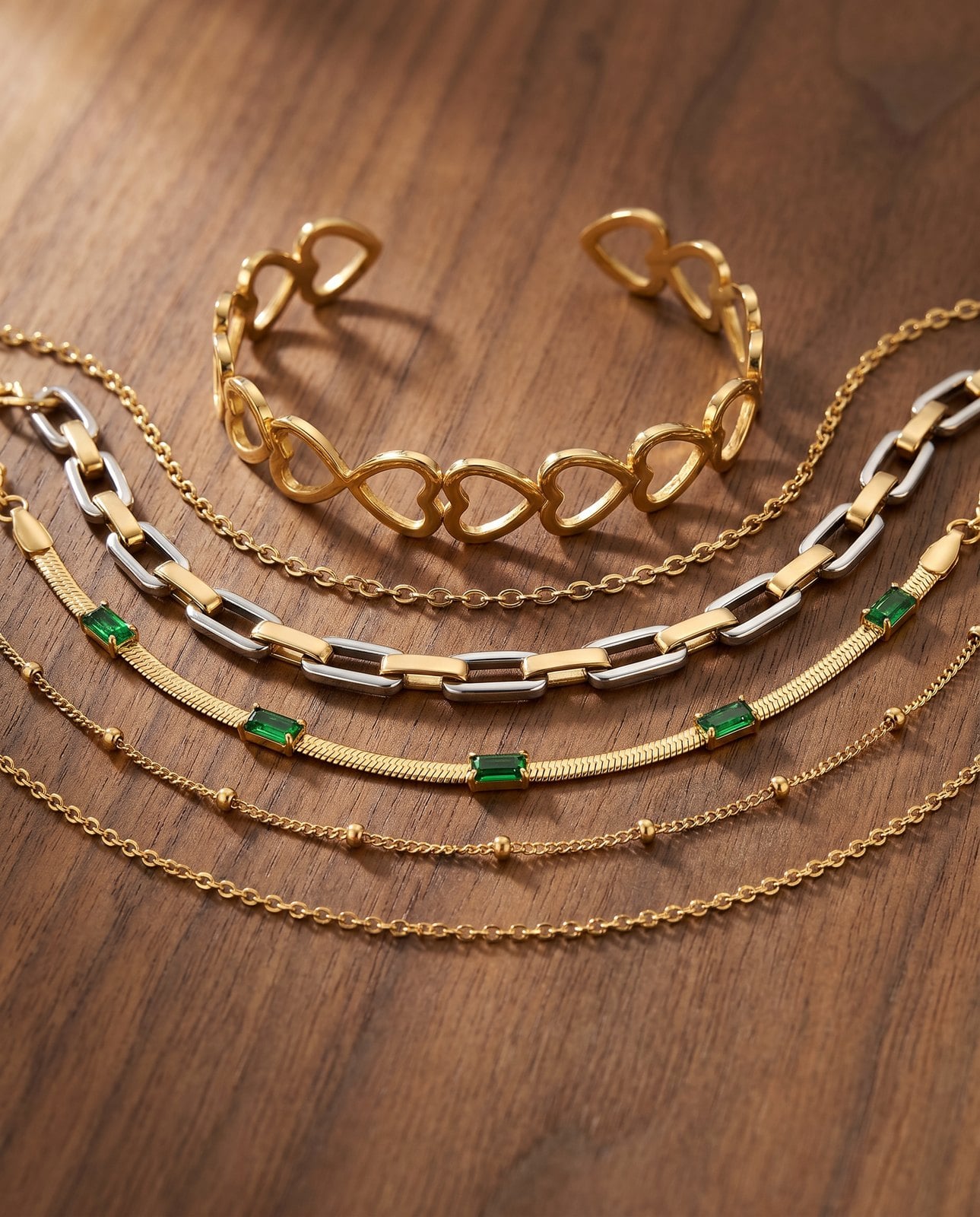
For Canadian buyers specifically, mixed metals are a practical advantage. Stainless steel bracelets in a silver tone pair cleanly with 18K gold plated pieces from the same catalog, which means you don't need to commit to a single metal story across your whole collection. Browse stainless steel bracelets for the silver-tone pieces that bridge into gold stacks, or layered bracelet sets for pieces designed from the start to stack together.
Why Daily Stacks Need to Be Waterproof and Hypoallergenic
Most bracelet stacking guides treat this as a styling topic. But for stacks you wear daily — as opposed to special-occasion stacks — material choice decides whether the stack survives at all. Two factors separate a daily-wear stack that lasts from one that falls apart: every piece needs to be genuinely waterproof, and every piece needs to be genuinely hypoallergenic. Not just your favorite piece — every piece.
The waterproof rule
Here's the rule most styling guides skip entirely: if any single bracelet in your stack isn't waterproof, the whole stack comes off every time you wash your hands. And Canadian women wash their hands frequently throughout the day — before meals, after meals, after commuting, after handling bags, at work, at home. A stack that has to come off 10-15 times a day is a stack you stop wearing within a week.
This is why daily-wear stacks need to be built entirely from waterproof pieces. The moment one piece becomes the "take it off before showering" piece, the convenience collapses. You start leaving the stack on your dresser in the morning, and within a month, you're back to wearing one bracelet instead of five.
What makes a bracelet truly waterproof for daily Canadian wear:
- Base metal: 316L stainless steel — a corrosion-resistant grade commonly used for durable jewelry. Completely resistant to water, sweat, and salt exposure. Won't tarnish, rust, or corrode
- Plating: 18K gold electroplated — bonded at molecular level to the stainless steel base, not a thin flash coating that wears off in weeks
- Sealed construction — no open links or hollow pieces that trap water and corrode from the inside
- Clasps: solid mechanism — lobster or box clasps rather than spring-ring clasps, which have internal components that degrade with repeated water exposure
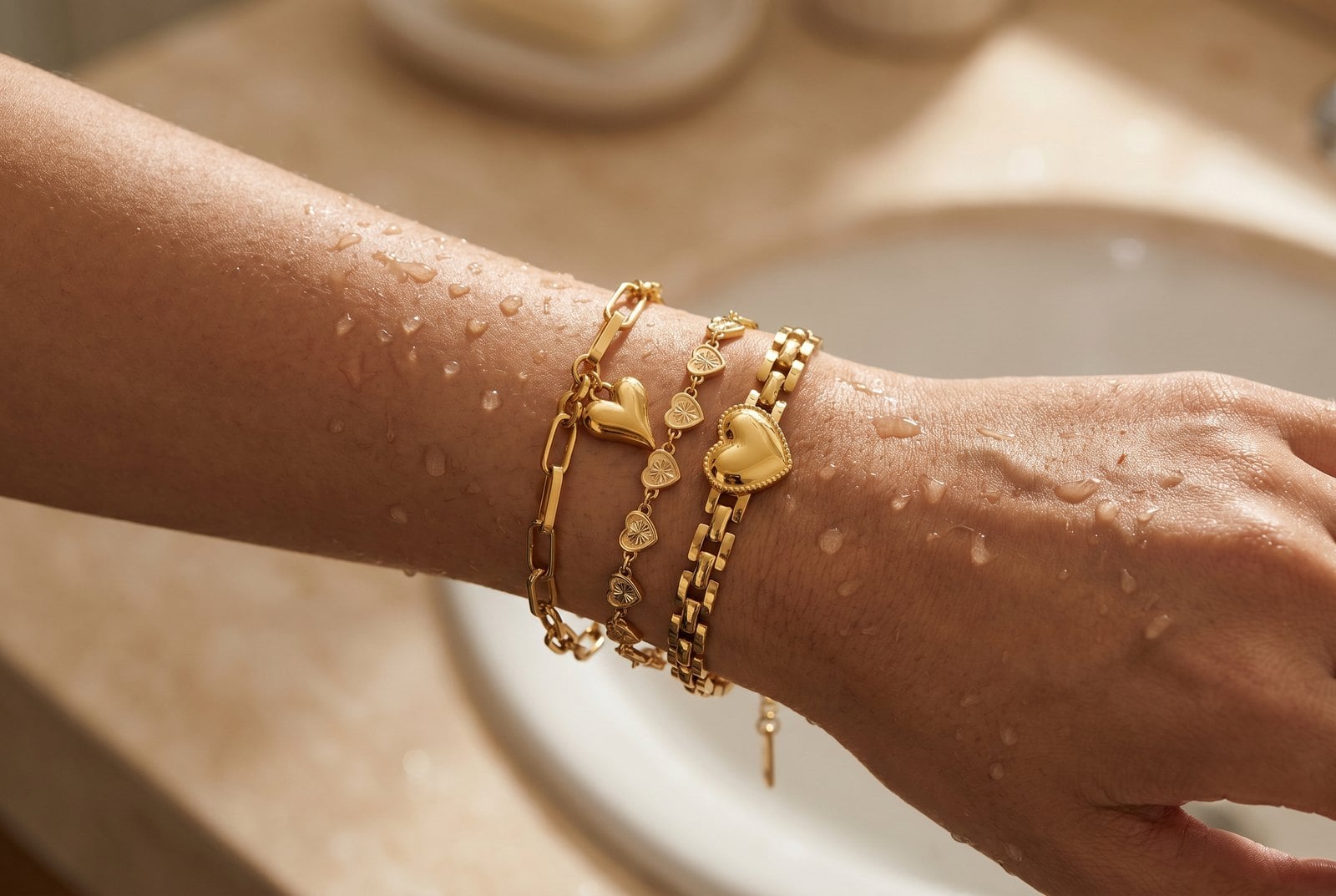
Cheap fashion bracelets — brass base with gold paint, copper with a thin gold flash, or alloy pieces with unclear plating — fail every one of these tests. For more on what "gold plated" actually means and why it matters for durability, see our guide on what 18K gold plated jewelry really is, and the 14K vs 18K comparison for why the gold purity of the plating layer matters even more for high-contact pieces like bracelets.
Why hypoallergenic matters more for stacks than any other jewelry
A single bracelet touches your skin in one place. A five-piece stack touches your skin in five places, with pieces moving against each other and against your wrist all day. If any piece in the stack contains nickel or a reactive base metal, you'll know within hours — the skin under that piece turns red, itchy, or irritated. And because the pieces move, the reaction spreads across your whole wrist rather than staying localized.
This is why nickel allergy and contact dermatitis show up more acutely with stacking than with single bracelets. Health Canada estimates 10-20% of Canadian women react to nickel, and the reaction gets worse with repeat exposure — sensitivity builds over time. A stack of cheap bracelets worn daily can develop into persistent irritation within weeks.
The fix is simple but requires being strict: every piece in your stack needs to be hypoallergenic, not just your favorite one. 316L stainless steel is the safest base metal for sensitive skin because it contains virtually no free nickel — the nickel is locked into the alloy structure and doesn't leach out through sweat or water. Titanium and sterling silver are also safe options. Brass, copper, and cheap alloys are not.
For the full breakdown on why stainless steel works for sensitive skin and how to verify a piece is genuinely hypoallergenic, see our guide on hypoallergenic stainless steel jewelry.
Five Stack Combinations That Work
Here are specific stack combinations that follow the principles above, with notes on when each one lands best.
| Stack idea | Pieces | Best for | Why it works |
|---|---|---|---|
| The Minimalist Daily | A thin gold chain bracelet, a slim gold bangle, and a delicate charm bracelet with one small charm. | Office wear, meetings, client-facing roles. | Reads as polished and intentional without being obvious. The whole stack can disappear under a sleeve or show in full when sleeves are rolled. |
| The Textured Stack | A thin herringbone chain, a rope chain bracelet, a plain bangle, a twisted bangle, and a small charm piece. | Daily wear when you want the stack to look composed and grown-up. | The variety of textures creates visual depth without introducing metal mixing. |
| The Mixed Metals Stack | A thicker gold curb chain as anchor, a thin silver cable chain, a gold bangle, and a two-tone bracelet. | Casual wardrobes and weekend wear. | The two-tone bridge piece prevents the gold-and-silver combination from reading as indecisive. |
| The Statement Plus Delicate | One thicker statement bangle or cuff as clear focal point, paired with two delicate chain bracelets. | Occasions when you want one piece to be the conversation starter. | The delicate pieces frame the statement piece rather than competing with it. |
| The Charm Story | Three plain chain bracelets in varying thicknesses, plus two charm bracelets with personal meaning. | A stack built over years, adding pieces for milestones. | The plain chains are the stage; the charm bracelets are the story. |
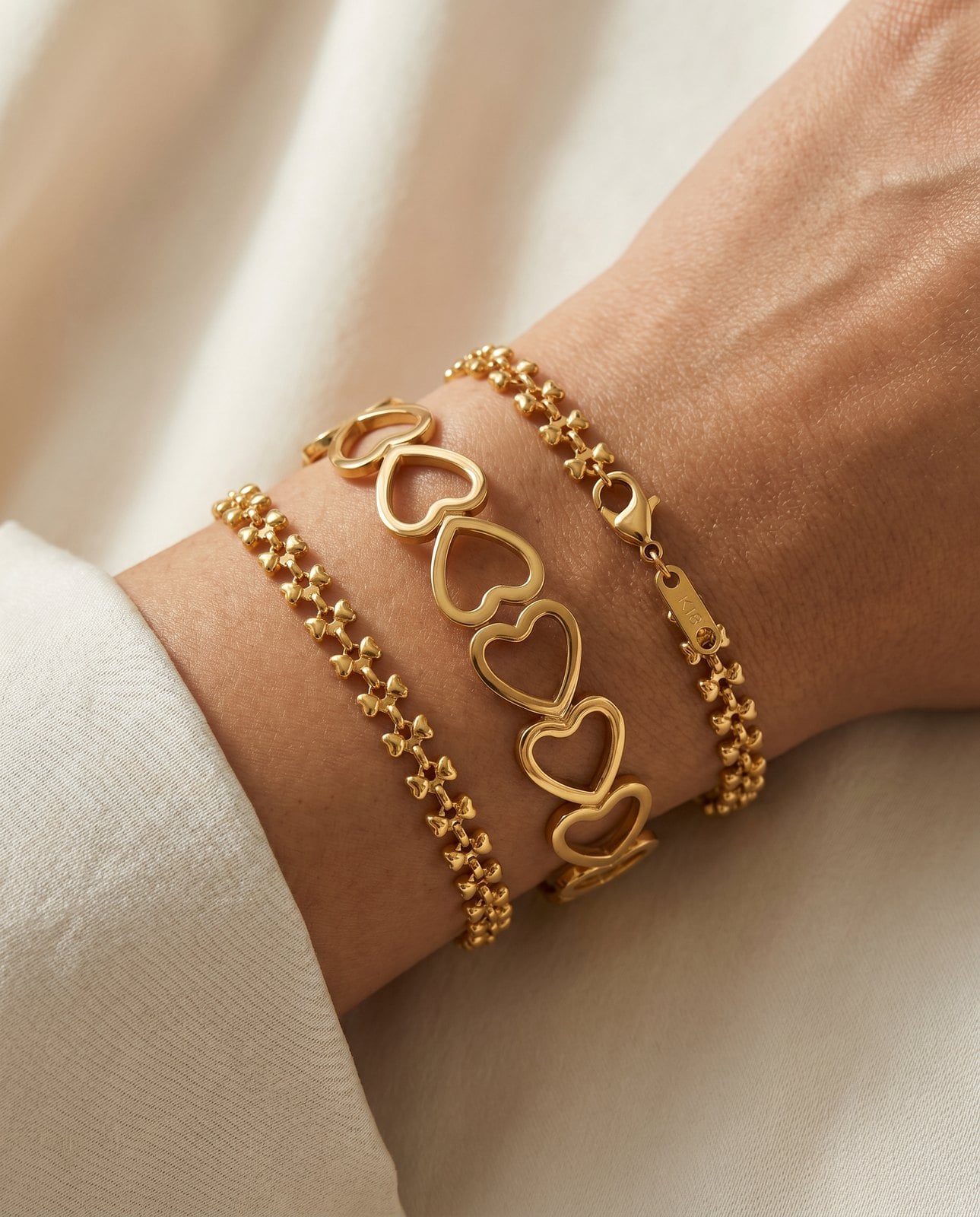
Browse charm bracelet styles for the sentimental anchor pieces, layered bracelet sets for pre-built stacking combinations, or adjustable bracelets for pieces that work across size variations through Canadian winter and summer. For layering heart pieces specifically across necklaces, bracelets, and earrings without overdoing it, see our heart jewelry styling guide.
Common Bracelet Stacking Mistakes
The failure modes are consistent across stacks that don't work. If your stack isn't landing, one of these is usually why.
- Too many focal points. If every piece in the stack is trying to be the statement piece, nothing gets the attention. Pick one focal point, support it with simpler pieces. Two statement pieces in one stack compete and weaken each other.
- All the same thickness. Five chain bracelets of identical width read as one wide chain, not a stack. Vary thickness by at least 50% between the thinnest and thickest piece for visible hierarchy.
- Pieces that don't move together. A loose bangle that slides around with every wrist movement, combined with tight chain bracelets, creates constant visual chaos. All pieces in the stack should move at similar rates when your wrist moves.
- Mixing too many styles at once. Leather bracelets, gold chains, silver bangles, and beaded pieces all in the same stack creates too many variables. Pick a dominant style and let other elements support it, rather than treating every bracelet as a different personality.
- One cheap piece in an otherwise quality stack. The cheap piece degrades first, pulls down the perceived quality of the whole stack, and often causes skin reactions that force the whole stack off. If a $10 bracelet is in a $200 stack, replace it rather than hoping it lasts.
- Over-crowding. Seven pieces on a petite wrist creates a solid wrist-covering that reads as "one chunk of bracelets" rather than a stack. Scale stack size to wrist size. Most stacks land well at 3-5 pieces; larger stacks need larger wrists to look proportional.
Living With Your Stack
A stack you wear daily behaves differently than a stack you wear for an evening out. Long-term wear and gradual collection-building are their own skills, distinct from the initial styling choices.
How to take care of your stack
Waterproof pieces tolerate daily wear without issue, but even waterproof pieces benefit from basic care to stay looking new for years rather than months.
The care rules that actually matter:
- Wipe down after workouts or beach days — sweat salt, chlorine, and sand don't damage stainless steel, but residue leaves pieces looking duller than they actually are. A soft cloth wipe restores shine instantly
- Store stacked pieces separately — not in a tangled pile. Chain bracelets tangle with charm bracelets overnight and damage charm settings. Use a divided jewelry tray or separate pouches
- Avoid lotion contact at application — put on lotion or perfume first, let it absorb for 60 seconds, then put on your stack. Lotion film doesn't damage waterproof pieces but can dull the appearance temporarily
- Check clasps monthly — the main failure point on any bracelet is the clasp mechanism. A quick check for loose hinges or worn spring mechanisms catches problems before you lose a piece
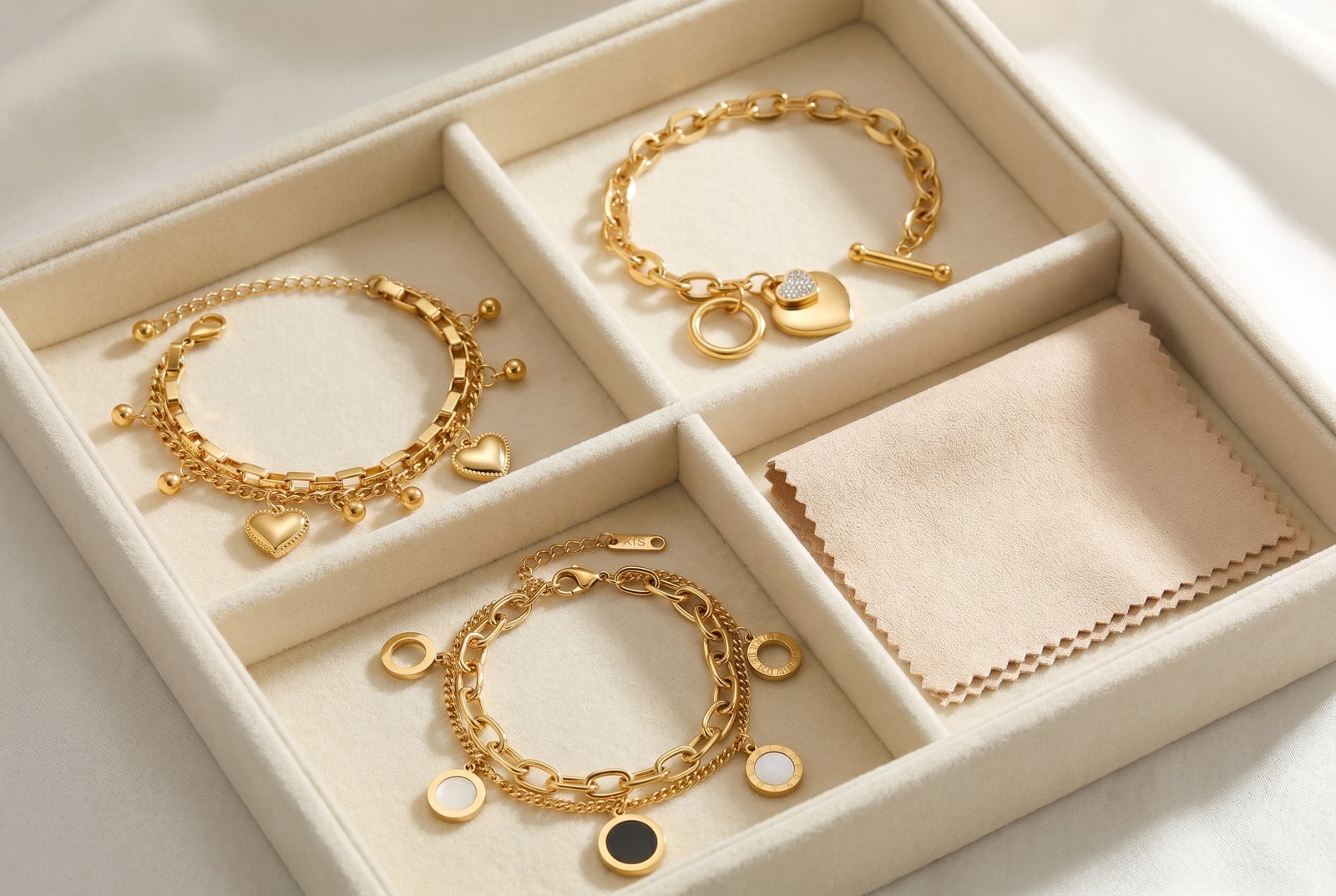
For deeper care guidance on gold plated pieces specifically, see our guide on making gold plated jewelry last longer.
Building your stack over time
The best bracelet stacks are built gradually. Buying a complete five-piece stack on day one often produces a stack that looks bought rather than curated — all the pieces read as arriving together, with no personal story in the mix.
The order that tends to produce better stacks:
- Month 1: Anchor bracelet. Buy one piece. Wear it alone daily for a few weeks. Learn what size, style, and weight feels right on your wrist.
- Month 2-3: First supporting pieces. Add a delicate chain and a different texture (bangle, rope chain, or beaded piece) to build a basic 3-piece stack.
- Month 4-6: Personal piece. Add your first charm or sentimental bracelet. This should reflect something about you — not just another chain.
- Ongoing: Special occasions. Add pieces for milestones — a graduation, a birthday, a trip, an anniversary. These become the stack's story over years, each charm or meaningful piece earning its place.
Browse new releases for the latest additions to the Glozya catalog, check the current flash sale for discounted pieces worth adding to a growing stack, or explore the full shop to find pieces that fit your specific stack plan. All pieces are waterproof, hypoallergenic, ship free across Canada on orders over $75, and come from a brand built specifically for Canadian daily wear. Shopping for reactive skin? Browse our full hypoallergenic jewelry collection. For trend context on what's shaping Canadian jewelry choices overall right now, see our companion guide on Canadian jewelry trends.
About the Author

Mohammad Aftab is the founder of Glozya, a Canadian 18K gold-plated jewelry brand he launched in 2023. He has over a decade of experience in e-commerce, email marketing, and brand design across DTC, retail, and digital media. He writes about jewelry care, style, and the everyday details that make a piece worth keeping.