How to Make Gold Plated Jewelry Last Longer: Honest Guide
In this guide
Most advice about making gold plated jewelry last longer was written for cheap costume jewelry — brass base with thin plating that genuinely does fail within months if you shower with it, sweat in it, or store it wrong. That advice doesn't translate well to today's quality gold plated jewelry, which is typically built on 316L hypoallergenic stainless steel with 18K gold plating bonded 2.5+ microns thick. Those pieces are waterproof, survive handwashing, tolerate sweat, and don't need most of the paranoid care routines older guides recommend. What they do need is a smaller set of high-impact care habits that actually matter — and an honest understanding of what fails first on gold plated jewelry (hint: it's not usually the plating).
This guide ranks care advice by how much it actually affects how to make gold plated jewelry last longer. High-impact habits that genuinely extend a piece's life by years come first. Lower-impact habits that extend life marginally come later. Skip the old-school advice about never showering with jewelry, treating it as fragile, or cleaning it monthly — most of that doesn't apply to quality stainless-steel-based pieces and creates unnecessary anxiety about daily wear.
What Actually Fails First on Gold Plated Jewelry
Before getting into care routines, it helps to know what actually breaks or wears on gold plated jewelry so you can focus care on the parts that matter. Most people assume "the plating wears off" is the main failure mode. For quality pieces, that's wrong.
In order of what fails first on 18K gold plated jewelry built on 316L stainless steel:
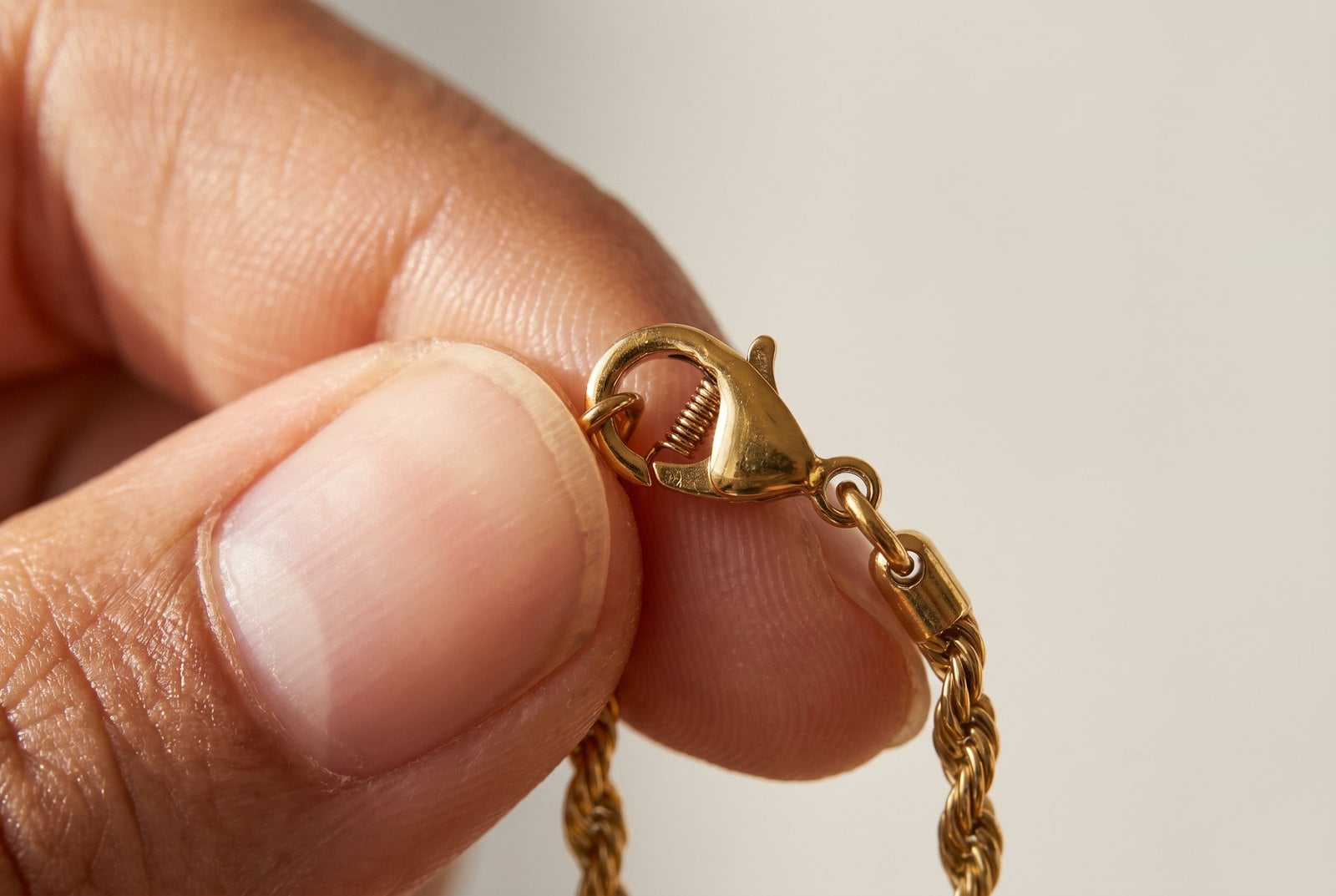
- Clasps — the mechanical parts of a piece fail far earlier than the plating. Spring-ring clasps lose tension after 6-18 months of regular use. Lobster clasps are more durable but their hinges can loosen. Box clasps can wear at the contact points. This is the #1 reason people "lose" necklaces and bracelets — the clasp opens during wear
- Chain links at wear points — the link right next to the clasp or where a pendant hangs sees the most stress and can thin out or break after 2-3 years of daily wear
- Earring posts — can bend with rough handling. Earring backs get lost or break well before the stud itself
- Plating at high-friction contact points — rings on the bottom of the band, the back of bracelet bangles where they hit desks and keyboards. NOT general wear-through from water or sweat
- Plating from direct chemical damage — only matters for specific chemicals. Daily water exposure doesn't cause this on quality pieces
Clasp tension
6-18 months
Spring-ring clasps can lose tension after regular use, which is why clasp checks matter more than most plating advice.
Daily-wear stress
2-3 years
Chain links near clasps or pendant contact points can thin or break after years of daily wear.
Most care advice focuses on protecting the plating from water and daily life, but the #1 failure is mechanical — clasps wearing out.
— The Glozya Journal
The practical implication: most "care advice" focuses on protecting the plating from water and daily life, but the #1 failure is mechanical — clasps wearing out. Good care routines focus on clasp longevity first, plating protection second.
High-Impact Care: What Actually Matters
These are the care habits that genuinely make a difference. If you do only these four things, your gold plated jewelry will last years longer than if you follow 20 fussy rules but skip the high-impact ones.
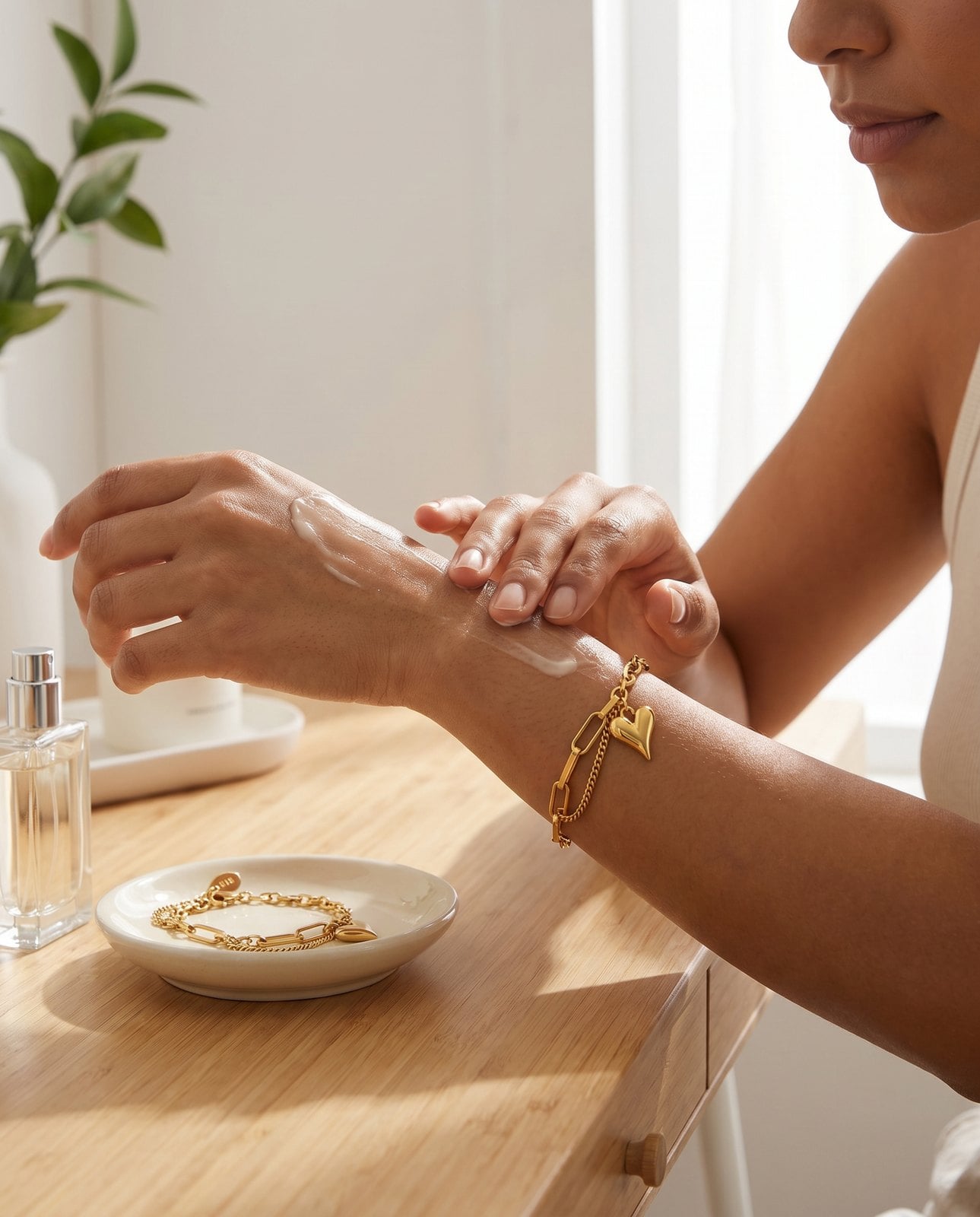
Put lotion, perfume, and sunscreen on first
This is the single highest-impact care habit. Beauty products contain alcohol, fragrance compounds, and polymers that are genuinely hard on gold plating. Applying lotion, perfume, hair spray, or sunscreen AFTER putting on jewelry coats the piece in chemicals that sit against the plating all day.
The fix costs you 60 seconds: put on lotion, perfume, and sunscreen first. Let them absorb into your skin for a minute. Then put on your jewelry. The plating contacts clean skin rather than a chemical film.
Rinse after workouts, beaches, and pool days
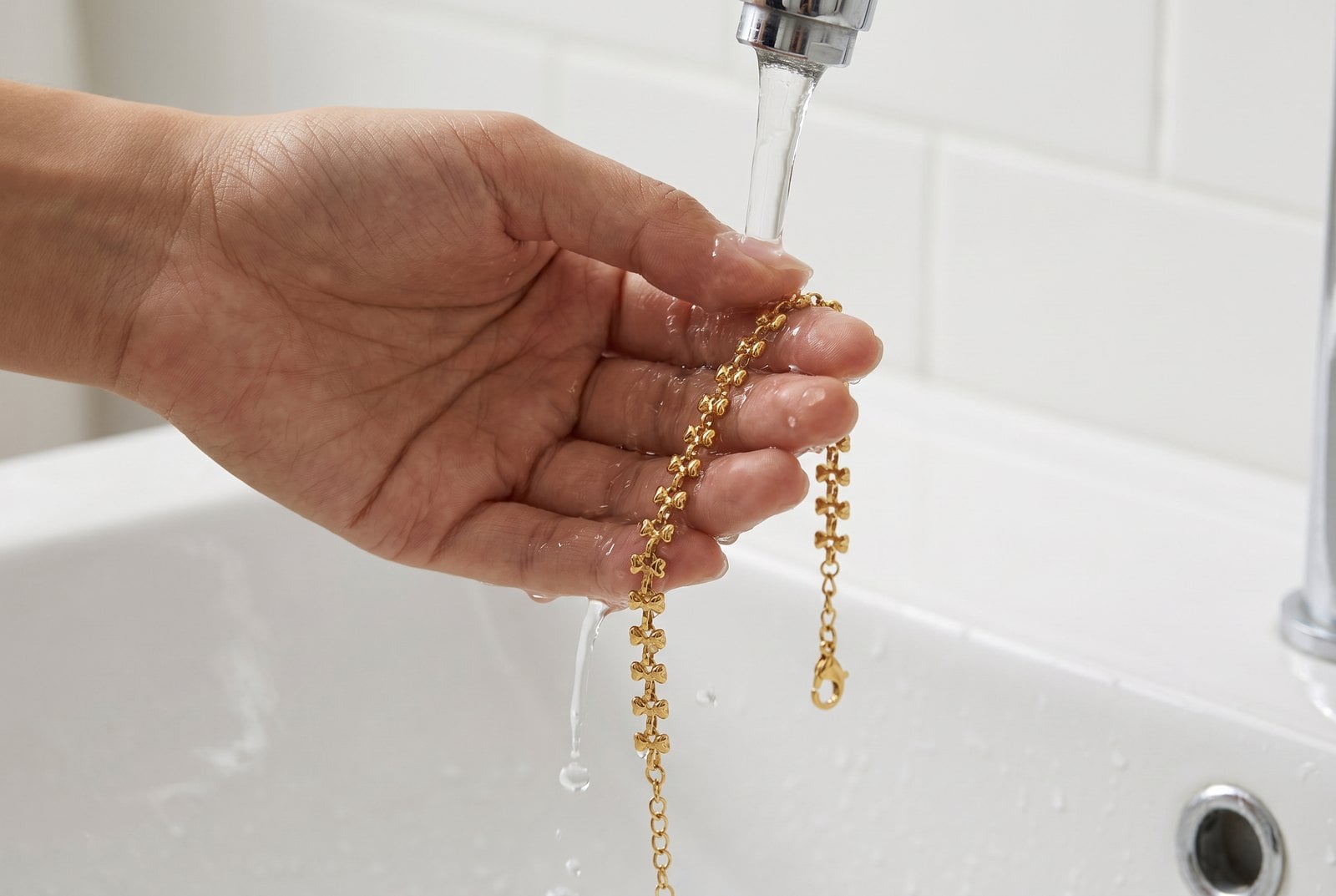
Quality 316L-based pieces survive sweat, chlorine, and salt water without damage — but residue on the surface can dull the appearance over time and, more importantly, can accelerate clasp wear. A quick rinse after activities that expose your jewelry to these conditions keeps the piece looking new without requiring removal during the activity itself. For a deeper breakdown of which materials genuinely survive water (and which fail despite the marketing), see our waterproof gold jewelry guide for Canada.
What counts as a "quick rinse": under the tap for 30 seconds with plain water, then pat dry with a soft cloth. That's it. No soap, no polishing, no effort. This habit specifically prevents the dulling that makes people think their plating is wearing off when actually it's just surface buildup.
Check clasps monthly
Since clasps fail first, checking them regularly is the highest-impact preventive habit. Monthly inspection of your daily-wear pieces catches loosening clasps before a piece actually falls off and gets lost.
What to check:
- Spring-ring clasps — does the spring close crisply when released? If it feels sluggish, it's wearing out
- Lobster clasps — does the hinge move smoothly without stickiness? Any grittiness signals debris or wear
- Chain integrity near clasps — the jump ring connecting the clasp to the chain is a common failure point. Check for any separation or stretching
Catching a failing clasp a month before it fully breaks means replacing it or retiring the piece before you lose an $80 necklace mid-day.
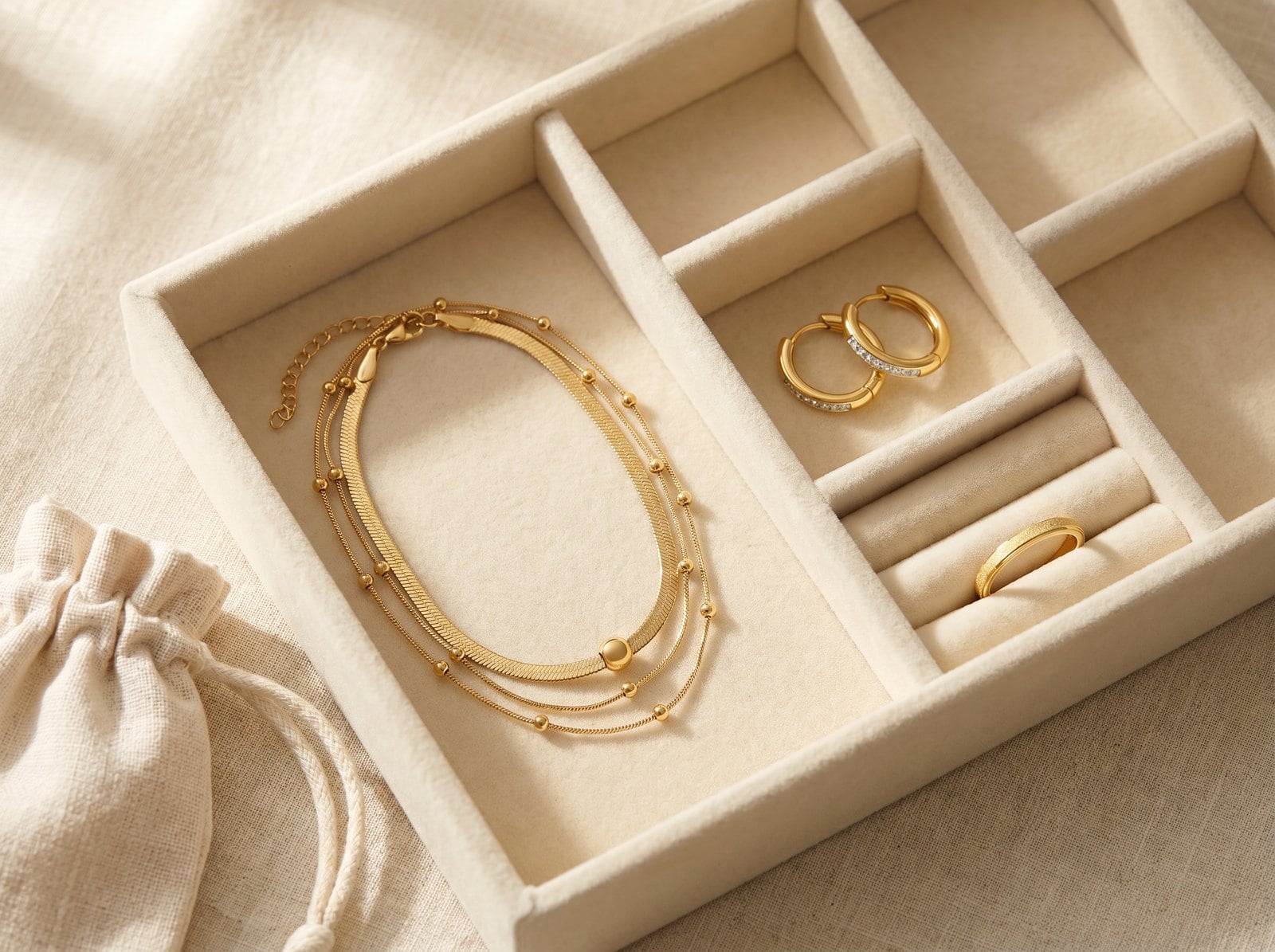
Store pieces separately
Jewelry pieces tangled in a dish or jewelry box scratch each other. The scratches don't cause dramatic plating damage on quality pieces, but they do accumulate over years and contribute to the "this piece looks old" appearance even when the plating is technically intact.
Solutions that work:
- Divided jewelry trays with velvet or fabric lining — inexpensive and dramatically better than a single bowl
- Individual soft pouches for pieces you don't wear daily — especially useful for travel or storage beyond a week
- Hung storage for necklaces — necklace trees or wall-mounted hooks prevent the tangling that damages chains during sleep-adjacent storage
- Ring stands or ring-specific sections in jewelry boxes — keeps bands from scratching other pieces
Medium-Impact Care: Small But Real Gains
These habits matter less than the high-impact ones but still provide measurable life extension. Worth doing if you care enough to develop good habits, skippable if you'd rather keep it simple.
Avoid specific chemicals at point of contact
Certain chemicals damage plating faster than regular daily life. Quality 18K plating tolerates most casual exposure, but direct contact with these specific things accelerates wear:
- Pool chlorine at concentrated levels — brief pool swim is fine; sitting in a freshly-shocked hot tub is not
- Household cleaners (bleach, ammonia, oven cleaner) — these genuinely degrade plating. Take pieces off for deep cleaning projects
- Hair dye — actively damages gold plating and most other metals. Take jewelry off before coloring hair
- Acetone nail polish remover — wipe it away immediately if contact happens
- Some essential oils and perfumes with high alcohol content — the issue is concentration; normal perfume exposure (applied first and absorbed) is fine
The rule isn't "never expose jewelry to chemicals" — it's "take pieces off for activities that involve concentrated or direct chemical contact." Washing hands, cooking, and normal daily life don't qualify.
Wipe pieces down after long wear days
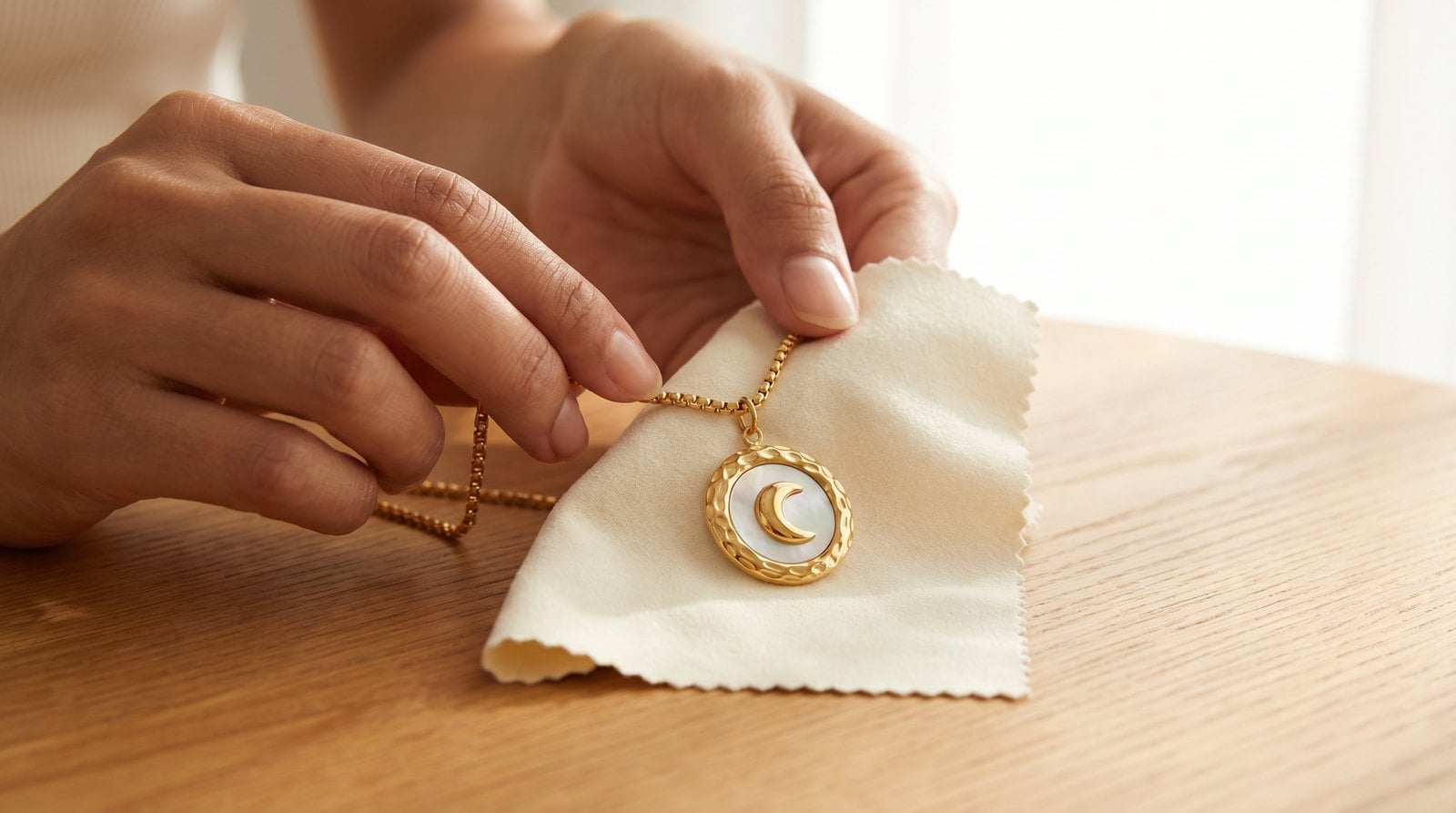
A soft microfiber cloth wipe at the end of a long day removes body oils, product residue, and dust that otherwise sit on the piece overnight. This isn't mandatory — missing a day or a week isn't going to damage anything — but it keeps pieces looking new longer.
What to use: a dedicated jewelry microfiber cloth or any soft, lint-free fabric. Don't use regular paper towels (too abrasive) or dryer sheets (chemicals). A 30-second gentle wipe is enough; no scrubbing needed.
Clean gently when pieces look dull
If a piece looks dull despite regular care, a gentle cleaning restores shine. The method for quality gold plated pieces is simple:
- Mix warm water with a drop or two of mild dish soap (no harsh detergents)
- Dip the piece briefly — not a long soak
- Gently rub with a soft cloth or very soft toothbrush for crevices
- Rinse thoroughly with clean water
- Pat dry with a soft lint-free cloth
- Let air dry completely before storing
What to avoid for plated pieces specifically:
- Ultrasonic cleaners — the vibration can accelerate bond degradation on plating
- Silver polish or harsh metal polishes — these are abrasive and will remove plating, not clean it
- Scrubbing with hard-bristled brushes — scratches the surface
- Soaking for extended periods — not harmful typically, but unnecessary and increases risk of water getting into sealed components
For solid gold pieces, jewelers sometimes use ultrasonic cleaners and polishes. Those methods don't translate to plated jewelry. Keep cleaning gentle.
| Care level | Habit | Impact | Why it matters |
|---|---|---|---|
| High | Apply lotion, perfume, sunscreen, and hair products first | Very high | Beauty products can sit against plating all day and accelerate color loss. |
| High | Rinse after workouts, beaches, and pool days | High | Removes sweat, salt, chlorine residue, and buildup that dulls shine or stresses clasps. |
| High | Check clasps monthly | High | Prevents the most common failure mode: clasps opening or breaking during wear. |
| High | Store pieces separately | High | Reduces scratches, tangling, and long-term friction damage. |
| Medium | Avoid concentrated chemicals | Medium | Protects plating from bleach, ammonia, hair dye, acetone, and concentrated chlorine. |
| Medium | Wipe after long wear days | Medium | Removes oils and residue before they sit on the piece overnight. |
| Medium | Clean gently when dull | Medium | Restores shine without abrasive polishing or ultrasonic damage. |
Low-Impact Care: Often Cited But Doesn't Matter Much
These are habits commonly recommended in gold plated jewelry guides that actually provide minimal benefit for quality 18K stainless-steel-based pieces. Do them if you want, but don't stress if you skip them.
- Never showering with jewelry. Generic advice that applies to cheap brass-based pieces. Quality 316L-based pieces with 18K plating shower fine. Chlorinated pool water and hot tub sit-ins are worth removing for; a regular shower isn't.
- Taking jewelry off before sleeping. This comes from the era when chains tangled easily and clasps fell off. Modern pieces with quality clasps are fine to sleep in. If you sleep restlessly or share a bed with pets that jump around, removal makes sense. If you're a calm sleeper, it doesn't meaningfully matter.
- Wrapping in tissue paper or silica packets. Useful for long-term storage of pieces you won't wear for months. Pointless for daily-wear pieces that live in rotation.
- Avoiding any contact with water at all. Only applies to cheap plating on reactive base metals. Quality 316L-based pieces are genuinely waterproof. Handwashing, showers, light swimming are all fine.
- Polishing jewelry monthly. Unnecessary for pieces that see regular light wipes. Over-polishing can actually wear plating faster than leaving it alone.
Canadian Climate Specifics
Canadian wardrobes face specific environmental conditions that affect jewelry differently than milder climates. These matter enough to call out separately.
- Winter indoor dryness. Canadian winter heating dries out indoor air significantly, which accelerates body oil transfer to jewelry as dry skin sheds more. The fix: slightly more frequent wipe-downs during winter months, and consciously putting on lotion-first before jewelry since dry skin needs more moisturization.
- Road salt exposure. Canadian winters use massive amounts of road salt, which becomes airborne and coats everything near roads. Quality 316L-based pieces aren't damaged by salt, but pieces stored loose in car interiors or handled with road-salt-coated gloves accumulate surface residue faster than they would in salt-free environments.
- Humidity swings. Canadian summer humidity followed by winter indoor dryness creates expansion/contraction cycles that stress jewelry more than steady climates. Clasp wear may be slightly faster in Canada than in, say, California. The fix: slightly more frequent clasp checks.
- Scarf and coat friction. Canadian fall and winter mean scarves, wool coats, and layered clothing that rub against necklaces and earrings constantly. The mechanical friction isn't damaging to plating on quality pieces, but it can catch chain links and stress clasps. Consider removing long necklaces during heavy winter-clothing days.
None of these climate factors require dramatic care changes — just slight calibration of the baseline habits. For more on buying pieces designed specifically for Canadian conditions, see our Canadian jewelry trends guide.
When to Retire a Piece
Every piece of gold plated jewelry has a finite lifespan, even with perfect care. Knowing when to retire a piece saves disappointment and prevents pieces from getting worse before you replace them.
Signs a piece has reached the end of its useful life:
- Visible plating wear-through at contact points (inside of ring band, chain friction points). This exposes the base metal and makes the piece increasingly vulnerable to corrosion. Re-plating is possible but rarely economical on fashion pieces
- Structural damage to clasps or links that can't be repaired for less than replacement cost
- Persistent tarnish or discoloration that returns within days of cleaning — usually indicates plating has worn through in many places
- Skin reactions starting to appear where none existed before — indicates base metal exposure. Retire immediately if this happens
- Chain stretching or deformation that makes the piece sit wrong
For quality 18K gold plated pieces on 316L stainless steel worn with reasonable care, the typical lifespan is 2-3 years of daily wear or 5-8 years of occasional wear. After that, the piece is still wearable but starts showing its age. For long-term-keeper pieces, solid gold or gold filled are the better investment — see our guide on gold plated vs gold filled vs solid gold for the full comparison.
What to Buy If You Want Jewelry That Lasts Longer
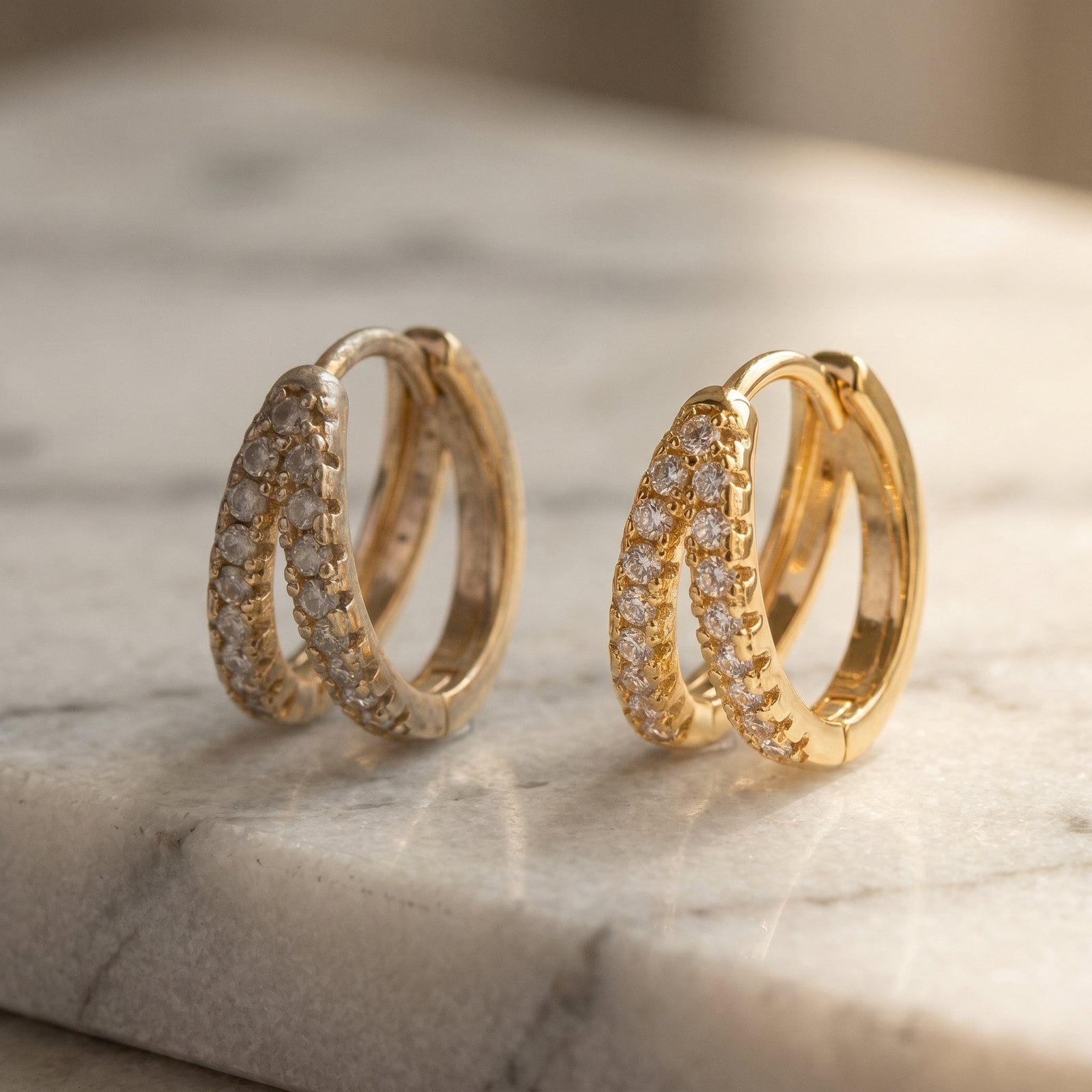
The care habits above extend any piece's lifespan, but the single biggest factor in how long gold plated jewelry lasts is what you bought in the first place. No amount of care makes cheap brass-based plating last three years; no neglect will completely destroy quality 316L-based 18K plating in a year. If you are shopping for pieces built to last, our zircon hoop earrings are made on that 316L stainless steel base.
What to look for when buying for longevity:
- Base metal: 316L stainless steel — dramatically more durable than brass or copper. See our guide on hypoallergenic stainless steel jewelry for why the grade specifically matters
- Plating grade: 18K gold — richer color and better wear characteristics than 14K or lower purity plating. See 14K vs 18K gold plated guide for details
- Plating thickness: 2.5+ microns — thicker plating genuinely lasts longer. Most cheap "gold plated" pieces have under 0.5 microns. Quality pieces clearly specify plating thickness
- Waterproof construction — pieces genuinely built to tolerate water are made of materials that resist other forms of wear too
- Clear warranty — brands confident in their pieces offer 30-day return policies for skin reactions and 1-year warranties against manufacturing defects
- Transparency about materials — brands that clearly state base metal, plating thickness, and clasp specifications in product descriptions tend to build better pieces. Brands that use vague "metal alloy" language usually cut corners
For more on what "18K gold plated" actually means at the technical level, see our guide on what 18K gold plated jewelry is.
Browse the full Glozya shop or explore by category — bracelets, earrings, necklaces, and adjustable rings, all part of our waterproof jewelry collection. Every piece is 18K gold plated over 316L hypoallergenic stainless steel, genuinely waterproof, and designed to survive Canadian daily wear for years with the basic care habits above. Check new releases for the latest arrivals or current flash sale for discounted pieces, and shop confidently knowing your jewelry is built to outlast the trends that inspired you to buy it.
About the Author

Mohammad Aftab is the founder of Glozya, a Canadian 18K gold-plated jewelry brand he launched in 2023. He has over a decade of experience in e-commerce, email marketing, and brand design across DTC, retail, and digital media. He writes about jewelry care, style, and the everyday details that make a piece worth keeping.