Gold Plated vs Gold Filled vs Solid Gold: Buyer's Guide
In this guide
"Gold jewelry" is a term that means at least five different things, and the differences matter a lot for how long your piece lasts, how much it costs, and whether it's actually worth buying. Solid gold, gold filled, gold plated, gold vermeil, and fashion gold-tone jewelry are genuinely distinct categories — with gold content ranging from 100% to nearly 0%, and durability ranging from multi-generational to months. Canadian shoppers deal with an extra complication: gold filled pieces are harder to find in Canada than in the US, and Canadian daily life (shower water, hand-washing, humidity, winter) is unusually harsh on cheap plating. This guide breaks down each category honestly, including when each one actually makes sense — not just which is technically the most gold.
Unlike most "gold plated vs gold filled" guides that conclude "solid gold is always best," this one starts from the assumption you're making a practical jewelry buying decision with a real budget. Solid gold is the gold standard for investment pieces, engagement rings, and heirlooms. But for daily-wear fashion jewelry, the honest answer is more nuanced — and that's what this guide covers.
The Five Categories of "Gold" Jewelry
Before comparing any of them, it helps to understand what each term actually means. The five categories below are listed from highest gold content to lowest.
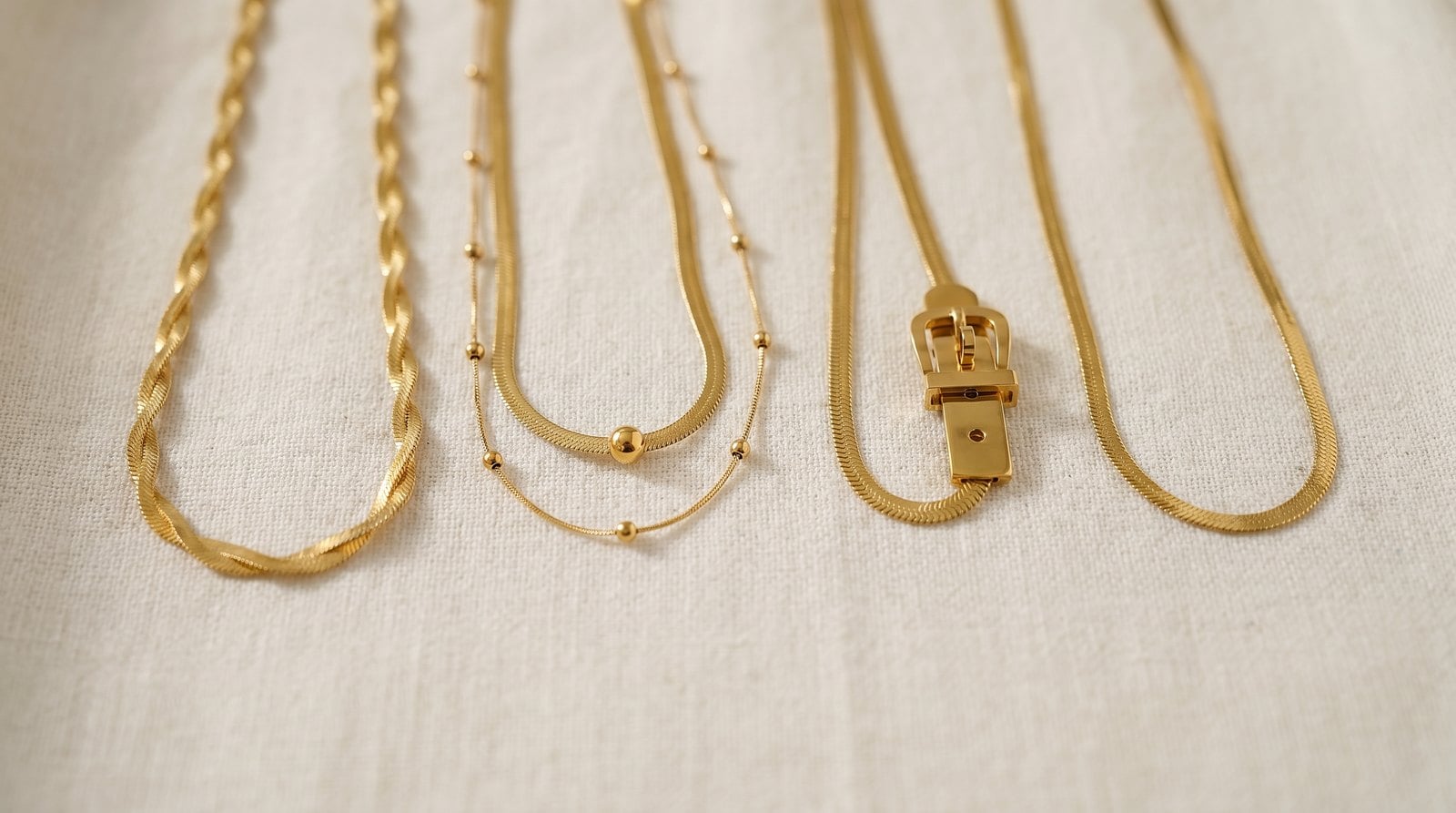
Solid gold
Solid gold is made entirely from gold alloy throughout the piece — no base metal underneath, no plating layer. Pure 24K gold is too soft for jewelry, so solid gold pieces use alloys: typically 10K (41.7% gold), 14K (58.3% gold), 18K (75% gold), or 22K (91.7% gold). Solid gold never tarnishes, never wears through, and retains its material value as long as the piece exists. It can be melted down and recycled. It's also the most expensive — a simple solid 14K gold chain necklace in Canada starts around $400–800, with more substantial pieces running $1,500+.
Gold filled
Gold filled jewelry consists of a solid layer of gold (usually 14K) mechanically bonded to a brass or copper core through heat and pressure. To be legally labeled "gold filled," the gold layer must make up at least 1/20th (5%) of the total weight — roughly 100 times more gold than a standard gold plated piece. The gold layer is thick enough to resist wear for decades with normal care. Gold filled is common in US jewelry but relatively rare in the Canadian direct-to-consumer market — most Canadian fashion jewelry brands skip it entirely and offer solid gold or gold plated, leaving a gap in the middle of the market.
Gold vermeil
Vermeil (pronounced "vur-may") is a specific type of gold plating where the base metal must be sterling silver — not brass or copper — and the gold layer must be at least 2.5 microns thick and 10K or higher purity. US federal standards require these minimums; Canadian practice generally follows the US definition. Vermeil sits between gold plated and gold filled in durability, typically lasting 2–5 years of regular wear before the plating starts to show wear. The sterling silver base adds cost (typically $80–300 for a piece), and the silver is hypoallergenic, which is a genuine selling point for sensitive skin.
Gold plated
Gold plated jewelry has a thin layer of gold electrochemically bonded to a base metal — most commonly stainless steel, brass, or copper. The gold layer thickness varies enormously: cheap costume jewelry can have a plating layer under 0.05 microns that wears off in weeks, while quality 18K gold plated pieces from reputable brands can have 2.5+ microns that lasts 2–3 years of daily wear. The base metal matters as much as the plating thickness — 316L hypoallergenic stainless steel is dramatically more durable and safer for sensitive skin than brass or copper. For more on what "18K gold plated" specifically means and how to evaluate plating quality, see our guide on what 18K gold plated jewelry really is, and the 14K vs 18K gold plated comparison.
Gold-tone or gold-colored fashion jewelry
This category covers everything that looks gold but isn't legally required to contain any gold at all. Zinc alloy with a gold-colored finish, brass with a yellow lacquer, or "gold-tone" plating that's measured in nanometers rather than microns all fit here. These pieces typically cost under $20 and last weeks to a few months of wear. This category is worth calling out separately because it gets marketed using gold language ("gold-colored," "gold finish") without actually qualifying as any of the four categories above.
Gold Content and Durability Compared
The differences between these categories are not subtle. Here's the actual gold content and practical durability for each, which is what determines whether a piece is a throwaway purchase or a long-term wardrobe investment.
| Category | Gold Content | Daily-Wear Lifespan | Key Trait |
|---|---|---|---|
| Solid gold | 41.7% to 91.7% gold throughout the entire piece | Lifetime | Never tarnishes. Retains metal value. |
| Gold filled | 5%+ gold by weight, bonded layer | 20–30 years possible | Won't tarnish or flake under normal conditions |
| Gold vermeil | 2.5+ microns of 10K+ gold on sterling silver | 2–5 years | Silver base is hypoallergenic |
| Quality plated on stainless steel | 2.5+ microns of 18K gold on 316L stainless steel | 2–3 years | Waterproof. Hypoallergenic base. |
| Cheap plated on brass | 0.05–0.5 microns on reactive base metal | Weeks to months | Wears through visibly under daily use |
| Gold-tone fashion | Trace to zero actual gold | Weeks | Purely cosmetic finish |
Gold Filled
5%+
Minimum gold by weight to legally claim the gold filled label under FTC rules
Standard Plated
<1%
Plated pieces contain less than 1% gold by weight — only the surface layer is gold
The gap between the first four categories and the last two is where most Canadian buyers get burned. A $15 piece labeled "gold jewelry" at a fast-fashion retailer and a $60 piece from a quality brand both look similar on the shelf, but they'll behave radically differently after two weeks of real daily wear.
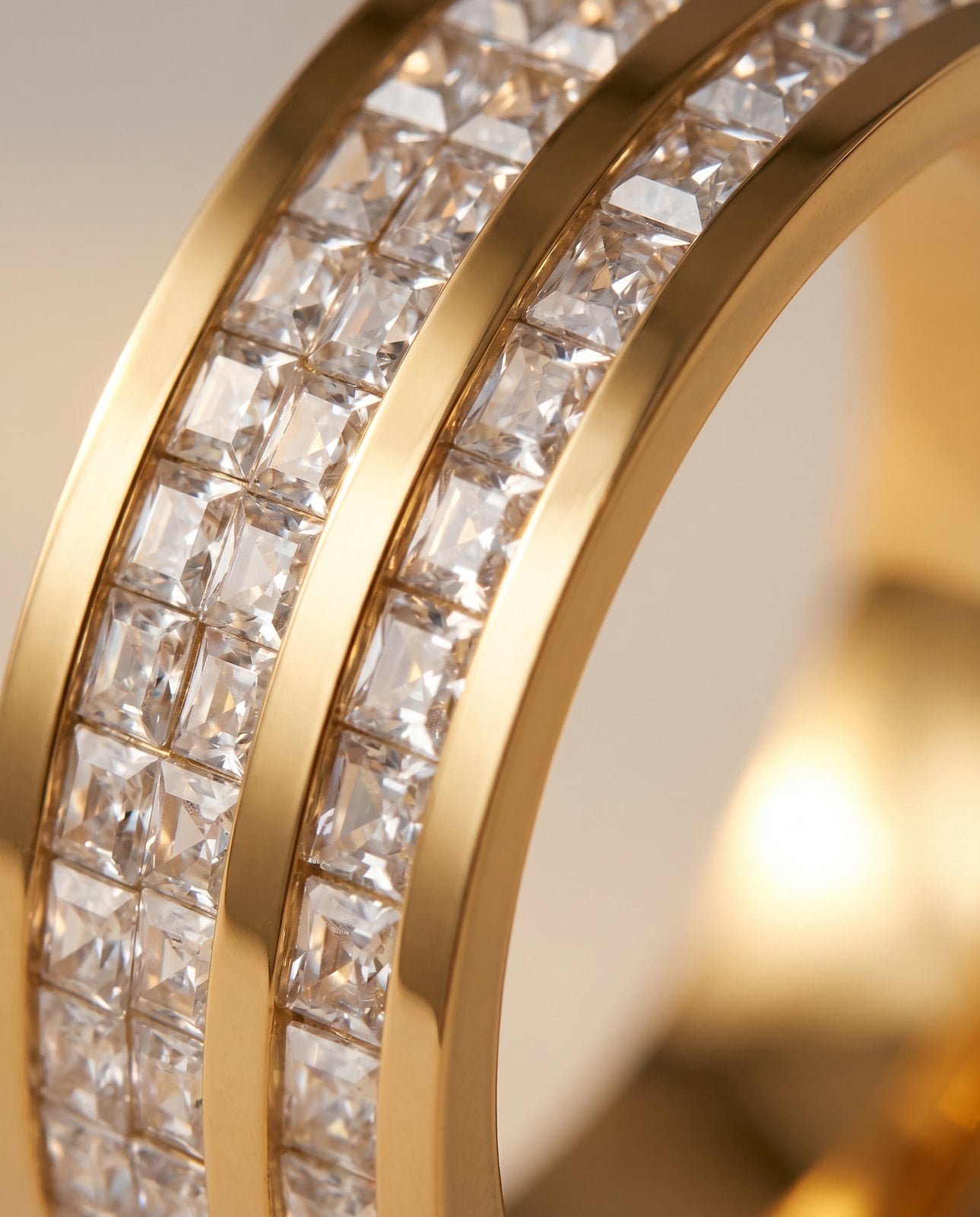
Price Ranges in the Canadian Market
Price differences across these categories reflect real differences in material and manufacturing cost, not just brand markup. Here's what you should expect to pay in Canada for comparable pieces.
Solid gold. A simple 14K solid gold chain necklace runs $400–800 CAD. Statement pieces, detailed settings, or 18K purity push this to $1,500–5,000+. Engagement rings with diamonds add another tier entirely. Solid gold prices also fluctuate with spot gold market pricing — solid gold jewelry values track commodity gold.
Gold filled. Most gold filled jewelry in Canada comes through US imports or specialty independent jewelers. Price range $80–300 for necklaces and bracelets, $150–500 for more detailed pieces. Gold filled is often a specialty category — it's harder to find major Canadian retailers stocking it consistently.
Gold vermeil. $80–300 for daily-wear pieces, $300–800 for statement pieces. The sterling silver base adds roughly $40–80 to the cost of comparable plated pieces, which is what the vermeil premium actually reflects — the better base metal, not the gold layer itself.
Quality gold plated on stainless steel. $25–80 for everyday pieces, $80–150 for statement pieces. This is the category where the price difference between "quality" and "cheap fashion" matters most. A $60 piece from a brand built on 316L stainless steel with 18K plating performs very differently from a $20 piece with unclear plating on unclear base metal. Browse the Glozya shop for examples in this tier.
Cheap gold plated or gold-tone fashion. $5–25. These pieces serve a real purpose — a single-wear event, a costume, a trendy piece you know will be outdated in months — but they don't belong in a daily rotation.
| Category | Everyday Pieces | Statement Pieces |
|---|---|---|
| Solid gold | $400–800 (14K chain) | $1,500–5,000+ |
| Gold filled | $80–300 | $150–500 |
| Gold vermeil | $80–300 | $300–800 |
| Quality plated on stainless steel | $25–80 | $80–150 |
| Cheap plated / gold-tone | $5–25 | Not recommended |
Which Category Is Right for You?
The honest answer is that different categories serve different purposes, and the right choice depends on what you're actually buying for. Here's how the decision usually breaks down.

For investment pieces, engagement rings, and heirlooms
Solid gold. Specifically 14K or 18K for engagement rings and substantial pieces. The metal value alone justifies the price over time, and these pieces are meant to outlast multiple decades of wear. Don't compromise here — a gold filled or gold vermeil engagement ring will not survive a lifetime of daily wear, and replacing it later means buying twice.
For long-term daily-wear pieces you'll keep for a decade or more
Gold filled, if you can find it, or quality 18K gold plated on 316L stainless steel. Both will outlast cheap fashion pieces by a decade or more. The choice between them often comes down to availability — if a brand you trust sells gold filled, that's the safer bet for very long-term wear. If gold filled isn't available in the style or budget you want, quality stainless-steel-based plated pieces are a close substitute for most practical purposes.
For daily-wear fashion jewelry you want to replace every 2–5 years
Quality 18K gold plated on stainless steel or gold vermeil. Both hit the sweet spot of real quality and accessible price. The practical difference: vermeil's sterling silver base is universally hypoallergenic; 316L stainless steel is also hypoallergenic but can be slightly more durable against impact and heavy daily wear. For Canadian buyers specifically, quality gold plated on stainless steel has one additional advantage: waterproof construction is standard, while vermeil generally isn't designed for continuous water exposure.
For trendy pieces, event wear, or very short-term use
Gold plated fashion jewelry at the lower price tier is acceptable — as long as you're honest that it's for short-term use. A $15 piece for a specific outfit or event doesn't need to last three years. Just don't let yourself buy this category for daily-wear purposes, because it won't survive.
Our full shop focuses on the category we know best: 18K gold plated over 316L hypoallergenic stainless steel. Every piece is waterproof, hypoallergenic, and designed specifically for Canadian daily wear — showers, winters, handwashing, workouts. Browse bracelets, earrings, necklaces, or adjustable rings by category, or see the latest new releases.
The wrong move is buying the wrong category for the wrong use case.
— The Glozya Journal
What the Stamps and Markings Actually Mean
Jewelry stamps are legally regulated and reveal exactly what you're buying — but they're easy to misread if you don't know the conventions.
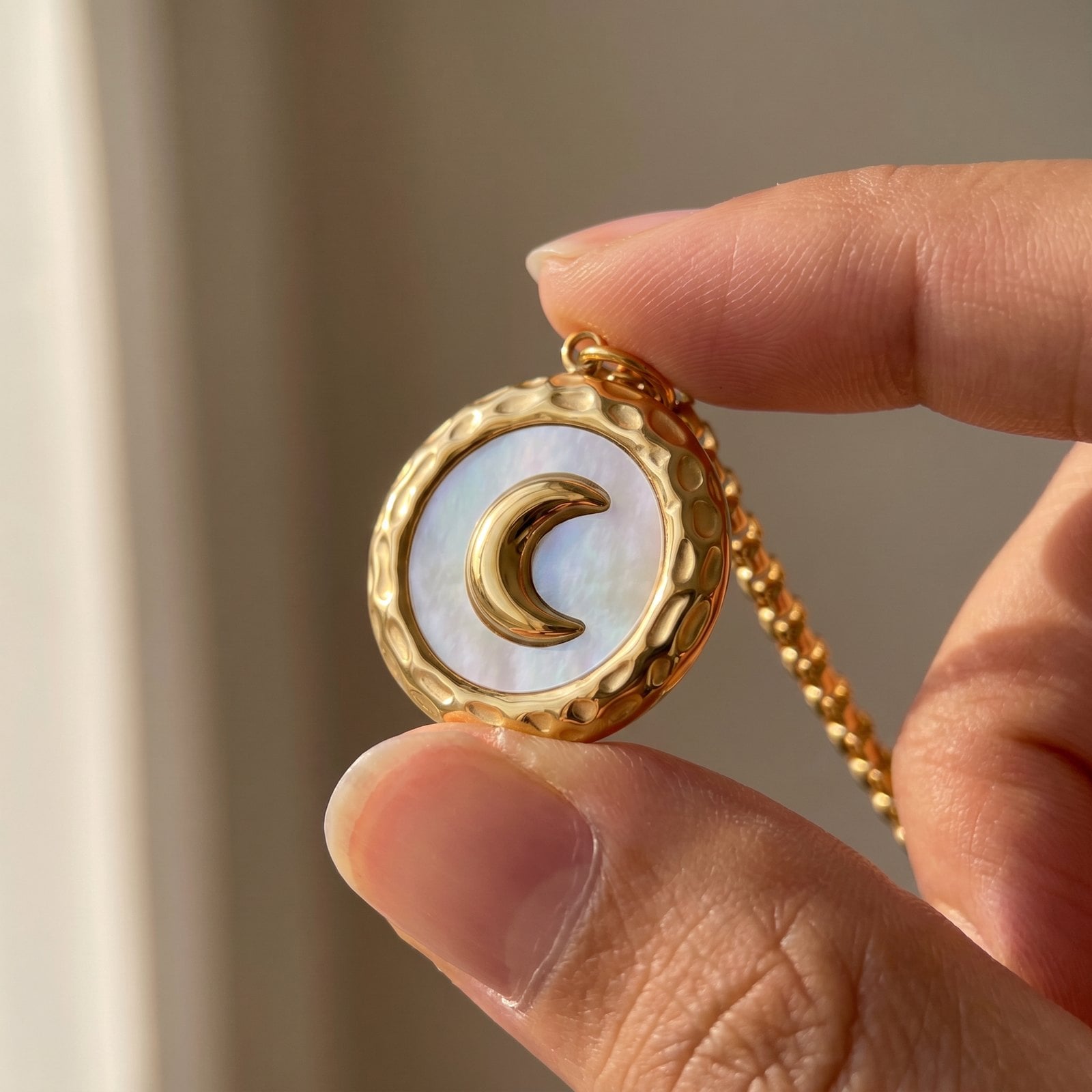
| Stamp | What It Means |
|---|---|
| "14K" or "14K 585" | Solid 14K gold. 585 is the parts-per-thousand purity mark (58.5% gold). |
| "18K" or "18K 750" | Solid 18K gold. 750 is the purity mark (75% gold). |
| "1/20 14K GF" or "14/20 GF" | Gold filled. 14K gold layer making up 1/20th of total weight. |
| "925" or "Sterling" | Sterling silver, no gold plating. |
| "925 Vermeil" or "Vermeil 925" | Gold vermeil on a sterling silver base. |
| "18K GP," "GP," or "Gold Plated" | Gold plated (18K gold layer, but base metal varies — ask the brand). |
| "18K HGE" or "Heavy Gold Electroplate" | Thicker gold plating (100+ microinches). |
| "Gold-tone," "Gold-colored," or no stamp | Typically non-precious base metal with cosmetic gold finish. |
The Canadian Daily Wear Reality
There's a specific reason this guide emphasizes the difference between quality stainless-steel-based 18K plating and generic gold plated jewelry: Canadian daily life is unusually harsh on jewelry, and most plating-quality information is written for milder climates.
Canadian conditions that accelerate plating wear:
- Frequent handwashing — Canadians wash hands more often than in many markets, and soap and water contact is the primary wear factor for bracelets and rings.
- Shower water exposure — daily showering with jewelry on is increasingly common, and shower water contains minerals and soap that interact with plated surfaces.
- Cold-to-warm temperature cycles — winter cold followed by indoor warmth causes thermal expansion and contraction in jewelry, stressing the bond between plating and base metal.
- Humidity swings — dry indoor winter heating followed by humid summers is harder on reactive base metals like brass or copper than steady climates.
- Salt from winter road exposure — airborne road salt during Canadian winters accelerates corrosion on reactive base metals.
The practical implication: a "gold plated" piece on brass that would last 18 months in a mild climate might show wear-through within 6–9 months of Canadian daily wear. Meanwhile, quality 18K plating on 316L stainless steel tolerates all of the above without measurable degradation for years.
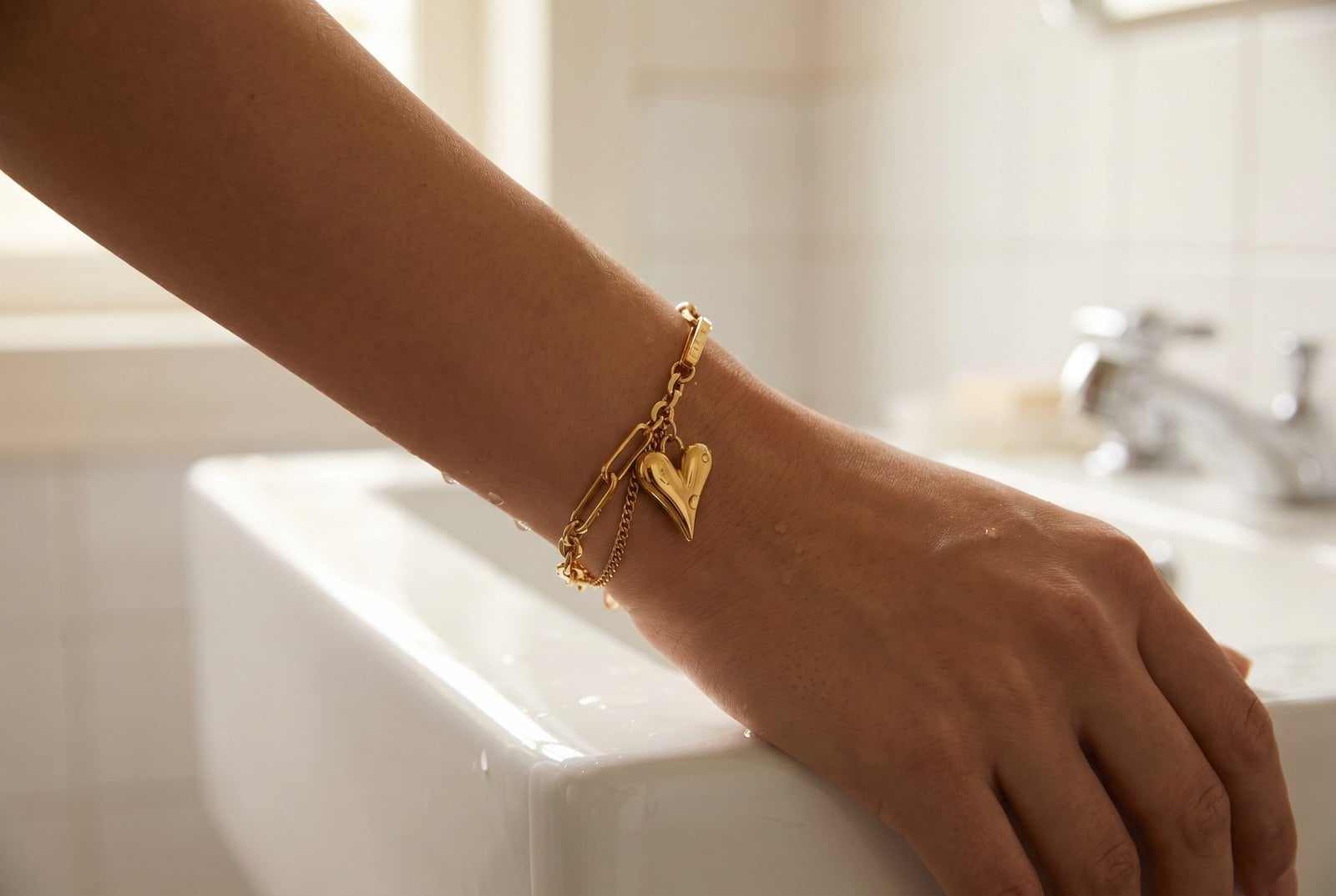
This is why the base metal matters as much as the gold type for Canadian buyers specifically. For the technical breakdown on why stainless steel is the right base for daily Canadian wear, see our guide on hypoallergenic stainless steel jewelry.
How to Make Any Category Last Longer
Regardless of which category you buy, basic care practices substantially extend the life of any gold jewelry. Some of these matter more for plated pieces, but all of them apply to some degree across categories.
- Put lotion and perfume on first — let them absorb for a minute, then put on jewelry. Chemical exposure is the single largest cause of premature plating wear.
- Rinse after workouts and beach days — sweat salt and chlorine are particularly hard on plated and gold filled pieces. Gentle rinse with fresh water, pat dry.
- Store pieces separately — tangled chains damage each other mechanically. Use a divided jewelry tray or individual pouches for stored pieces.
- Avoid ultrasonic cleaners for plated pieces — they can accelerate bond degradation. Gentle soap and soft cloth is safer for plated jewelry.
- Keep cleaning gentle — polishing cloths are fine for solid gold, but abrasive on plated surfaces. Even with gold filled, stick to mild soap and soft cloth rather than aggressive polishes.
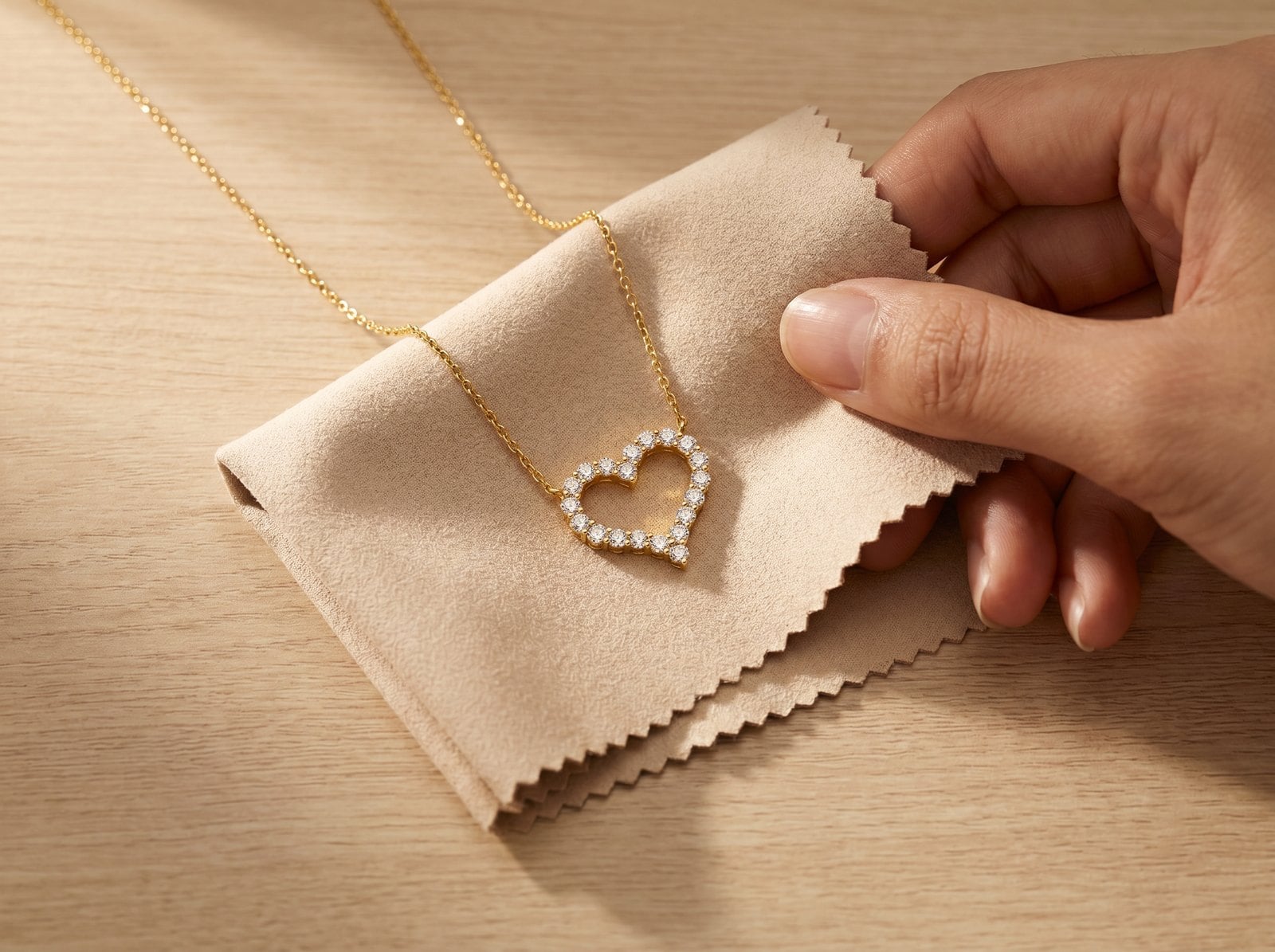
For more detailed care guidance specific to gold plated pieces, see our guide on making gold plated jewelry last longer.
When to Step Up and When to Step Down
Most practical buyers eventually consolidate their jewelry collection around a mix — solid gold for sentimental anchor pieces, gold filled or quality plated for regular-rotation daily wear, and deliberate short-term pieces for trend experimentation. The wrong move is buying the wrong category for the wrong use case.
Situations where it's worth stepping up to a higher category:
- Pieces you plan to wear daily for 5+ years without removing — step up to solid or gold filled.
- Pieces with sentimental significance (engagement, milestone gifts, family pieces) — solid gold.
- Pieces worn against reactive skin or where reaction history exists — any hypoallergenic base (316L stainless, sterling silver, or solid gold).
Situations where stepping down makes sense:
- Trendy pieces with a known short lifespan — cheap plated is fine as long as you're honest about it.
- Event-specific pieces (a single wedding, a themed outfit) — cheapest category that looks right.
- Experimental style choices you're not yet committed to — quality plated before investing in solid.
The Canadian market specifically has a good range across these tiers, though gold filled availability is the notable gap. For daily-wear fashion pieces under $100, quality 18K plating on 316L stainless steel is the format that most reliably works across Canadian conditions. For trend context on what's shaping Canadian jewelry choices right now, see our companion guide on Canadian jewelry trends, or the 14K vs 18K gold plated guide for the specific plating grade comparison.
Browse new releases for the latest arrivals, the current flash sale for discounted pieces worth considering, or explore by category — bracelets, earrings, necklaces, and adjustable rings. All pieces at Glozya are 18K gold plated over 316L hypoallergenic stainless steel, built specifically for Canadian daily wear, and ship free across Canada on orders over $75.
About the Author

Mohammad Aftab is the founder of Glozya, a Canadian 18K gold-plated jewelry brand he launched in 2023. He has over a decade of experience in e-commerce, email marketing, and brand design across DTC, retail, and digital media. He writes about jewelry care, style, and the everyday details that make a piece worth keeping.