How to Layer Necklaces: A Canadian Daily Wear Guide
In this guide
Necklace layering has moved from occasional styling trick to everyday jewelry wardrobe for Canadian women through 2026 — but the rules for making it work are specific, and most guides written for fine-jewelry budgets don't translate well to practical daily wear. A good layered necklace look isn't about owning more necklaces; it's about choosing the right lengths, textures, and base metals so the stack actually works against your skin, under your sweaters in winter, and through showers and handwashing without coming off. This guide covers how to layer necklaces for Canadian daily life — not just for photographs.
The core rules of necklace layering are the same everywhere: vary lengths, mix textures, pick a focal point, keep the stack odd-numbered. But the practical execution for Canadian buyers needs two additions most guides skip. First, every piece in a daily-wear stack needs to be waterproof and hypoallergenic, because a layered stack has more skin contact surface than any single piece. Second, Canadian winters mean scarves, turtlenecks, and sweater layering — which changes what lengths actually work in daily wardrobes.
Building the Stack: Lengths, Structure, and Foundation
Most necklace layering success comes from a few specific structural choices — length hierarchy, piece count, and focal positioning. Once these are right, the stack reads as intentional even when the individual pieces are simple.
The core principle: lengths do the work, not volume
The biggest mistake in necklace layering is treating it as "add more necklaces." The stacks that read as intentional have a clear length hierarchy where each piece sits at a visibly different point on the collarbone and chest. When lengths are too similar, the chains overlap and tangle; when lengths are too different, they stop reading as a coordinated stack.
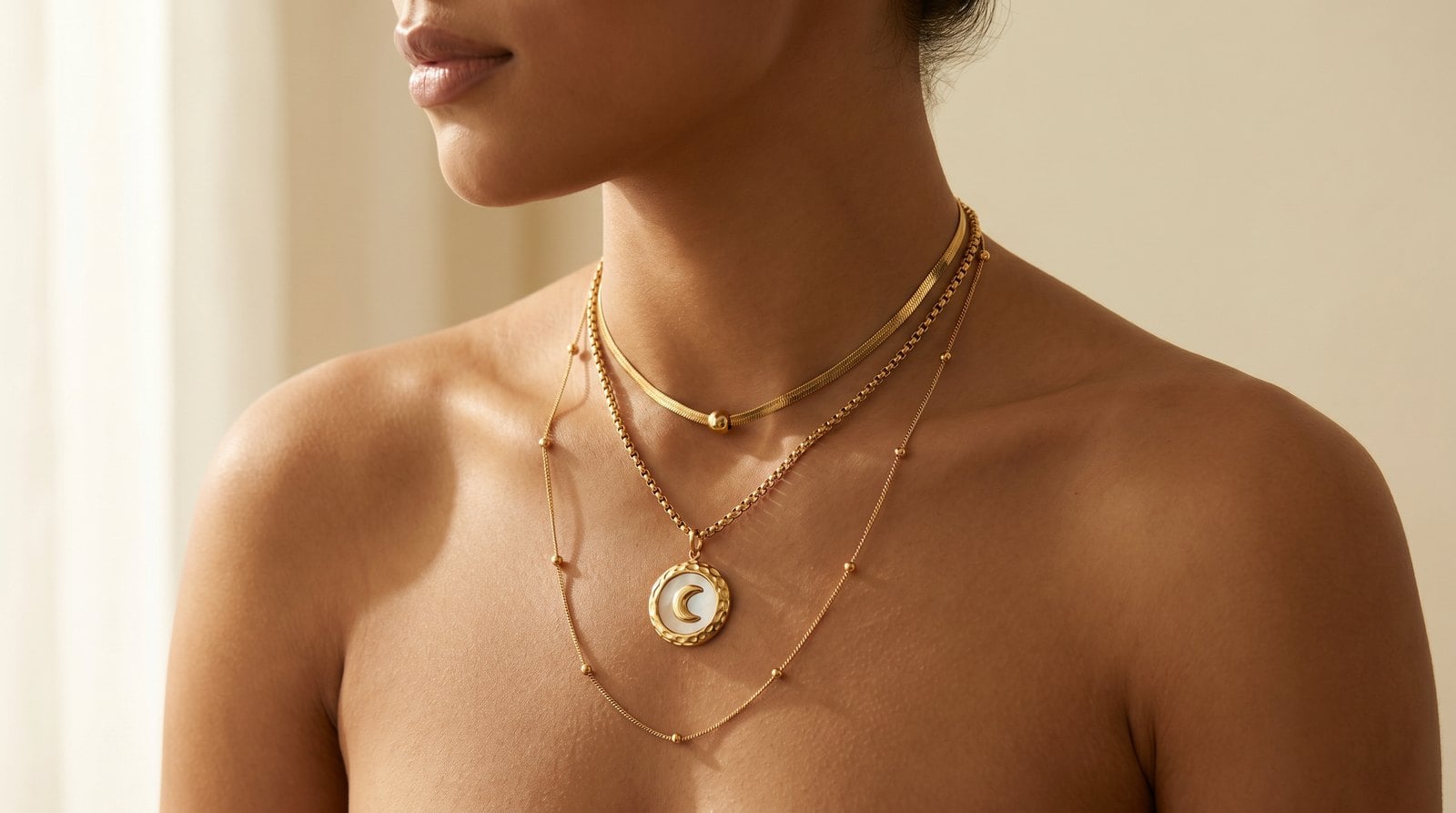
The working rule is at least 2 inches of vertical space between each necklace. This creates clean separation between pieces without gaps that break the layered look. A standard 3-layer stack — which is the starting point for most daily-wear layering — works well at 14-16 inches (choker or short), 18 inches (princess, sitting at the collarbone), and 20-24 inches (matinee, resting at or just below the collarbone).
Minimum spacing
2 inches
Use at least 2 inches of vertical space between each necklace so the layers stay visually separate and reduce overlap.
Foundation stack
3 layers
A 3-layer stack gives enough visual depth to read as layered without turning into an everyday maintenance problem.
Beyond length, the three other variables matter:
- Texture variation — mixing chain styles (herringbone, box, curb, rope, paperclip) so each piece reads as distinct. Same-texture stacks look like one wide chain rather than a stack
- Weight balance — combining thinner and thicker chains so the stack has hierarchy. All-delicate looks weak; all-chunky looks heavy
- Focal point — one pendant or charm that anchors the stack visually, typically on the middle chain
When a layered necklace stack reads as "intentional," these four variables are working together.
— The Glozya Journal
When it reads as "random" or "cluttered," usually one or two are missing.
Standard necklace lengths and what they do
Understanding how each standard length actually sits on your body is the foundation for building any layered look. These measurements assume an average neck circumference (about 13-14 inches at the base of the neck) — adjust 1-2 inches longer or shorter for taller or petite proportions.
| Length | Measurement | Where it sits | How to use it |
|---|---|---|---|
| Choker | 14-16 inches | Sits snugly at the base of the neck. | The top layer in most stacks. Adds definition and draws the eye upward. Works with V-necks, crew necks, and open collars. |
| Princess | 17-18 inches | Rests just above or at the collarbone. | The most versatile daily-wear length. Works alone or as a middle layer. Most pendant necklaces are designed for this length. |
| Matinee | 20-24 inches | Falls at or just below the collarbone. | Works as the longest layer in most 3-piece stacks. Ideal for statement pendants or focal charm pieces. |
| Opera | 28-34 inches | Sits on the chest or just above the sternum. | Used in more elaborate stacks of 4+ pieces, or as a standalone with minimal layering. |
| Rope | Over 36 inches | Falls below the sternum. | Dramatic statement piece. Rarely practical for layered daily wear in Canadian wardrobes because of how it interacts with scarves and layered tops. |
For Canadian buyers building a first layering collection, the most useful lengths are 16-inch choker, 18-inch princess, and 22-inch matinee. These three cover the majority of daily-wear layering needs and work across most outfits from work wardrobes to casual weekend looks.
The 3-piece foundation stack
If you're starting to layer necklaces for the first time, a 3-piece foundation stack is where most people land. It creates enough visual depth to register as "layered" without overwhelming the outfit or becoming a maintenance headache.
- Position 1 (shortest): A 16-inch delicate choker or short chain. This sits at the base of your neck and anchors the stack's highest point. A thin chain, a small pendant, or a simple choker works here. Keep this piece relatively understated — it frames the longer chains rather than competing with them.
- Position 2 (middle): An 18-inch princess-length chain. This is usually where your focal point lives — a meaningful pendant, a charm, or a slightly more substantial chain. Position 2 is what people see first when they look at a layered stack because it sits at natural eye height.
- Position 3 (longest): A 22-inch matinee-length chain. This creates the cascading effect that makes a stack read as "layered" rather than "grouped." Often this is a longer pendant necklace or a longer statement chain.
Our layered necklace sets are designed around this exact structure — pre-matched lengths and proportions that work together from the first wear. For pieces you'd build a custom stack around, see pendant necklaces for focal pieces and chain necklaces for base layers.
Visual Variation: Texture and Metal
Once the length structure is in place, visual variation through texture and metal choice is what separates a stack that looks "okay" from one that looks "styled."
Texture variation: the difference between intentional and flat
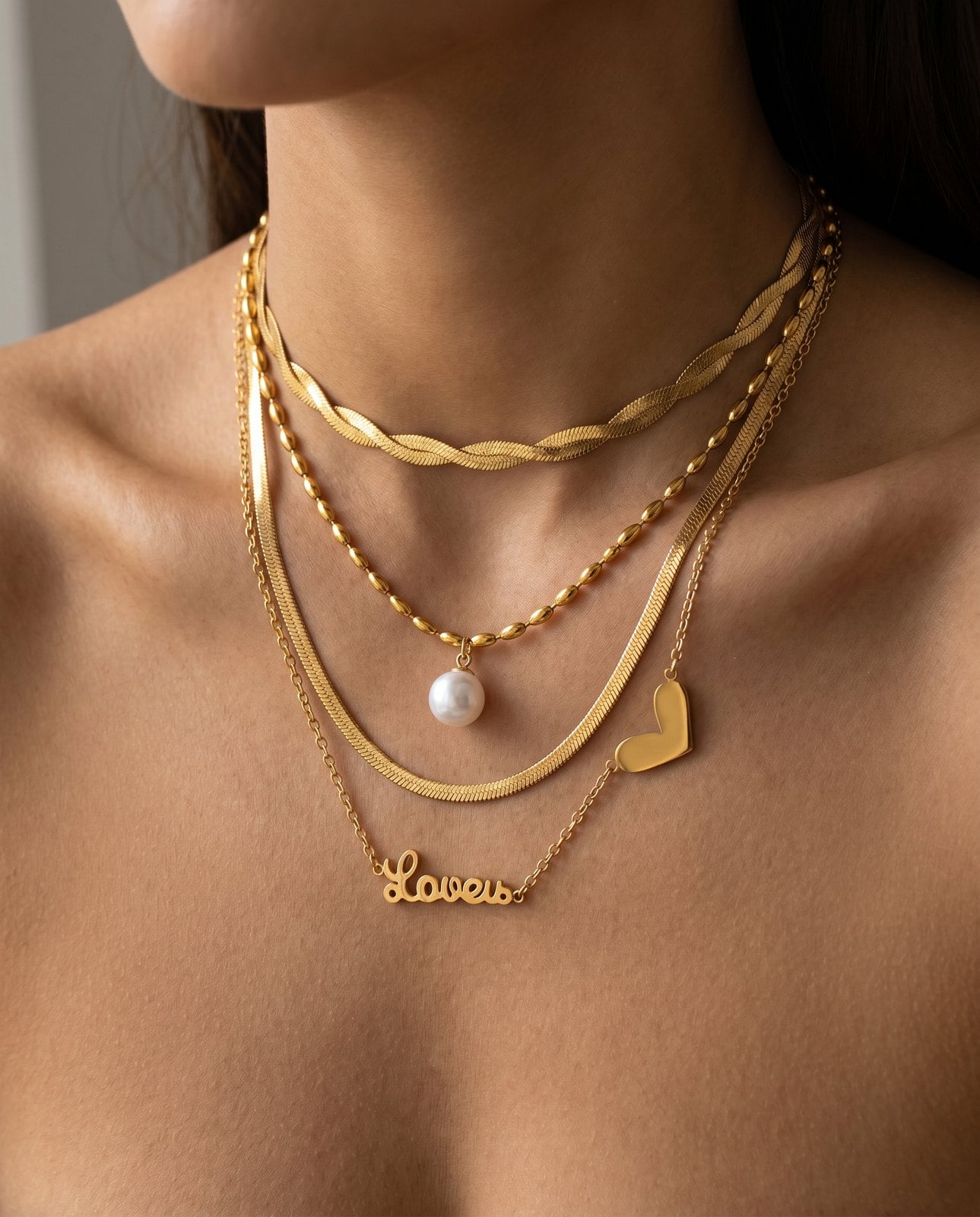
A stack of three chains all in the same chain pattern — all box chains, or all herringbone — reads as one thick necklace, not three distinct layers. The eye can't tell where one piece ends and the next begins. Texture variation fixes this.
The easiest ways to vary texture across a necklace stack:
- Chain pattern mix — combine a flat herringbone or curb chain with a rope or box chain. Even if both are yellow gold, the pattern difference creates visible separation
- Smooth versus beaded — pair a smooth chain with a small-beaded or satellite chain. The textural contrast gives each piece its own visual identity
- Flat versus dimensional — a flat Figaro chain next to a rope chain creates depth that makes the stack look layered rather than stacked
- Pendant versus plain — one chain with a focal pendant and other chains plain. This is almost always better than multiple pendant chains, which compete for attention
Mixed metals in necklace layering
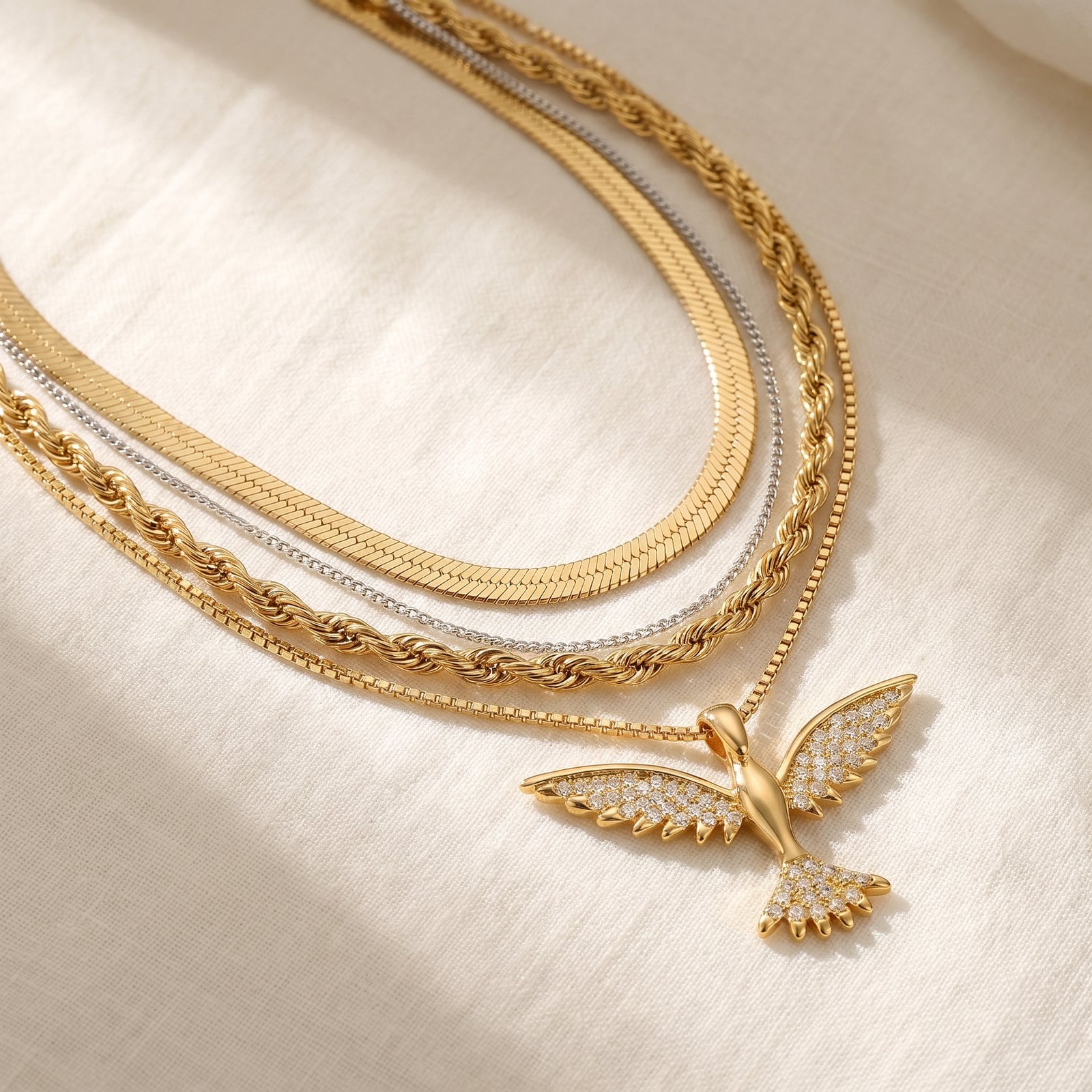
Like bracelet stacking, necklace layering through 2026 increasingly leans toward intentional mixed metals rather than strict single-metal purity. Yellow gold as the dominant tone with one silver or white-gold accent piece is the combination that reads most modern.
What makes mixed-metal necklace stacks work:
- Dominant plus accent — not 50/50. If you're wearing three necklaces, let two be gold and one be silver, or two silver and one gold. Equal-split mixing reads as indecisive
- Bridge pieces help — a two-tone chain (gold with silver accent links, or gold with pearl) is an intentional mixing cue that makes a mixed-metal stack feel coordinated rather than random
- Keep finishes consistent — all polished, or all brushed. Don't combine matte, polished, and textured finishes in the same mixed-metal stack
- Length hierarchy matters more — if metals are mixed, the 2-inch spacing rule between lengths matters even more to keep the stack visually organized
For Canadian buyers, mixed-metal necklace layering is practical because 18K gold plated pieces over 316L stainless steel pair cleanly with silver-tone stainless steel pieces from the same catalog — both share the same durable base metal and neither will tarnish or react with daily wear.
Why Waterproof and Hypoallergenic Matter More When Layering
Here's the rule most necklace layering guides skip: a layered stack multiplies your jewelry's skin contact surface, and any weakness in any single piece affects the whole stack. This matters for two specific reasons.
Water exposure
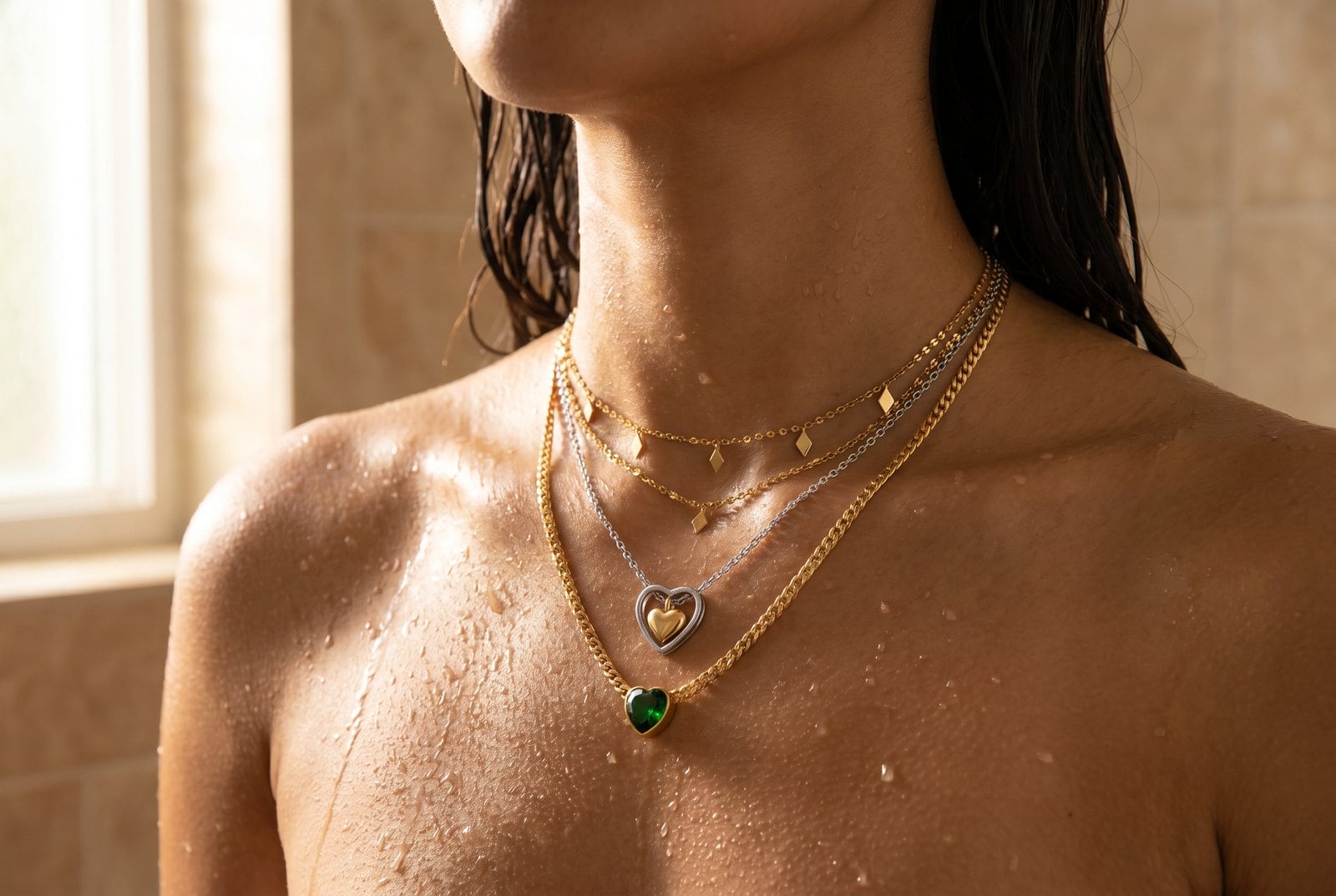
If you wear three necklaces daily and one of them isn't waterproof, the entire stack comes off every time you shower, wash your face, or get caught in rain. And Canadian women deal with water contact constantly — daily showers, handwashing every hour at work, summer humidity, winter indoor heating cycles that dry skin and shift jewelry around. A three-necklace stack that has to come off 10+ times a day is a stack that ends up forgotten on your dresser within a month.
The fix is buying every piece in your stack from waterproof construction — 316L stainless steel base with 18K gold plating. This lets you put on the stack in the morning and keep it on through the full day, including shower, workouts, and cooking. Our hypoallergenic necklace collection is built entirely on this format specifically because layered daily wear doesn't work any other way.
Cumulative nickel exposure
A single necklace touches your skin in one small area — typically the back of your neck where the chain rests. A layered stack of three necklaces touches your skin across a wider area, with pieces moving against each other and your collarbone throughout the day. If any piece contains free nickel or uses a reactive base metal, you'll notice the reaction faster and across a larger skin area than you would with a single necklace.
Health Canada estimates 10-20% of Canadian women react to nickel in jewelry, and the sensitivity tends to compound with repeated exposure. The practical implication: every piece in a layered necklace stack needs to be genuinely hypoallergenic, not just your favorite one. 316L stainless steel bases are the most reliable format for this. For the full technical breakdown on how 316L works and how to verify a piece is legitimately hypoallergenic, see our guide on hypoallergenic stainless steel jewelry.
Anti-Tangle Construction Matters for Layering
Beyond the visual rules, physical tangling is the most common reason people abandon layered necklace stacks within weeks. Some chain types tangle easily with each other; others resist tangling even in busy stacks. Knowing which is which saves genuine frustration.
| Chain type | Layering behavior | Best use |
|---|---|---|
| Flat chains | Flat-profile chains lie flat against the chest and don't twist around other chains. | Herringbone, Cuban, and curb chains resist tangling well in layered stacks. |
| Box chains | The rigid box-link structure moves independently without wrapping around other chains. | A strong base-chain option when you want clean separation. |
| Figaro chains | The alternating link pattern creates breaking points that prevent extended twisting. | Useful when you want visible texture without excessive snagging. |
| Very delicate cable chains | Ultra-thin round chains wrap around anything they contact. | Use carefully and avoid stacking several delicate cable chains together. |
| Rope chains | The twisted structure catches on other chains and pendants. | Limit to one rope or heavily textured chain per stack. |
| Beaded chains | Beads can snag on other chains, especially finer ones. | Best balanced with flatter chains that stay organized. |
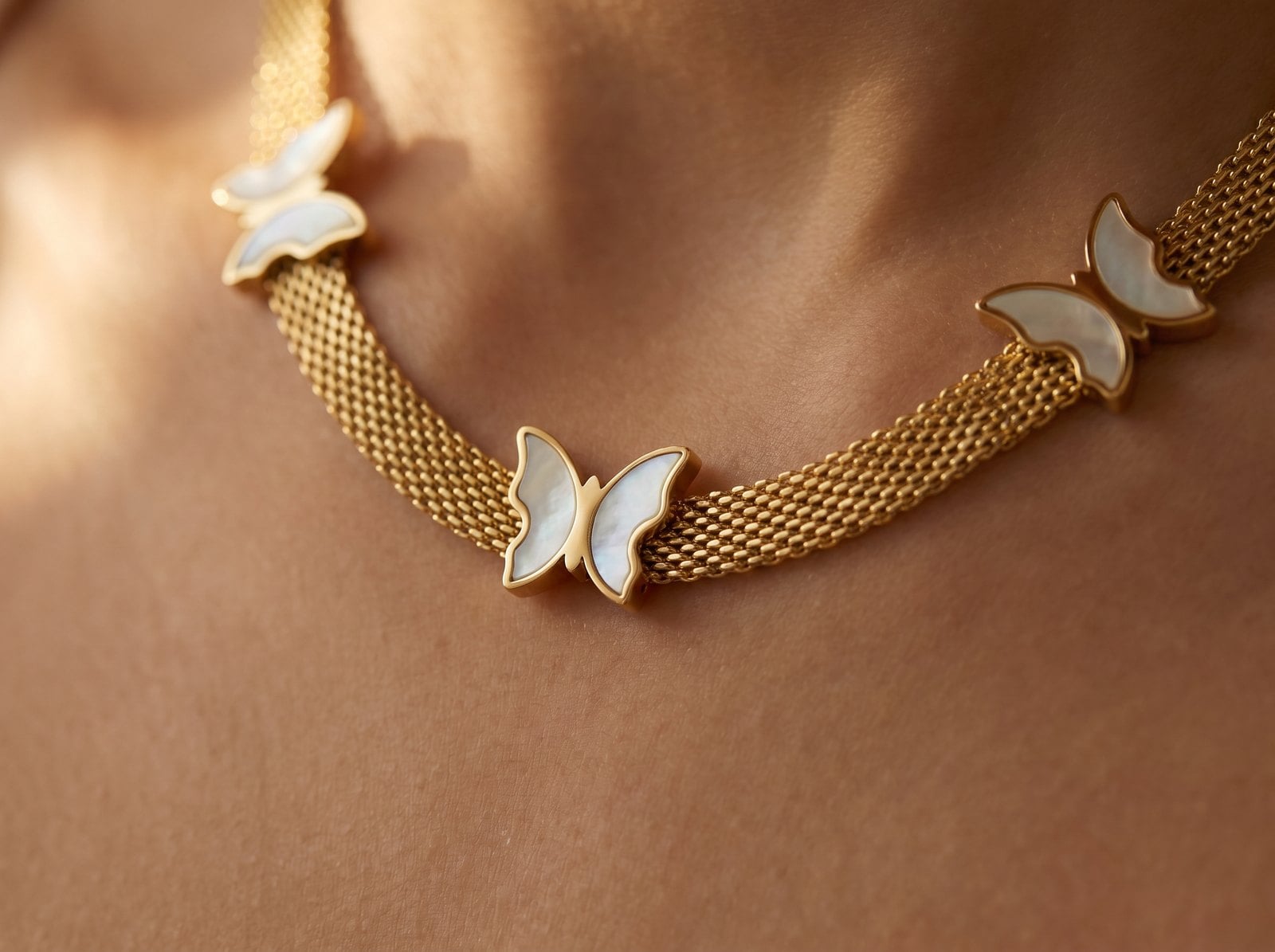
This doesn't mean you can't include rope chains or delicate cables in a layered stack — just that you need to balance them with flat or box chains that don't compound the tangling problem. A practical layering rule: at most one rope or heavily-textured chain per stack, paired with flat or box chains that stay organized.
Necklines and What Works With What
The outfit's neckline interacts with your necklace stack in ways that can either complement the layering or completely undermine it. Getting neckline compatibility right matters especially for Canadian wardrobes where layering tops and sweaters dominates fall and winter.
| Neckline | What works | Why it works |
|---|---|---|
| V-necks | Chains can be any length because they'll follow the V's angle naturally. | The neckline frames a layered stack beautifully. V-necks are the most flattering neckline for showcasing multi-piece stacks. |
| Scoop necks and wide crews | Medium stacks at 16-22 inch range. | Very long pieces at 24 inches or more can disappear into the neckline rather than cascading visibly. |
| Crew necks and high crews | Short chains at 14-16 inches as the primary layer, with longer pieces at 22 inches or more. | Short chains stay visible above the neckline while longer pieces extend meaningfully past it. |
| Turtlenecks | Longer pieces at 20-26 inches. | Layered necklaces over turtlenecks sit visibly on the fabric rather than compressing under it. |
| Button-down shirts | Layered necklaces with the top 1-2 buttons undone. | The open buttons create a V that mimics the V-neck's effect. |
| High-neck dresses or blouses | Longer pieces at 22 inches or more. | Chokers and short pieces disappear under high necks, while longer layers fall visibly below the neckline. |
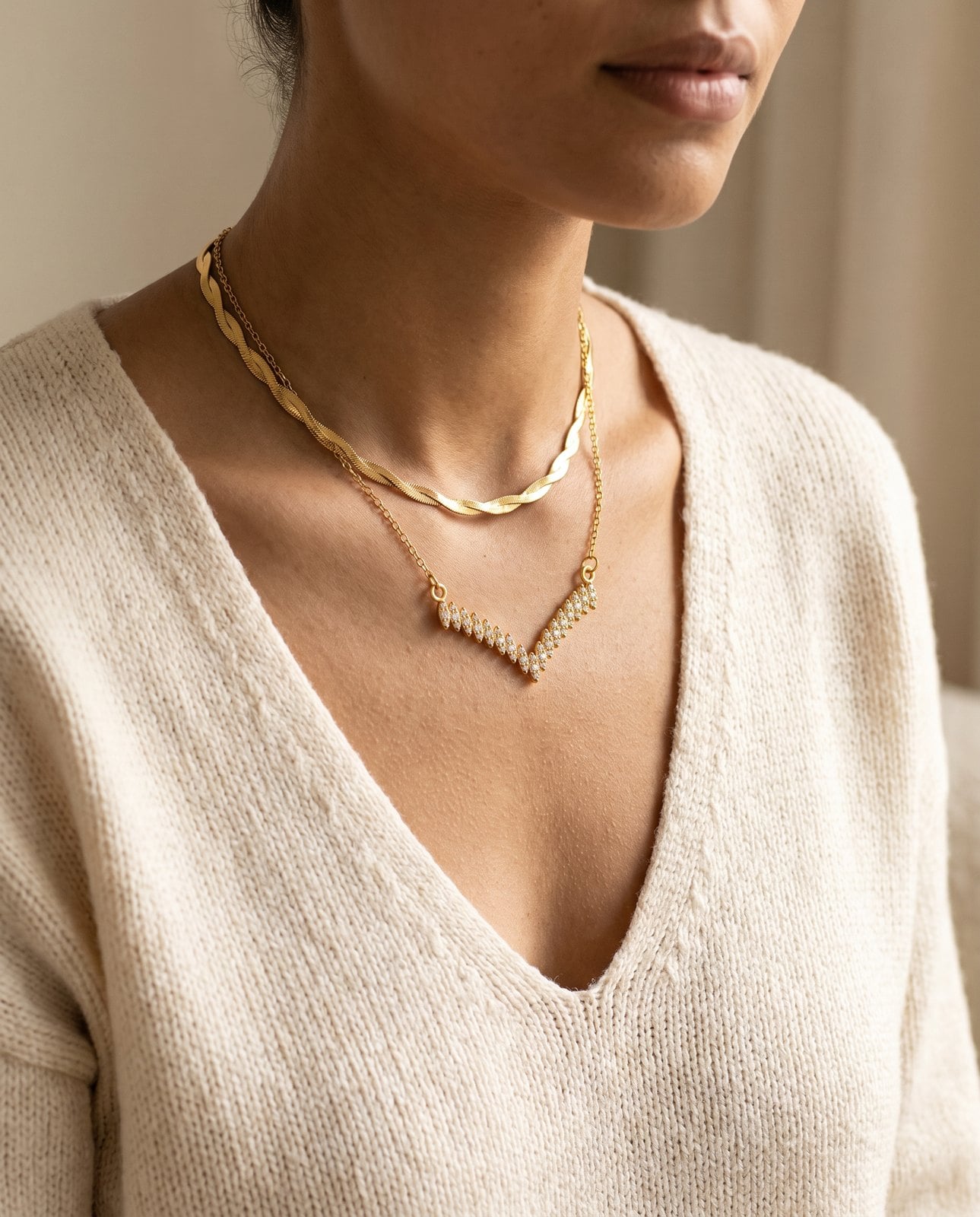
For Canadian buyers specifically, the turtleneck and layered-sweater combinations during fall and winter mean your daily-wear necklace stack often sits on fabric rather than skin for several months each year. This changes what you want visually — more substantial pieces that register against fabric rather than dainty chains that need direct skin contrast to be visible.
Common Necklace Layering Mistakes
The failure patterns are consistent. If your layered stack isn't landing, one of these is usually the cause.
- Lengths too similar. Two necklaces at 17 and 18 inches look like one thick necklace, not two layers. Always aim for at least 2 inches of vertical separation between pieces. If you love two pieces that are similar lengths, wear them separately.
- Too many pendants. Pendants compete for visual attention. A stack with three pendant necklaces reads as cluttered even if the lengths and textures are varied. Rule of thumb: one pendant piece per stack, or at most one pendant plus one small charm. Everything else stays plain chain.
- All the same weight. Three delicate chains read as weak; three chunky chains read as overwhelming. Vary thickness across the stack — usually thinnest at top, thickest in the middle or bottom. The eye needs hierarchy to find a center of gravity.
- Single-metal monotony without texture variation. All-gold stacks work beautifully when chain textures are varied, but three smooth gold chains at the same thickness read as one chain. If you're sticking to one metal, texture has to do the variation work.
- Ignoring the neckline. A stack of three short chokers looks cramped under a high-neck sweater. A long rope chain disappears into a deep V. Match stack length range to what your outfit's neckline actually does.
- Cheap chain in a quality stack. One piece that tarnishes, turns green, or breaks affects the whole stack. Either build the stack entirely from quality pieces or acknowledge it's a short-term stack.
Building Your Necklace Collection for Layering
Starting from zero and building toward a flexible layered collection is most sustainable as a gradual process. Here's the order most people find works.
- First piece: an 18-inch princess-length pendant necklace. This works alone for the first few months while you learn what weights and styles suit your wrist and face. A modest gold-plated stainless steel pendant or a simple chain with one focal element is the right starting piece.
- Second piece: a 16-inch delicate chain (no pendant). Added on top of your first piece, this creates your initial 2-piece layer. The plain chain lets the pendant on your first piece remain the focal point.
- Third piece: a 22-inch chain or longer pendant. Worn below your first piece, this completes a standard 3-piece stack. Choose a different chain pattern than your shorter chains for texture variation.
- Fourth piece onward: specialty additions. A longer rope or opera chain for dramatic looks. A choker for shorter stacks. A charm necklace with personal meaning. These become your stack's character rather than its foundation.
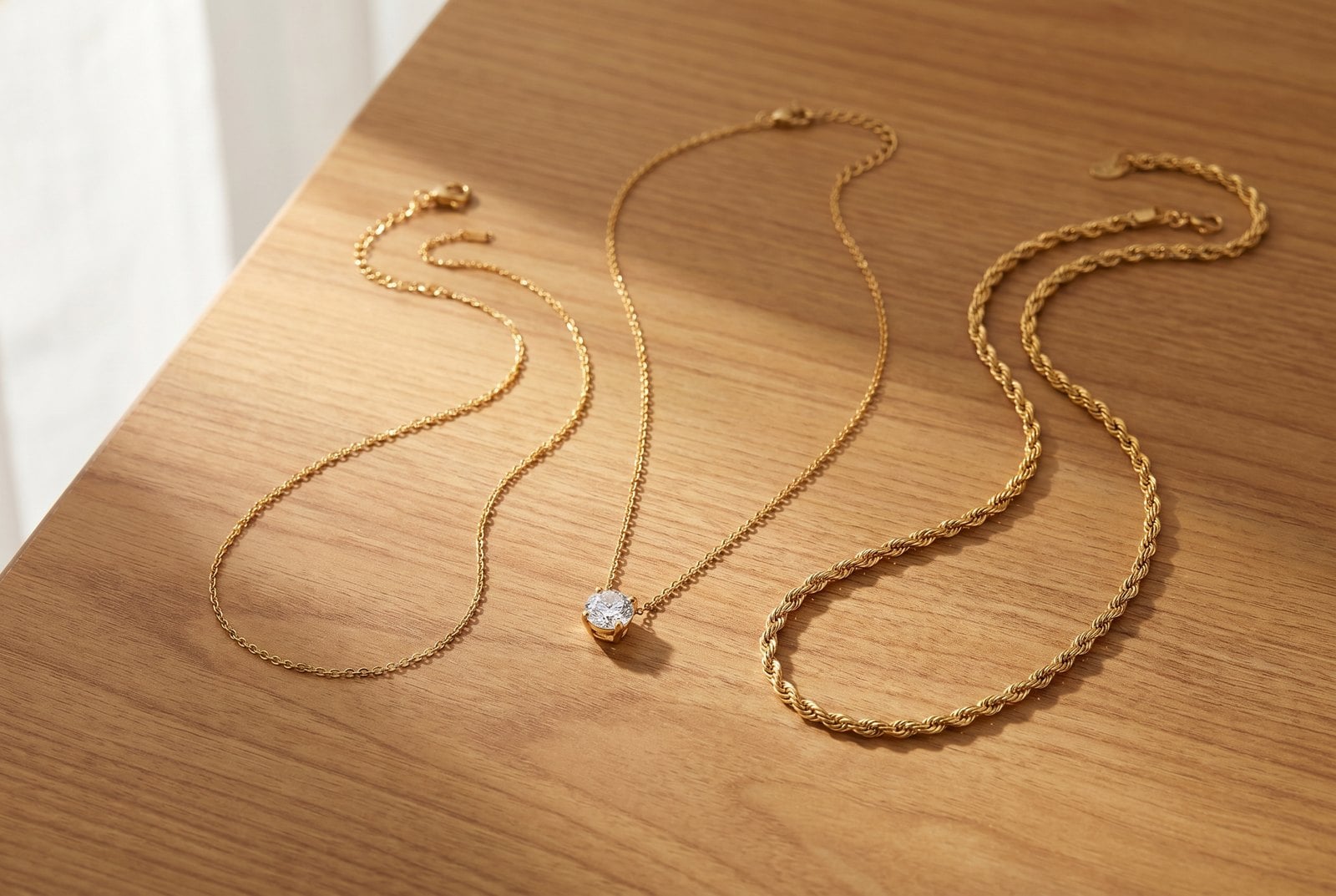
For Canadian buyers specifically, browse pendant necklaces for focal pieces, chain necklaces for base layers, pre-matched layered sets for starter combinations, or statement necklaces for occasion pieces. For trend context on what's shaping Canadian necklace choices overall, see our Canadian jewelry trends guide. For motif-specific layering — including the one-heart-per-zone rule that keeps stacks from looking costume — see our heart jewelry styling guide.
Browse new releases for the latest additions, check the current flash sale for discounted pieces worth adding, or explore the full shop. All Glozya pieces are 18K gold plated over 316L hypoallergenic stainless steel, waterproof, and ship free across Canada on orders over $75. For the bracelet equivalent of this layering guide, see bracelet stacking ideas. For keeping layered pieces looking new, see making gold plated jewelry last longer.
About the Author

Mohammad Aftab is the founder of Glozya, a Canadian 18K gold-plated jewelry brand he launched in 2023. He has over a decade of experience in e-commerce, email marketing, and brand design across DTC, retail, and digital media. He writes about jewelry care, style, and the everyday details that make a piece worth keeping.