Jewelry Trends Toronto Canada: 2026 Style Guide
In this guide
Toronto's jewelry scene in 2026 isn't just a smaller version of what's happening in New York, London, or Los Angeles. The city has its own rhythm — shaped by a climate that spans -20°C winters and 30°C summer humidity, a creative corridor running from Queen West through Ossington and into the Distillery District, a massive healthcare and professional-services workforce with specific jewelry needs, and a direct-to-consumer Canadian jewelry market that's matured faster than most comparable cities. What ends up trending here reflects all of that. This guide covers the jewelry trends actually showing up in Toronto wardrobes through 2026 — what people are wearing, where it's coming from, and why the Toronto specifics matter.
The global 2026 trend narrative is about a swing from minimalism to maximalism — chunky gold, mixed metals, bold layering, color revival. Toronto's version of that narrative has its own specifics: the maximalism is calibrated against practical daily wear, the mixed metals lean pragmatic rather than experimental, and the layering follows rules driven by real weather rather than fashion editorial fantasy. Here's what it actually looks like on Toronto streets and in Toronto closets.
The Nine Jewelry Trends Actually Worn in Toronto Right Now
These are the trends showing up across Toronto neighborhoods, captured from what's selling at Canadian direct-to-consumer brands and what's appearing on locals through 2026. Ranked roughly by visibility in daily wear, not by editorial fanfare.
Chunky gold, but not maximalist
Chunky gold is having a global moment because gold prices are at record highs and the maximalist aesthetic is ascendant. In Toronto specifically, the chunky trend has been adopted more carefully — substantial pieces are in, but they tend to run medium-weight rather than the oversized runway proportions you'd see in LA or Milan editorials. A 4mm curb chain rather than 10mm. A 3-5mm hoop rather than massive doorknockers. This is partly a climate thing (big pieces disappear under Canadian winter scarves and turtlenecks) and partly a practical-wear thing (Torontonians tend to buy pieces they'll actually rotate daily rather than one-event statement pieces).
What this means in practice: chunky bangle bracelets, medium-weight chain necklaces, thicker hoop earrings, and bolder signet or stackable rings. The common thread is pieces with visible presence without being impractical for commute-and-laptop-bag Toronto work days.
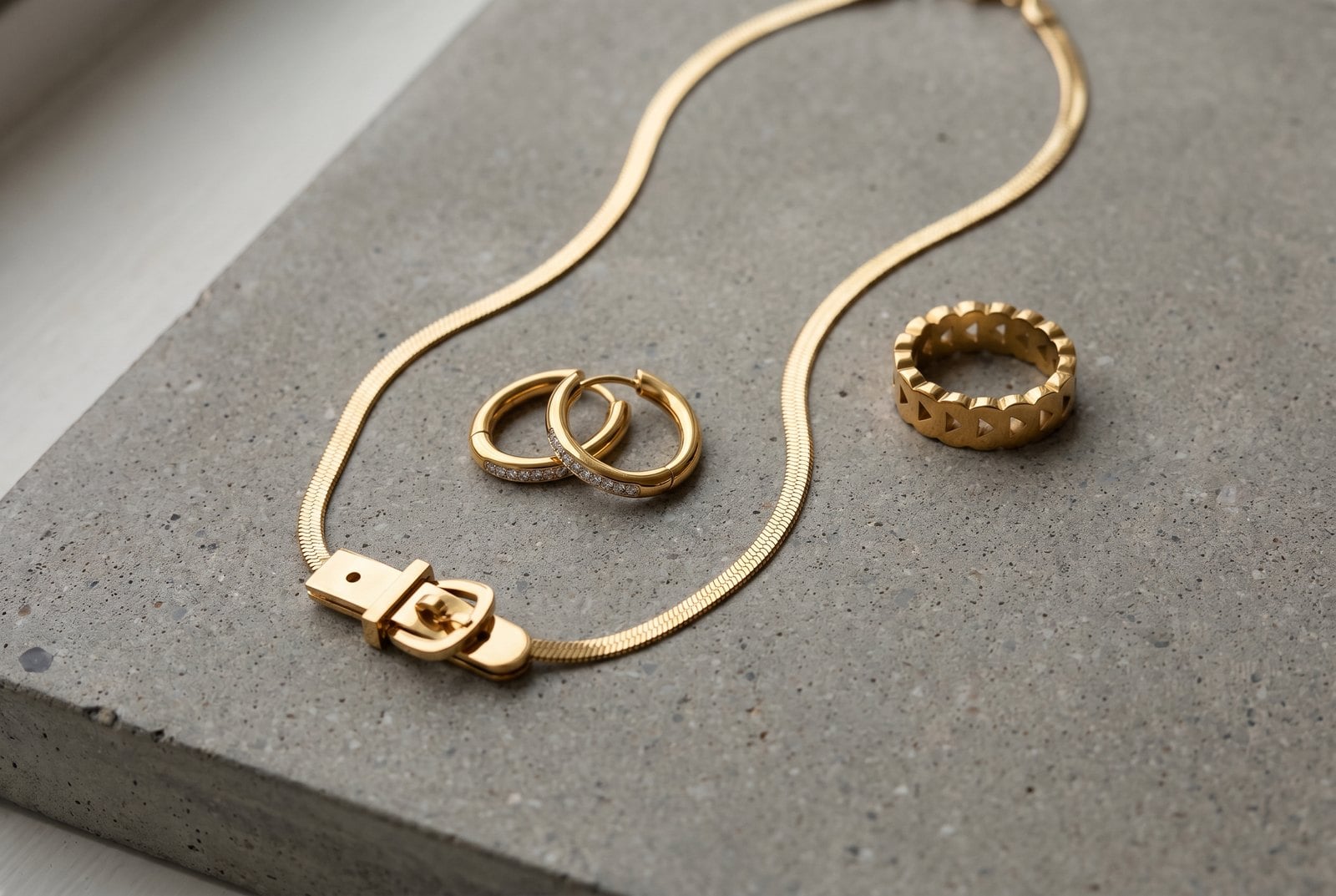
Mixed metals, gold-dominant
Gold-and-silver mixing has moved from "bold fashion statement" to baseline. Most Toronto women with developed jewelry collections mix metals casually now. The specific pattern that's landing is gold-dominant with silver or white-gold accents — roughly 2/3 gold to 1/3 silver, rather than 50/50 split. Two-tone pieces (bridge pieces that incorporate both metals in a single item) are particularly popular because they make mixed-metal stacks read as intentional rather than random.
Toronto-specific nuance: the mixed-metal trend works especially well with the city's professional-services wardrobe. A gold-dominant stack with a single silver accent piece reads professional without looking corporate, which is the exact register that works for Toronto's hybrid-work creative professional class.
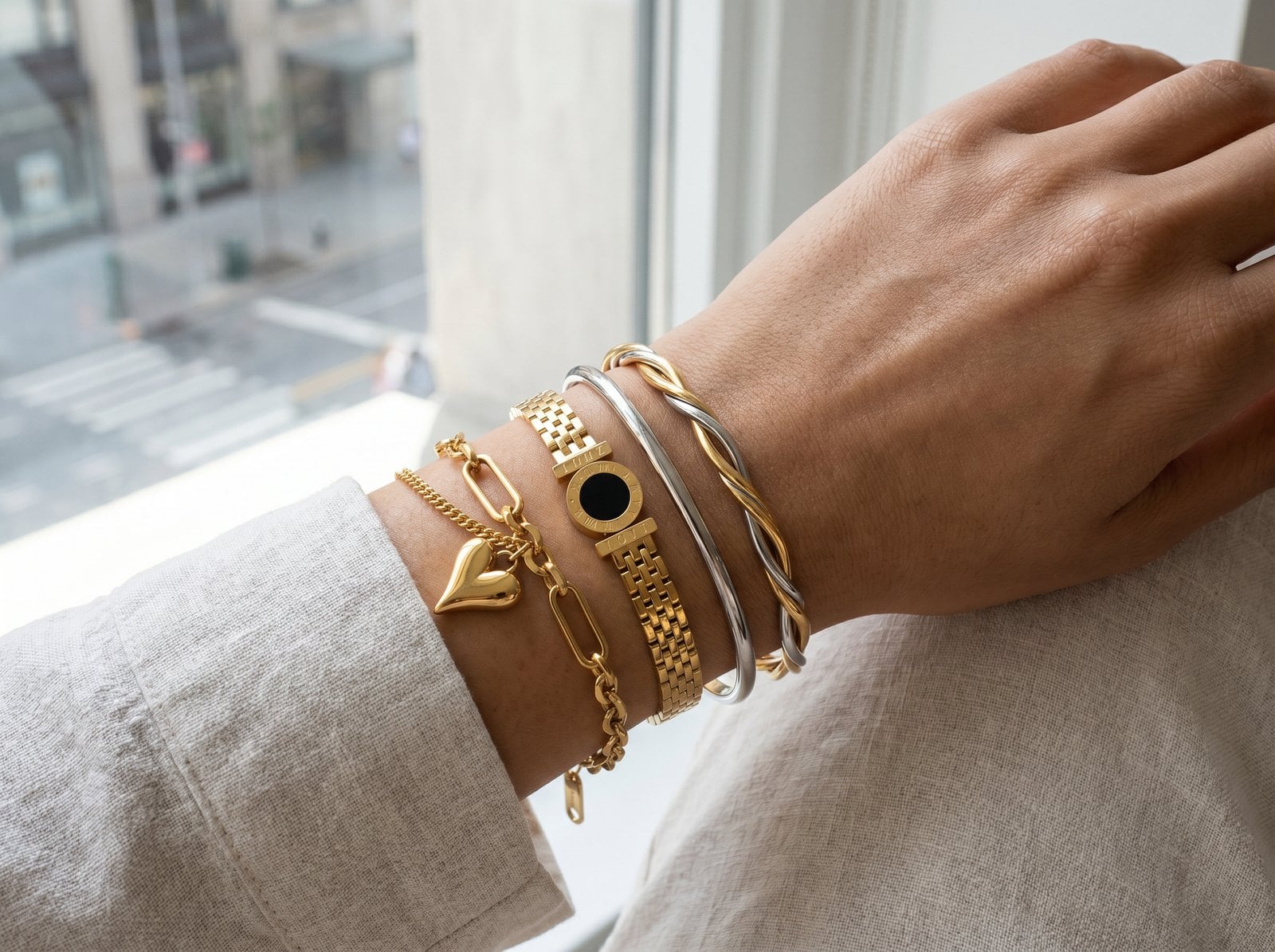
Layered necklace stacks (3-piece foundation)
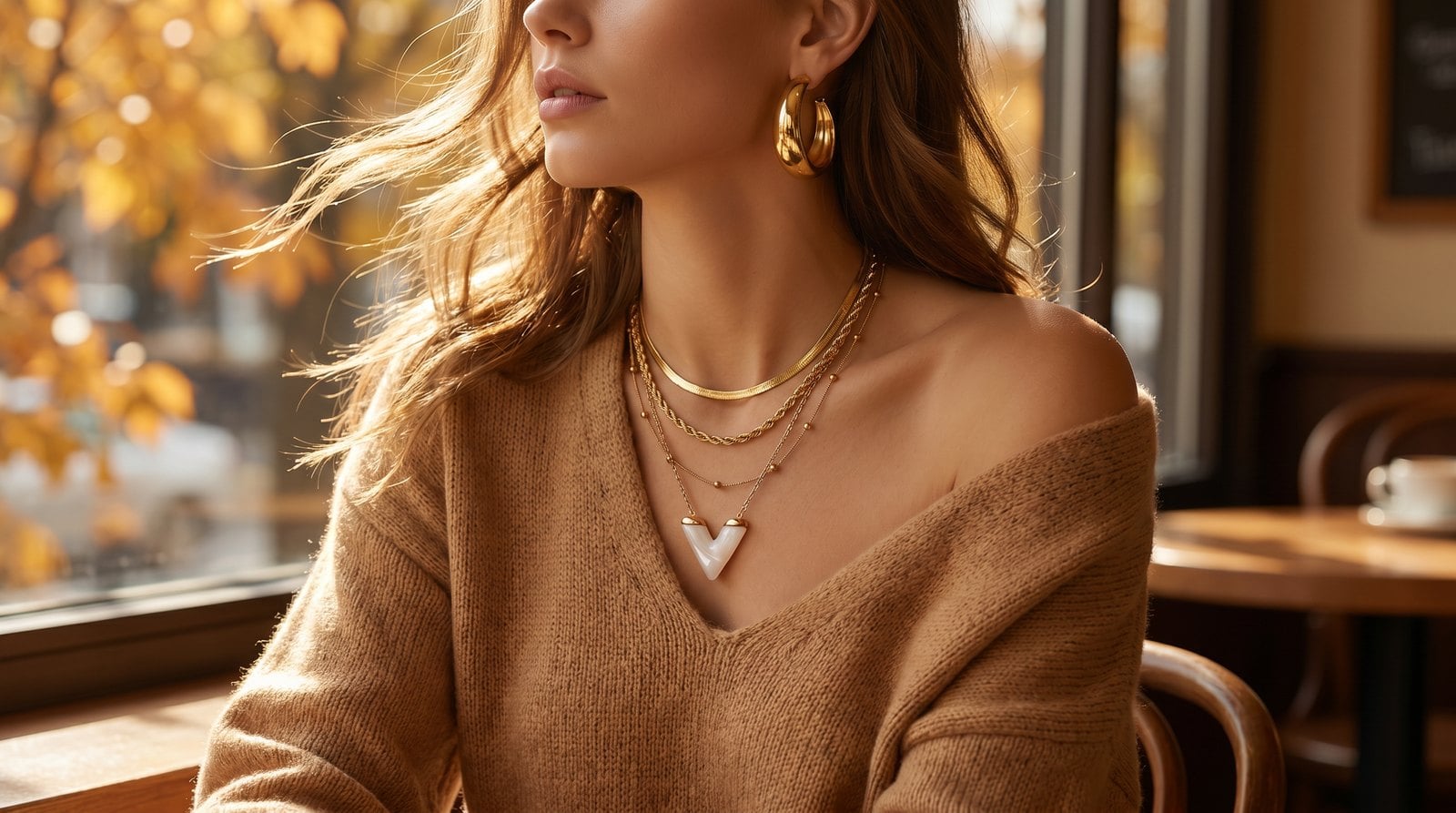
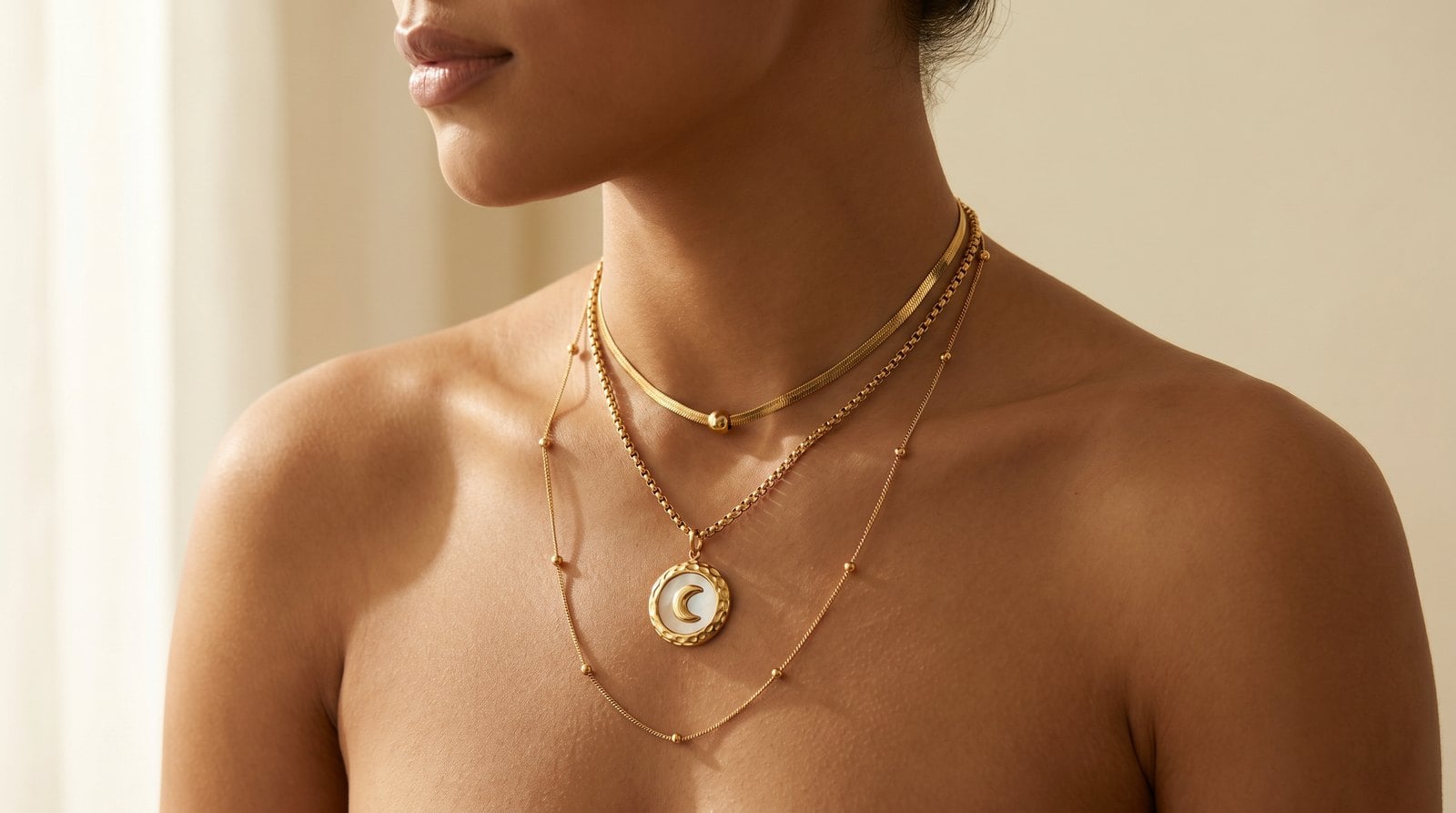
The 3-piece layered necklace stack has moved from trend to standard. A choker + princess + matinee length combination (roughly 16"+18"+22") is now the default daily-wear necklace configuration for Toronto women who wear any necklace at all. Solo pendants are still common for minimalists and older wearers, but anyone under 40 who cares about jewelry is usually wearing some version of a layered stack.
Canadian-specific execution: the stacks Toronto women actually wear tend toward slightly longer lengths than the US editorial default, because longer pieces work better over sweaters and turtlenecks during the 6+ months of cool-weather wardrobes. For the full mechanics of how layering works, see our guide on how to layer necklaces for Canadian daily wear.
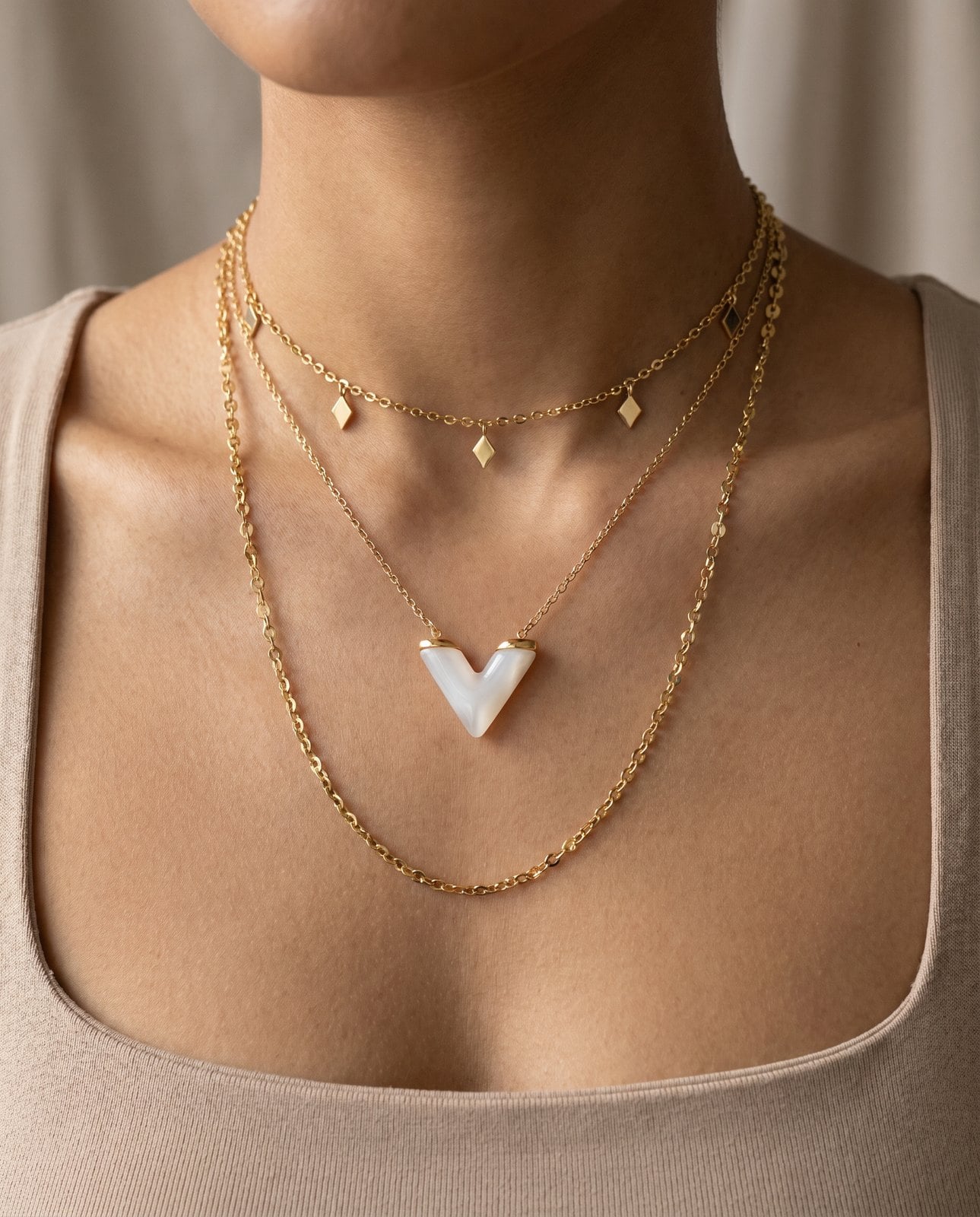
Stacked bracelets with one statement piece
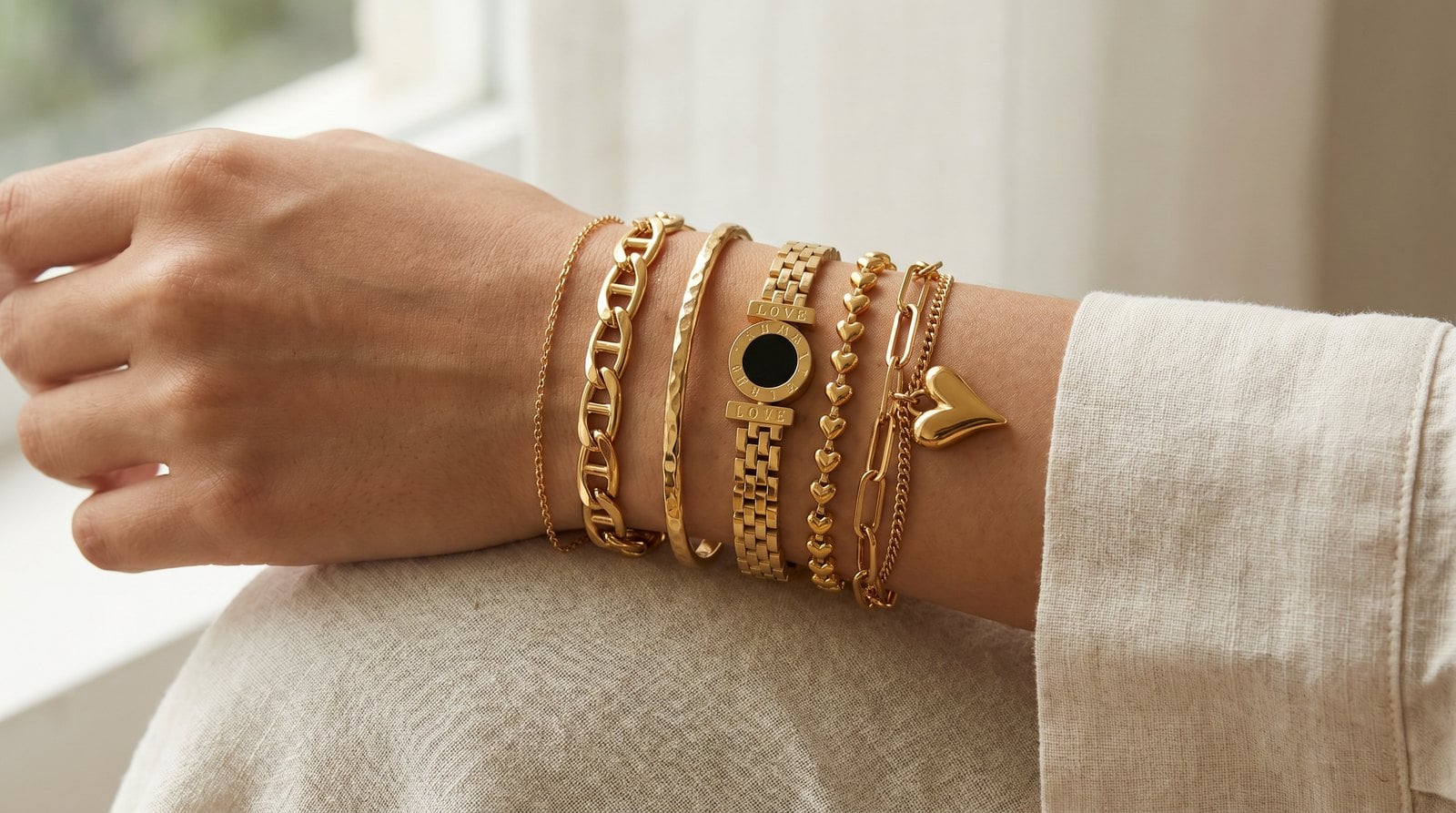
Bracelet stacking is similarly mainstream now, but Toronto's execution differs from the Instagram maximalist look. The pattern showing up in Toronto wardrobes is typically 3-5 bracelets: a few delicate bangles or thin chains paired with one more substantial piece (a thicker chain, a charm bracelet, or a statement cuff). The mix of thin-plus-one-thick creates visual hierarchy without looking overwhelming.
Why this works in Toronto specifically: laptop-and-keyboard work days mean bracelets hit surfaces constantly. A stack of all-delicate pieces looks great but damages quickly. The thin-plus-thick mix survives Toronto's intensely office-hours-oriented work life. For the complete layering methodology, see our bracelet stacking guide.

Hypoallergenic emphasis — this is big in Toronto
This one is Toronto-specific in a way that surprises people from other markets. Toronto's healthcare workforce is massive — SickKids, Toronto General, Sunnybrook, Mount Sinai, St. Michael's, and dozens of affiliated clinics employ tens of thousands of nurses, doctors, technicians, and healthcare workers who spend hours daily washing hands, wearing gloves, and exposing jewelry to antiseptic chemicals. This group has an outsized demand for hypoallergenic, waterproof, low-maintenance jewelry that survives hospital-grade daily conditions.
Beyond healthcare, Toronto's high rates of nickel sensitivity (consistent with Canadian national rates at 10-20% for women) make hypoallergenic materials a practical baseline for much of the market, not just a niche concern. The brands growing fastest in Toronto's direct-to-consumer jewelry market are the ones that built around 316L stainless steel and quality 18K plating as standard — not as a premium tier. For the technical context on why 316L works, see our hypoallergenic stainless steel jewelry guide.
Waterproof construction as baseline expectation
Related to the hypoallergenic point: waterproof construction has moved from "premium feature" to "baseline expectation" in Toronto's jewelry market. Pieces that require removal before showering or handwashing aren't winning in the daily-wear rotation. This is partly practical (Toronto women are time-pressed and won't fuss with removing jewelry multiple times per day) and partly aesthetic (you want pieces that become part of your daily wardrobe, not separate event wear).
The brands that understood this ahead of the market built waterproof-first catalogs. The brands that didn't are catching up. For shoppers, the signal is simple: if a piece requires special handling around water, it's not going to fit Toronto daily life. For Glozya's approach to this, see our full materials breakdown.
Ear curation over statement earrings
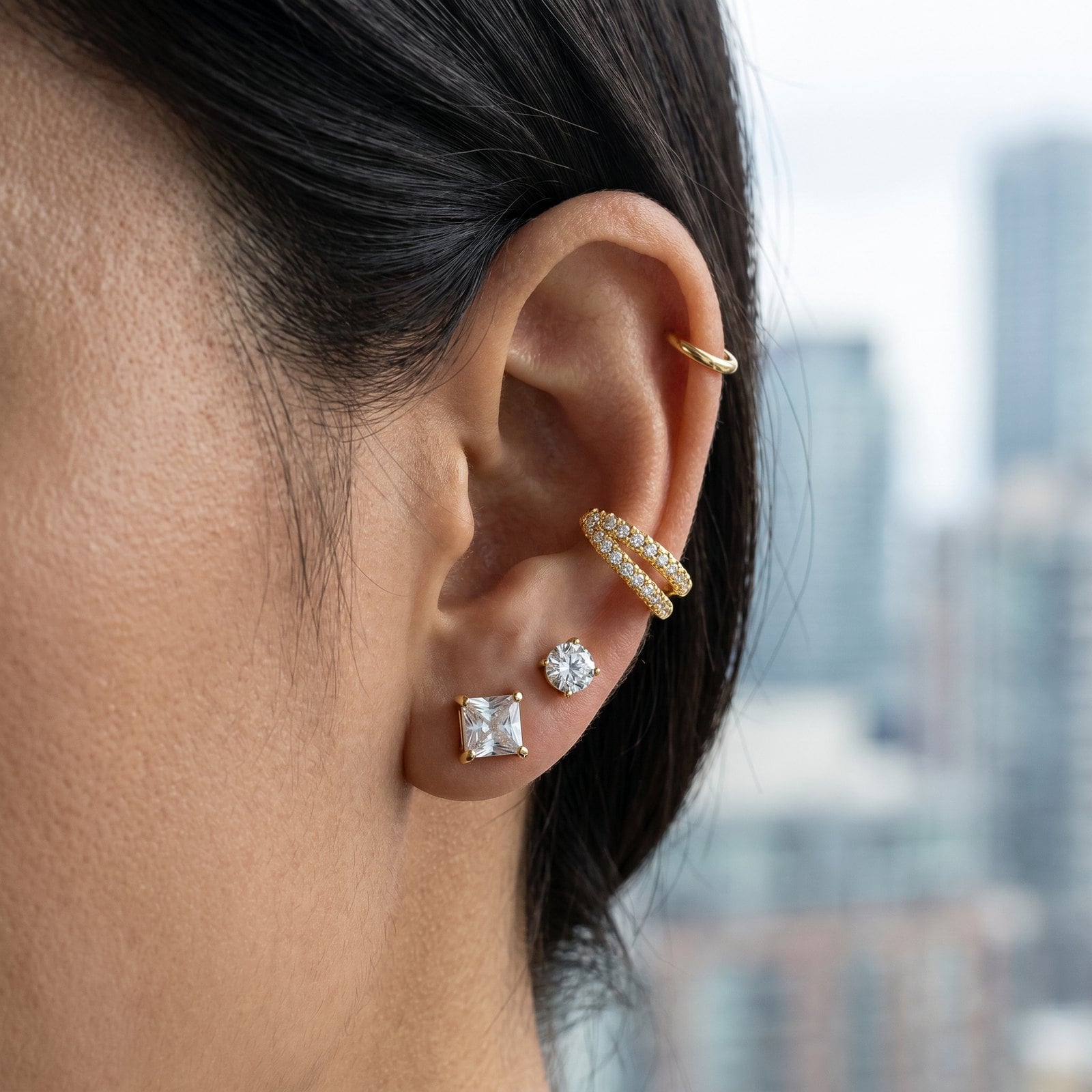
Toronto's earring trend has shifted toward "ear curation" — multiple small and medium pieces across one or both ears — rather than single statement earring pieces. This includes multiple lobe studs of varying sizes, small hoops stacked in single or multiple piercings, and ear cuffs that suggest piercings without requiring them. The look is more intentional and more architectural than traditional "pair of earrings" pairing.
The trend has a Toronto-specific driver: the city has a strong piercing studio culture (Queen West especially) where multi-lobe piercings have been mainstream for years. Jewelry brands that offer stud sets specifically designed for curated ear stacks have grown rapidly. Browse stud earrings for curation-oriented pieces or hoop earrings for small-hoop layering.
Adjustable rings for size flexibility
Adjustable rings have moved from practical workaround to actively preferred style choice in Toronto. Two reasons: Toronto's high gift-giving culture (lots of birthdays, holidays, graduations given the large young professional population), and the practical issue that finger sizes genuinely fluctuate with Toronto's humidity swings — winter fingers are 1-2 sizes smaller than summer fingers for many people. Adjustable rings sidestep both issues.
Beyond practicality, the aesthetic of adjustable rings has matured. Where adjustable pieces used to look cheap or unfinished, the current generation of adjustable designs looks intentional — often more sculptural and distinctive than fixed-size rings. See adjustable rings for examples.
Pearl accents, not all-pearl pieces
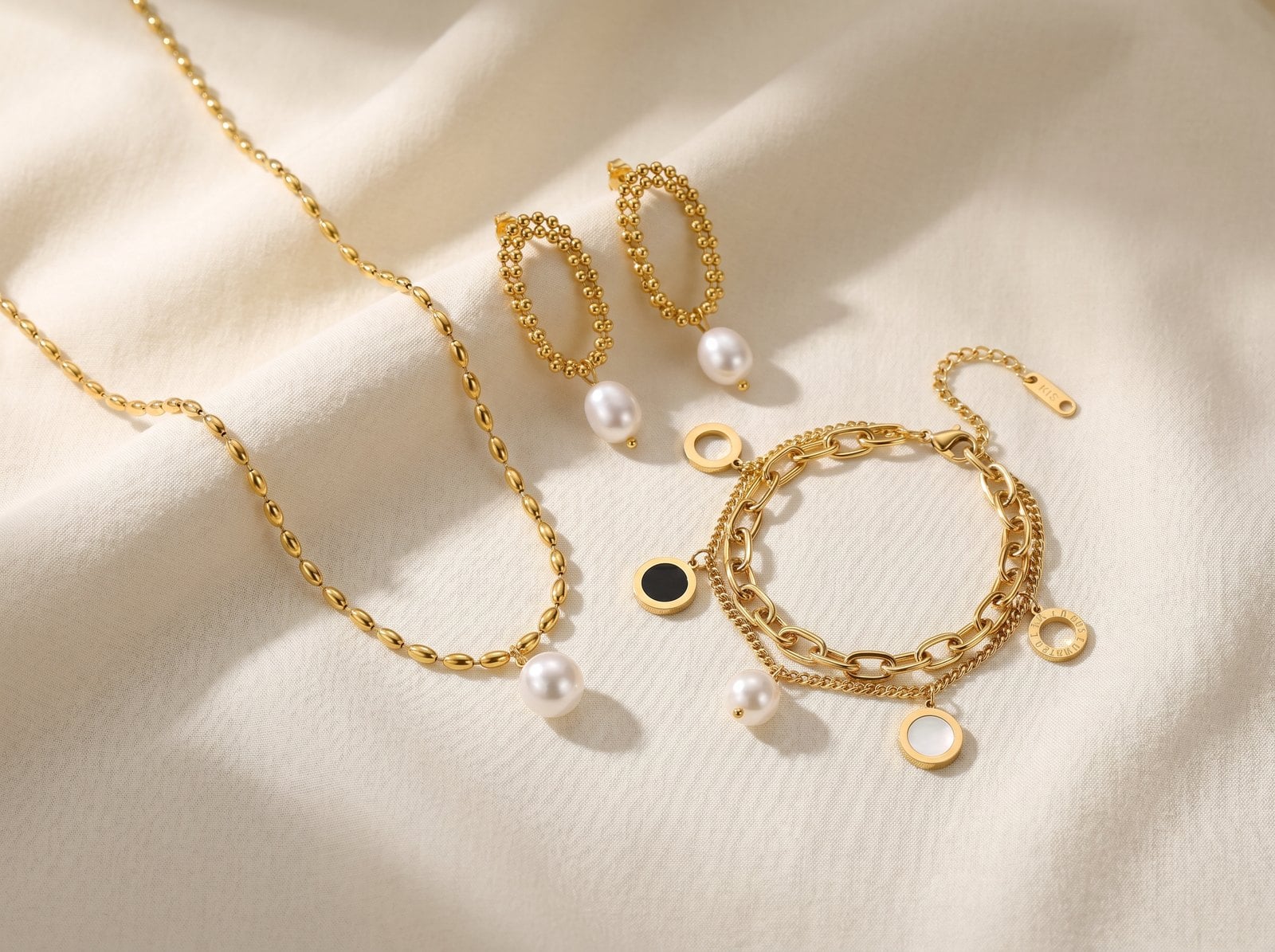
Pearls have returned but in a specific form: pearl accents within otherwise-gold pieces, not all-pearl traditional strands. A single pearl on a gold chain, a pearl drop on a gold hoop, pearl accents within a charm bracelet. The all-pearl strand look is still dominant for formal occasions and mature wearers, but the daily-wear pearl trend is about small integrations rather than full commitment.
The Toronto connection: the city's creative scene (Ossington, Distillery District, Leslieville) leans toward sentimental/personalized pieces with subtle luxe touches rather than overt statement luxury. A single pearl accent hits that register better than obvious status signaling. See pearl necklaces or pearl rings for current pearl-accent pieces.
| Trend | Toronto version | Why it works |
|---|---|---|
| Chunky gold | Medium-weight pieces rather than runway-scale maximalism | Visible enough to feel current, practical enough for commuting and work |
| Mixed metals | Gold-dominant with silver accents | Professional, modern, and easier to integrate into existing wardrobes |
| Layered necklaces | 16" + 18" + 22" foundation stacks | Works better over sweaters and turtlenecks than short editorial stacks |
| Bracelet stacks | 3-5 pieces with one statement anchor | Survives laptop work and daily wear better than all-delicate stacks |
| Hypoallergenic jewelry | 316L stainless steel and 18K plating as baseline | Matches Toronto's healthcare workforce and sensitive-skin demand |
| Waterproof pieces | Daily-wear requirement, not premium add-on | Supports showers, handwashing, humidity, and busy routines |
| Ear curation | Multiple studs, small hoops, cuffs | Fits Toronto's piercing culture and architectural styling |
| Adjustable rings | Style-forward size flexibility | Handles humidity swings and gift-giving uncertainty |
| Pearl accents | Small pearl details in gold pieces | Feels personal and modern without formal all-pearl styling |
Why Toronto's Scene Differs From Other Markets
Several structural factors shape Toronto's jewelry trends in ways that don't apply elsewhere.
- Climate extremes. Toronto winters routinely hit -15°C to -25°C, and summers regularly hit 28-33°C with high humidity. Jewelry worn daily across this range needs materials that survive both extremes and styles that work under parkas and with sleeveless tops. This rules out pieces that fade, corrode in cold/wet conditions, or require removal under specific temperatures. The styles that survive tend toward versatile medium-weight pieces rather than extremes.
- Multi-cultural density. Toronto is one of the most ethnically diverse cities globally, and different communities have distinct jewelry traditions — South Asian gold, East Asian jade, Middle Eastern filigree, European heritage, Indigenous-designed pieces. The city's baseline jewelry aesthetic incorporates influences from all of this. Toronto trends often prefigure multi-influence looks that take longer to land in more monocultural markets.
- Professional wardrobe constraints. Toronto's finance, tech, professional services, and healthcare sectors employ a huge fraction of the working-age population in wardrobe-appropriate-for-work clothes. This drives demand toward pieces that read professional but show personality — the "quiet statement" register that's less about maximum impact and more about intentional styling.
- Direct-to-consumer jewelry maturity. The Canadian direct-to-consumer jewelry market has matured rapidly over 2020-2026, partly because Canada Post domestic shipping is reliable and partly because Canadian customers adopted online shopping early during pandemic years. Toronto customers have access to a deeper D2C brand ecosystem than most similarly-sized cities outside US coastal metros. This means trend adoption happens faster (new styles reach Toronto shoppers quickly through online brands) and brand competition is fierce.
- Weather-driven accessories cycle. The 6+ months of cool-weather wardrobes in Toronto push trends toward pieces that work layered over sweaters, under scarves, and paired with winter coats. The 3 months of peak summer push toward pieces that work with sleeveless dresses and beach wear. This creates two distinct seasonal style moments that coexist rather than one continuous trend cycle.
Winter range
-15°C to -25°C
Toronto winter extremes push daily jewelry toward durable, medium-weight pieces that work under parkas and scarves.
Summer range
28-33°C
Heat and humidity make waterproof, sweat-safe, hypoallergenic materials more important than editorial styling.
Cool-weather wardrobe
6+ months
Long sweater, scarf, and coat seasons shape necklace length, earring visibility, and bracelet practicality.
Where Toronto Buys Jewelry in 2026
Toronto's jewelry retail landscape covers a specific set of channels that influence which trends land and stick.
- Direct-to-consumer online brands. The fastest-growing channel by volume. Canadian D2C brands ship quickly domestic, eliminate the physical retail markup, and let shoppers browse extensive catalogs. Brands that built around Canadian market specifics (hypoallergenic focus, waterproof construction, Canadian pricing in CAD) have grown fastest.
- Queen West and Ossington creative corridor. Independent jewelry designers with storefront presence — often selling pieces that blend fine jewelry materials with fashion-forward design. Higher price points but distinctive pieces that don't show up in mass-market channels.
- Eaton Centre and Yorkdale commercial. Chain retailers and department store jewelry counters. Wide variety, conservative trend adoption (lag of 12-18 months behind creative-corridor retailers), mid-price tier focus.
- Yorkville and Bloor Street luxury. Fine jewelry, engagement rings, investment pieces. Cartier, Tiffany, Birks flagship locations, plus independent luxury jewelers. Trend adoption here prioritizes timelessness over current-moment fashion.
- Distillery District artisan. Small-batch and handmade pieces from Canadian artisans. Often unique stone selections, one-of-a-kind setting approaches, sustainability-focused materials.
For most Toronto shoppers building a daily-wear jewelry wardrobe in the $25-150 price tier, Canadian D2C brands are the mainstream choice. For investment pieces (engagement, milestone anniversaries), the Yorkville luxury channel still dominates. Creative-corridor independents occupy the middle ground for distinctive pieces at fine-jewelry prices.
| Buying channel | Price positioning | Best for | Trend behavior |
|---|---|---|---|
| Canadian D2C online brands | $25-$150 | Daily-wear jewelry, hypoallergenic pieces, waterproof staples | Fastest adoption and strongest practical focus |
| Queen West / Ossington independents | Mid to high | Distinctive designer pieces and creative styling | Early trend expression with local character |
| Eaton Centre / Yorkdale retail | Mid | Accessible mall retail and conservative styles | Typically 12-18 months behind creative corridors |
| Yorkville / Bloor luxury | High | Fine jewelry, engagement rings, heirloom pieces | Trend adoption filtered through timelessness |
| Distillery District artisan | Variable | Small-batch, handmade, unique pieces | Individual maker-led trend interpretation |
Seasonal Style Calibration for Toronto
Jewelry that works year-round in Toronto requires calibrating for seasonal context rather than treating all seasons identically.
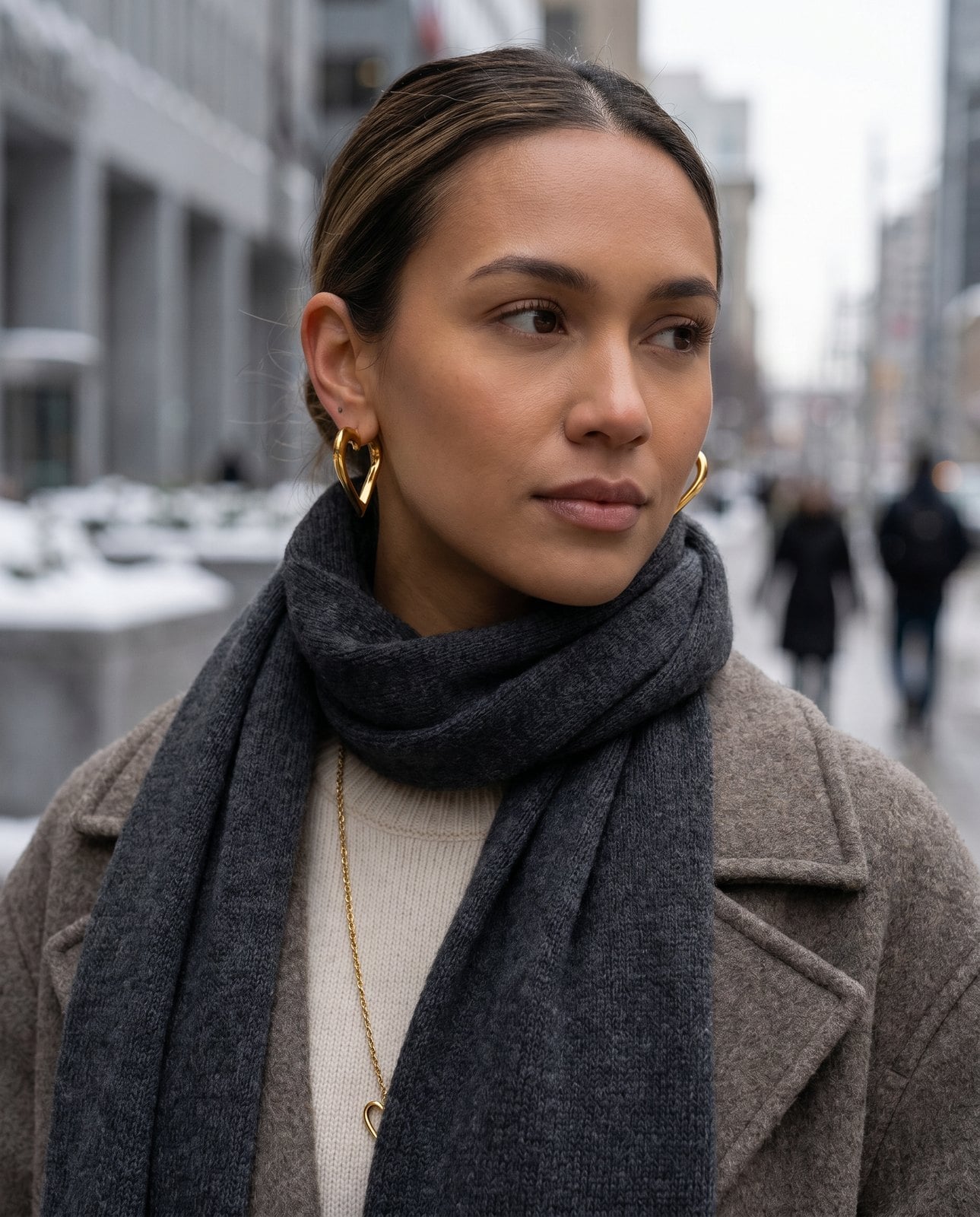
- November through March — the parka months. Necklaces need to work under or over parkas and scarves. Pendant necklaces either sit high enough to show above a scarf or long enough to drape visibly over a sweater. Chokers work well for scarf-pairing. Bracelets compete with watch and coat sleeves — medium-weight pieces fare better than delicate ones. Earrings are the most visible jewelry category during parka season because hair-tied-back and exposed ears are standard.
- April through June — transitional shoulder season. Toronto's spring is often cold and wet. Waterproof construction is especially valuable as rain becomes a daily factor. Layered necklace stacks come into visible rotation as parkas transition to light jackets. This is prime jewelry-visibility season after months of winter cover.
- July through September — peak summer. Minimalist and architectural pieces in lightweight configurations. Humidity makes heavy pieces uncomfortable. Waterproof construction matters for pool/beach trips and the city's waterfront access. Ear cuffs and small hoops often dominate summer earring wardrobes. This is when the brand choice really matters — cheap plating fails fastest in summer sweat and humidity.
- October — the trickiest month. Temperatures swing from 25°C to 5°C in the same week. Layered jewelry that works with layered clothing dominates. Versatile medium-weight pieces that work across the weather range win; specialty summer or winter pieces sit out most of this month.
What's Leaving Toronto Wardrobes in 2026
Trends that dominated prior years but are fading from Toronto rotation:
- Rose gold monopoly — rose gold is still popular but no longer the default "modern alternative to yellow gold" it was in 2018-2022. Yellow gold has reclaimed dominance, with rose gold as one option among several
- Dainty-everything minimalism — the all-delicate aesthetic that defined 2019-2023 has shifted toward medium-weight and chunky pieces. Ultra-thin chains still have a place but aren't the default
- Single-metal commitment — wearing only-gold or only-silver is no longer the sign of style sophistication it once was. Mixed metals are baseline
- Obvious logo/brand jewelry — visible branding and monogram pieces are cooling significantly. The trend is toward pieces that look expensive without logo signaling
- Shell and resin charm maximalism — the full-charm, everything-dangles aesthetic that peaked in 2024 has cooled into selective charm usage
- Ultra-long necklaces (26"+) as primary pieces — longer chains work as statement pieces in layered stacks but aren't winning as solo primary necklaces
How to Shop Toronto Jewelry Trends Without Regret
Trend-chasing in jewelry is riskier than in clothing because pieces are more expensive and harder to replace. Here's how Toronto shoppers with developed jewelry collections approach trend adoption without accumulating pieces they don't wear.
- Buy trends in the $25-80 range first — test a trend at accessible price before investing. If you love it after 3 months of daily wear, upgrade to better materials
- Stick to hypoallergenic materials regardless of style — trendy pieces that cause reactions don't get worn. 316L stainless steel and quality 18K plating are safe across any style trend
- Buy waterproof when buying daily-wear — trend pieces you have to remove for showers don't become daily-wear favorites. They end up in occasional rotation and feel like waste
- Prioritize versatility over peak trend expression — pieces that work across 3+ outfits and 2+ seasons earn their keep. Single-use pieces don't
- Allow one "trend experiment" per season — a single piece bought specifically to test a new trend. If it works, expand. If not, it was a modest bet. This keeps jewelry wardrobes from bloating with pieces that don't fit your daily style
For the current Glozya catalog aligned with Toronto's 2026 trends, browse the full shop, explore by category — bracelets, earrings, necklaces, finger rings — or check new releases for the latest additions and current flash sale for discounted pieces. Every Glozya piece is 18K gold plated over 316L hypoallergenic stainless steel, waterproof, and ships free across Canada on orders over $75. For the broader Canadian context beyond Toronto specifically, see our Canadian jewelry trends guide. For the care routine that keeps trend pieces looking new, see our gold plated jewelry care guide.
About the Author

Mohammad Aftab is the founder of Glozya, a Canadian 18K gold-plated jewelry brand he launched in 2023. He has over a decade of experience in e-commerce, email marketing, and brand design across DTC, retail, and digital media. He writes about jewelry care, style, and the everyday details that make a piece worth keeping.