Jewelry Symbol Meanings: Butterfly, Moon, Heart & Clover
In this guide
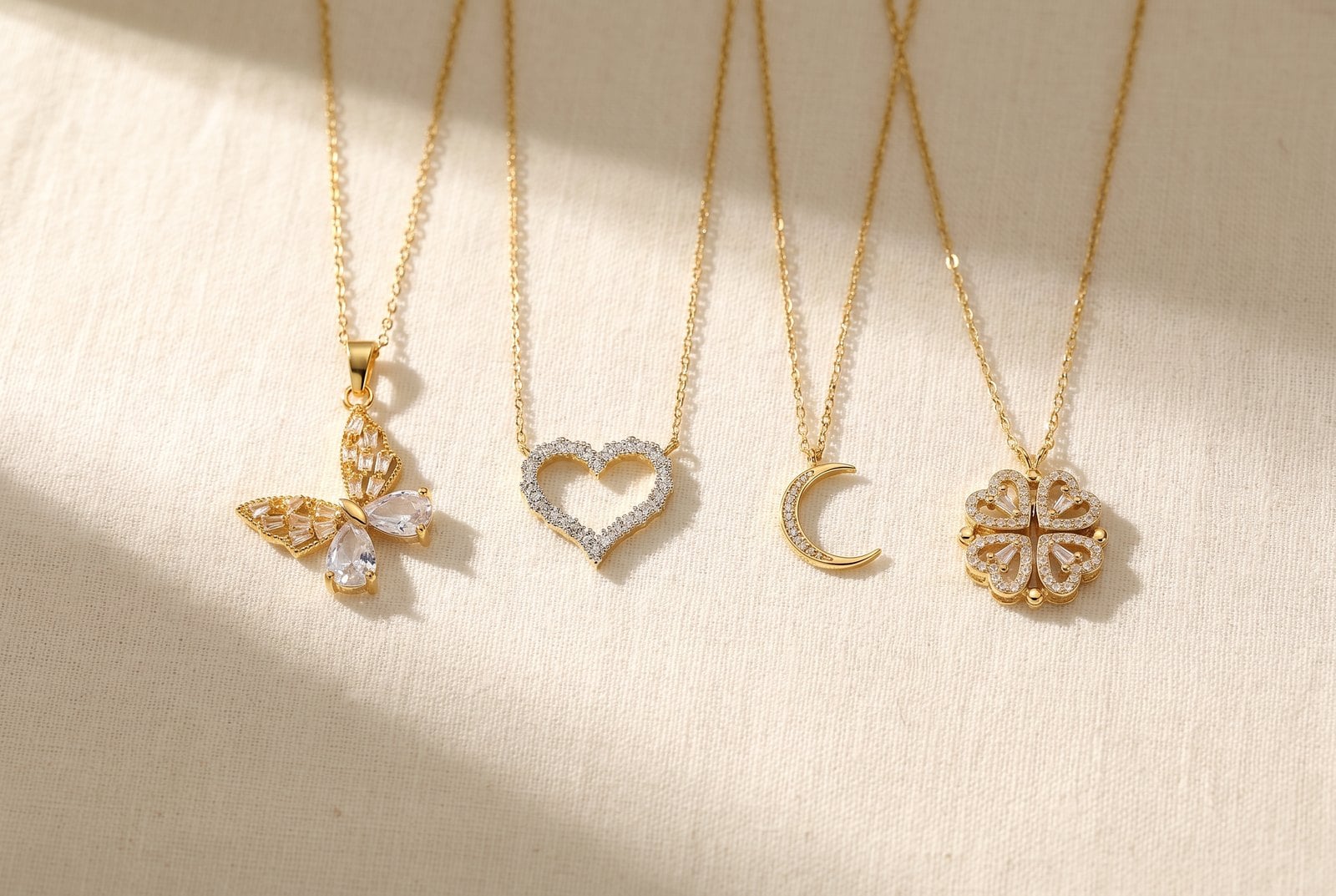
Jewelry symbol meanings come down to a short list of associations most of us already half-recognize: butterflies stand for transformation, crescent moons for intuition and cycles, hearts for love and connection, and clovers for luck and protection. None of these meanings are fixed rules — they're traditions carried across cultures and decades — and the meaning that matters most is usually the one you attach to the piece. This guide covers the four symbols you'll see most often in everyday Canadian jewelry: what each traditionally represents, where that meaning comes from, and how to wear it so it reads as personal rather than costume-y.
What jewelry symbol meanings actually tell you
A symbol on a pendant or stud is a small piece of shorthand. It says something about the wearer — or about the person who gave it — without anyone having to explain it out loud. That's the appeal: a crescent moon necklace reads differently than a plain bar pendant, even when both are simple and gold. Here's a quick reference for the four most-searched motifs before we get into each one.
| Symbol | Commonly represents | Often chosen for |
|---|---|---|
| Butterfly | Transformation, rebirth, new chapters | A fresh start, growth, honoring change |
| Crescent moon | Intuition, cycles, feminine energy | Calm, reflection, a sense of rhythm |
| Heart | Love, affection, connection | Romance, family, self-love |
| Clover (four-leaf) | Luck, hope, protection | Encouragement, milestones, thinking of you |
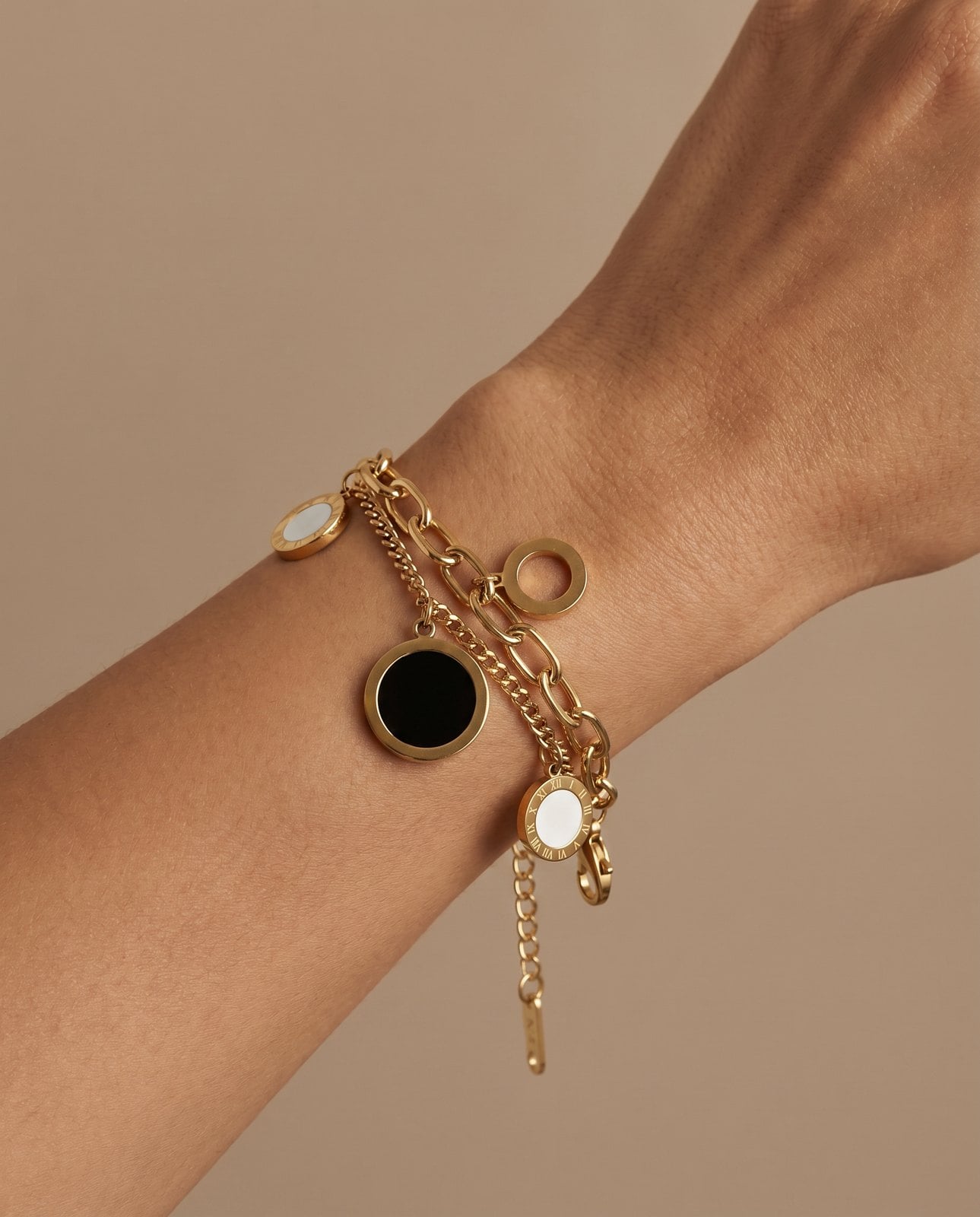
A couple of honest caveats. These associations are cultural and folkloric, not universal — a butterfly can mean one thing in one tradition and something slightly different in another. And a symbol doesn't have to mean anything for you to wear it; plenty of people pick a clover ring because it's pretty, full stop. Treat the meanings below as a starting point, not a test you can fail.
Butterfly jewelry meaning: transformation and new chapters
Of all the motifs, the butterfly carries the clearest story. Because a butterfly spends part of its life as a caterpillar before it changes completely, it's long been tied to transformation, rebirth, and coming out the other side of something. That's why butterfly pieces tend to land as gifts for a graduation, a recovery, a move, or any moment that marks a before and after.
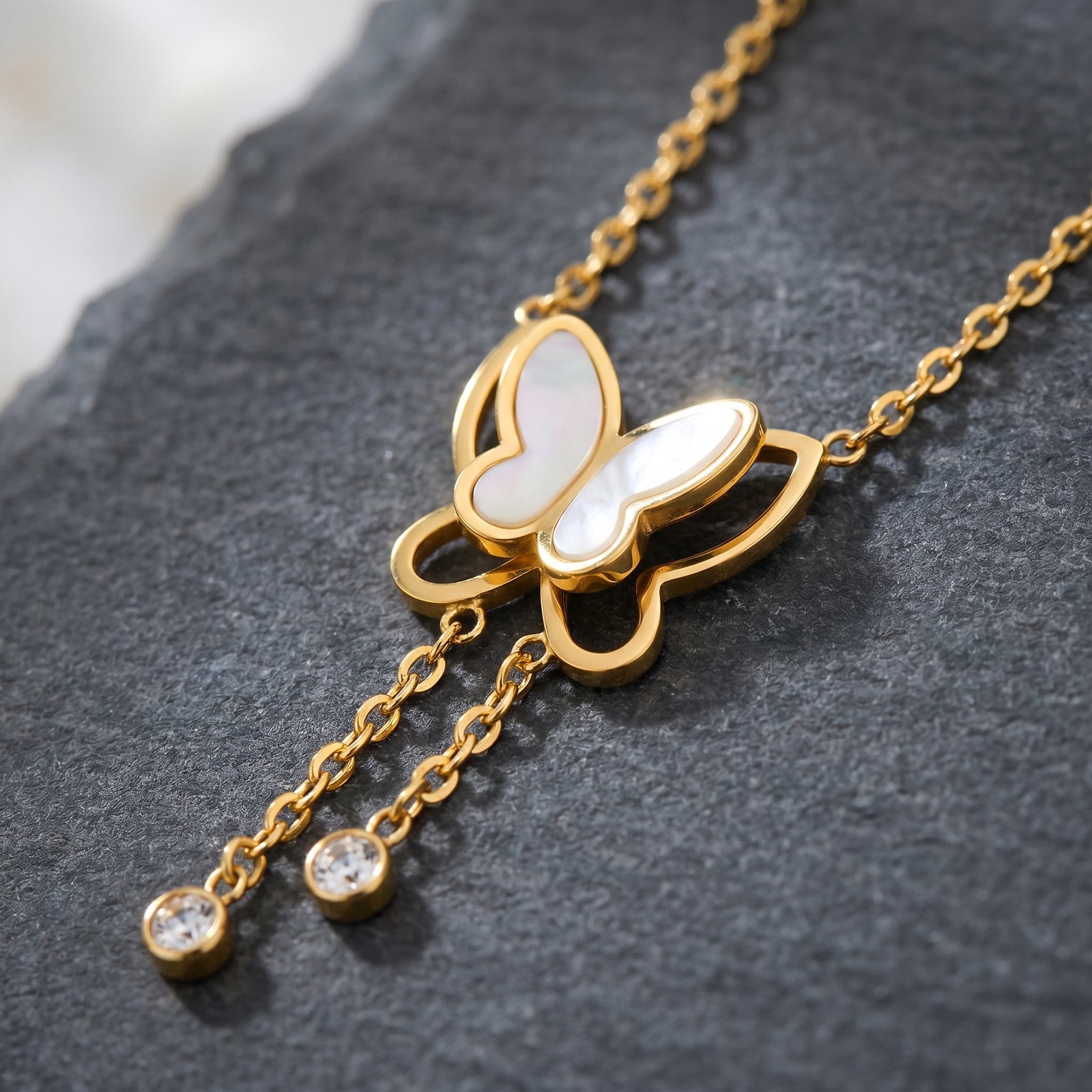
There's a lighter read, too. Butterflies are also associated with freedom, lightness, and warmer seasons — part of why they spike as a spring and summer choice. You don't have to be marking a life change to wear one; sometimes a butterfly just feels like the right amount of playful.
How to wear it. Butterfly motifs work best when you let one piece lead. A pair of butterfly stud earrings keeps things subtle and everyday. If you want more movement, drop and dangle earrings let the wings catch the light, which suits an evening out or warmer weather. The one thing to avoid is doubling up: a butterfly necklace, butterfly earrings, and a butterfly ring all at once tips from symbolic into themed. Pick one focal butterfly and keep the rest of your stack plain.
Crescent moon and celestial jewelry meaning: intuition and cycles
Crescent moons and celestial pieces — moons, stars, the occasional sun — are some of the most-searched motifs in Canada, and the meaning is quieter than the butterfly's. The moon is traditionally linked to intuition, feminine energy, and the idea of cycles: phases that come and go and come back around. A crescent specifically — the slim sliver, not a full moon — tends to read as new beginnings and growth, since it's the shape the moon takes as it's filling back in.
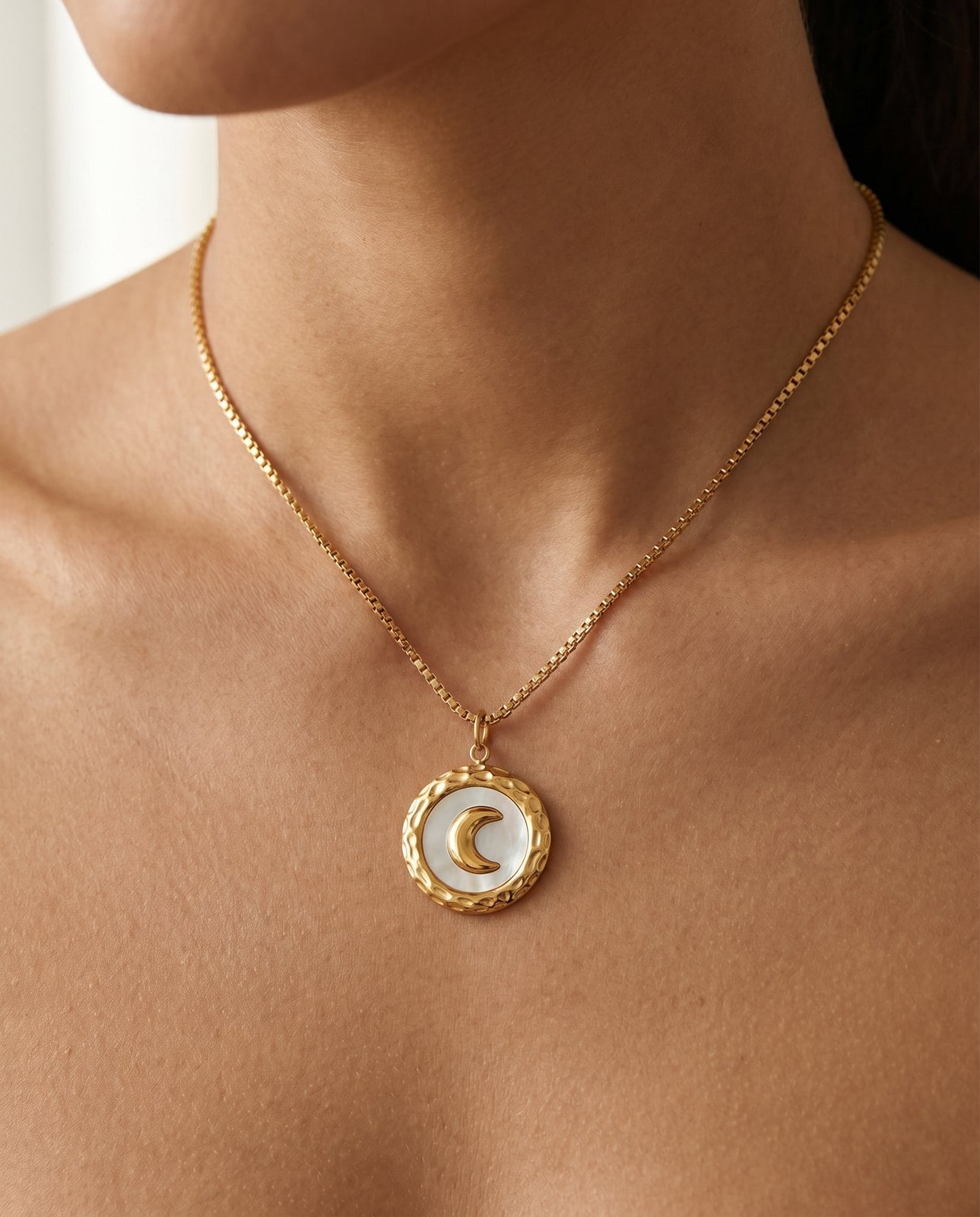
People are often drawn to celestial jewelry for the same reason they're drawn to anything calming — it's a small daily reminder that things move in rhythms, not straight lines. It also happens to be flattering: a thin crescent sits beautifully in the hollow of the throat.
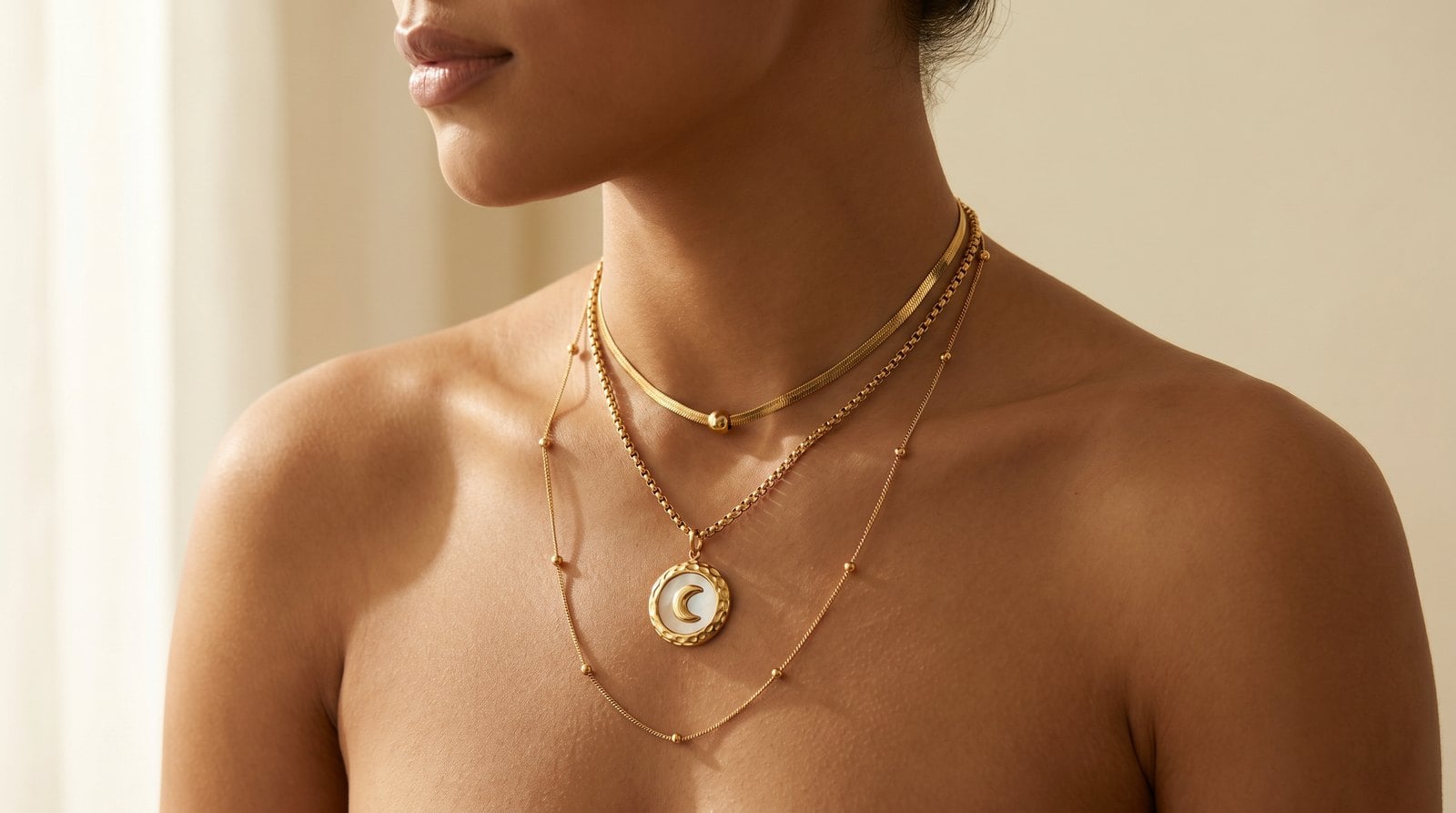
How to wear it. A crescent moon is made for the neckline. A single pendant necklace on a fine chain is the cleanest way to wear one. If you like more dimension, a crescent is a natural anchor for a layered necklace look, paired with one shorter plain chain and one longer one. For the spacing and length math that keeps layers from tangling, our guide on how to layer necklaces for daily wear walks through it step by step.
Heart jewelry meaning: love, but not only romance
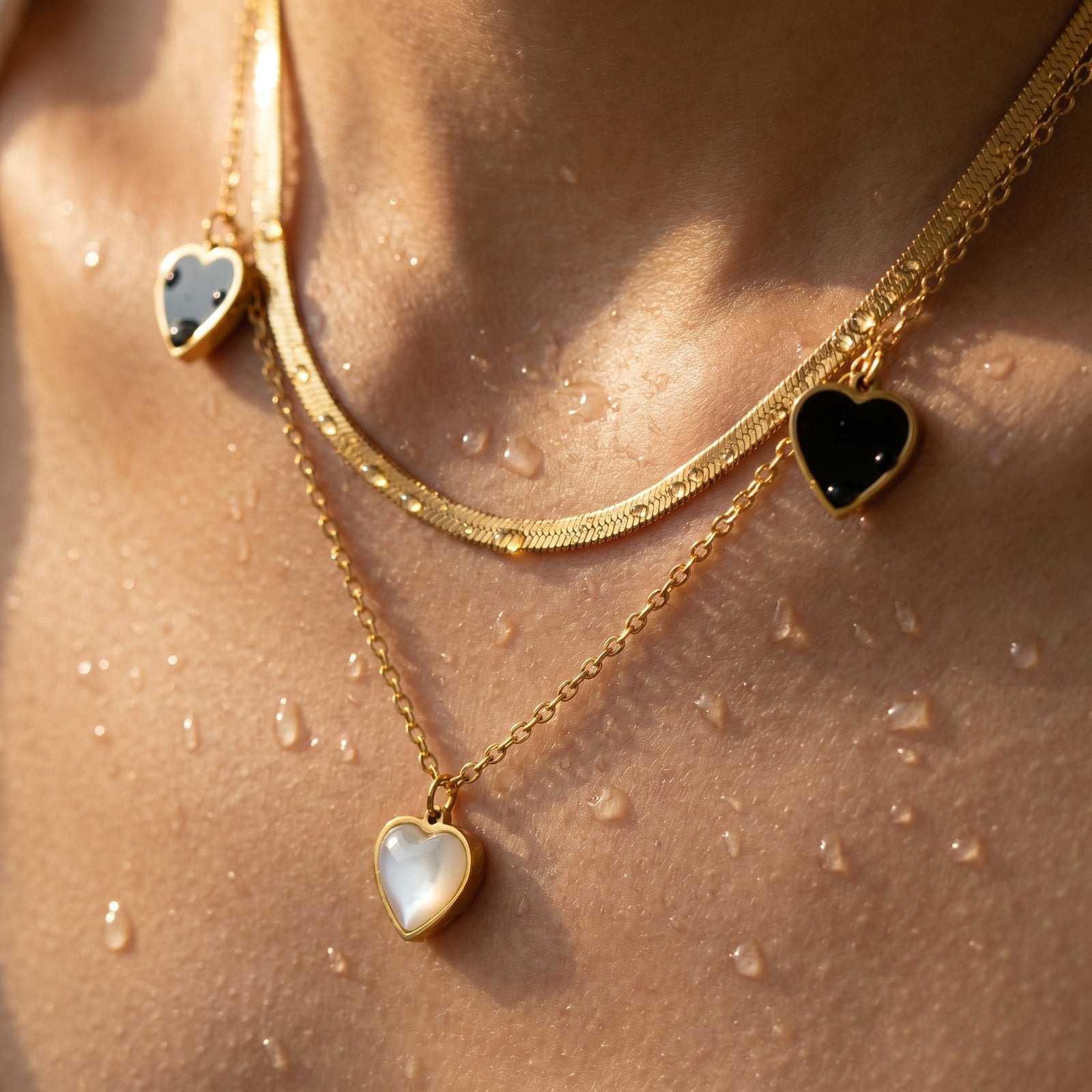
The heart is the motif everyone thinks they understand, and it's more flexible than its reputation. Yes, a heart traditionally signals romantic love — which is why it dominates Valentine's gifting. But a heart just as often stands for family, friendship, or self-love, especially when it's small and understated rather than a big statement piece. A heart you buy for yourself reads very differently from one you receive, and both are completely valid.
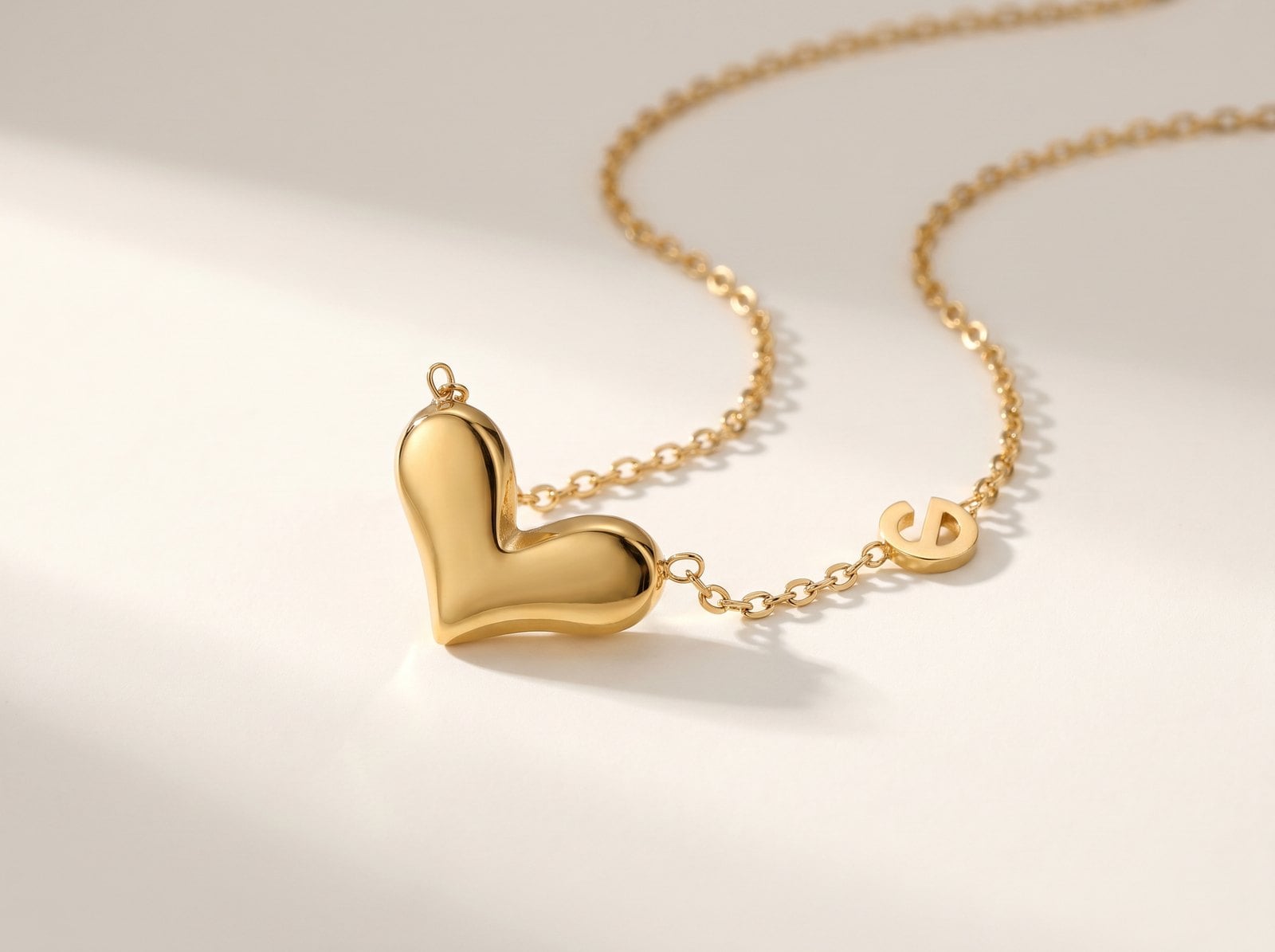
The shape also carries a bit of nostalgia. Heart lockets, charms, and heart-shaped studs have a slightly sentimental, keepsake quality that newer geometric motifs don't — which is exactly why they keep coming back.
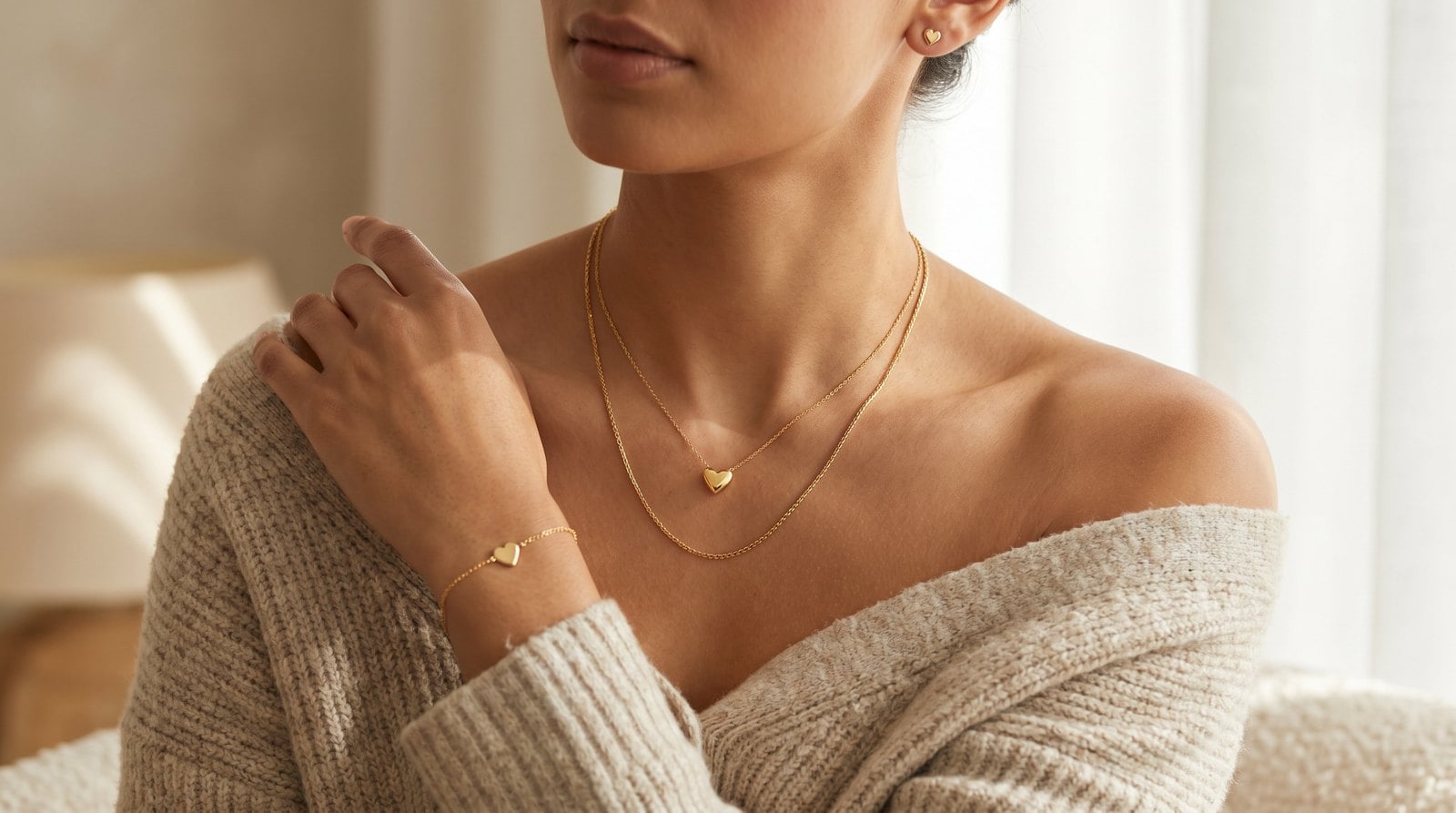
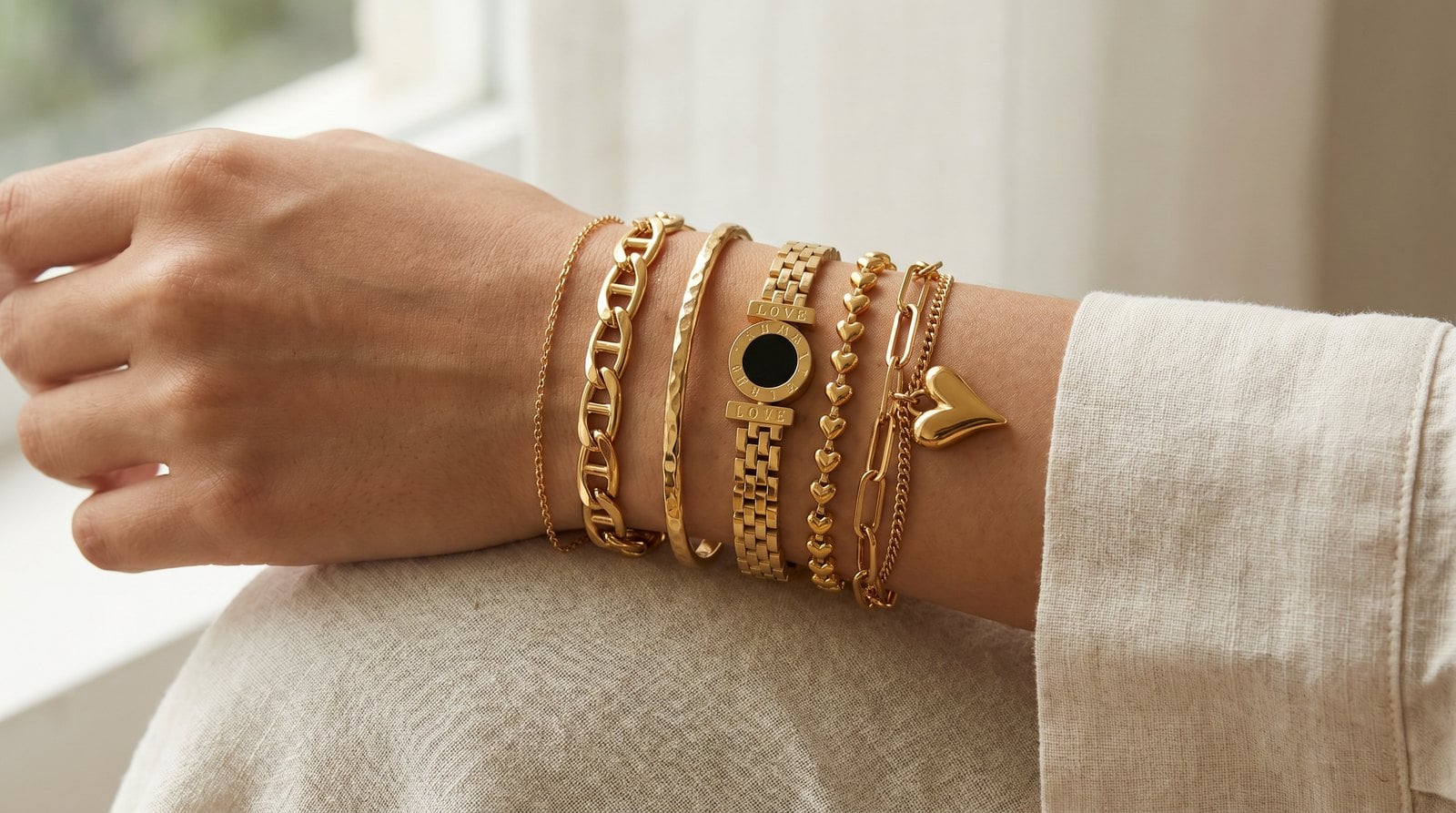
How to wear it. The trick with hearts is restraint, because the shape is already emotionally loud. A single heart charm on a charm bracelet is a classic for a reason — it lets you add meaning over time without the wrist looking busy. For pairing necklines, lengths, and metals, our guide on how to style heart jewelry goes deeper, and the same odd-number, one-anchor logic from bracelet stacking ideas for daily wear applies if you're building a charm stack.
Clover and four-leaf clover meaning: luck and protection
The clover is the luck motif, but it's worth separating the two versions. An ordinary three-leaf clover — the shamrock — carries Irish and Celtic associations and a general sense of nature and good fortune. The four-leaf clover is the rarer one, found by chance, and that rarity is the whole point: it's traditionally tied to luck, hope, faith, and protection. There's also the well-known reading where each of the four leaves stands for one of those qualities.
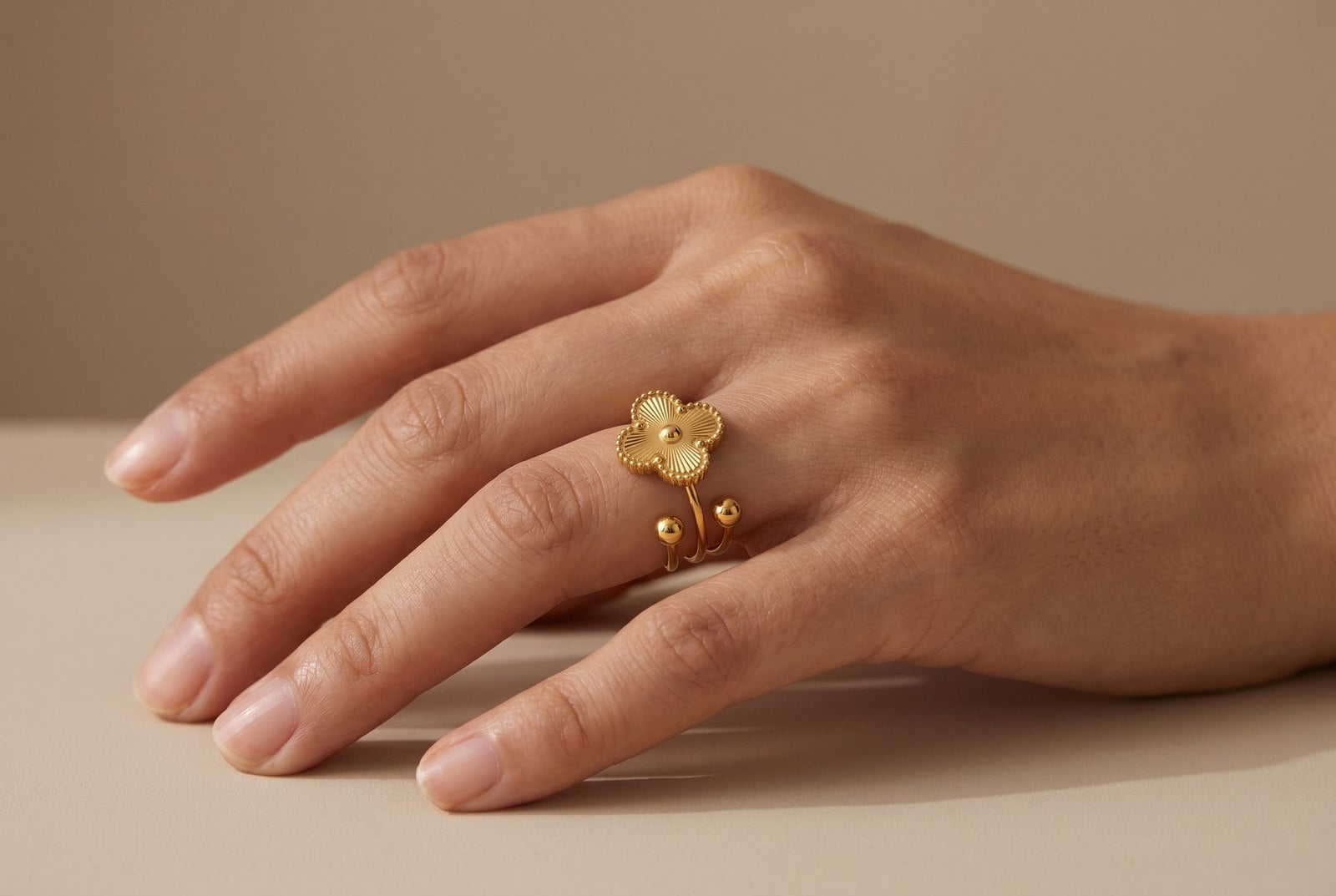
That found-by-luck backstory is why clover pieces make such good encouragement gifts — for someone starting a new job, sitting an exam, or going through a stretch where they could use a little fortune on their side. It's a rooting-for-you symbol more than a romantic one.
How to wear it. Clover and quatrefoil shapes are graphic and a little retro, so they hold their own as a single statement. A clover motif on an adjustable ring is an easy entry point — the open band sizes to most fingers, so it works as a gift even when you don't know someone's ring size. Clover charms also stack nicely on a bracelet alongside other small symbols; just keep the metal tone consistent so the mix looks collected rather than random.
How to choose a symbol that actually means something
If you're buying for yourself, the simplest filter is: which of these stories do you want to carry around? Someone closing out a hard year might reach for a butterfly. Someone who wants a calm, grounding daily piece might prefer a crescent moon. There's no wrong answer, and you're allowed to just like how something looks.
If you're buying for someone else, the symbol does some of the talking for you, so match it to the moment:
- A fresh start or a big change — butterfly
- Comfort, calm, thinking of you — crescent moon
- Love, family, a keepsake — heart
- Luck, encouragement, a milestone — clover
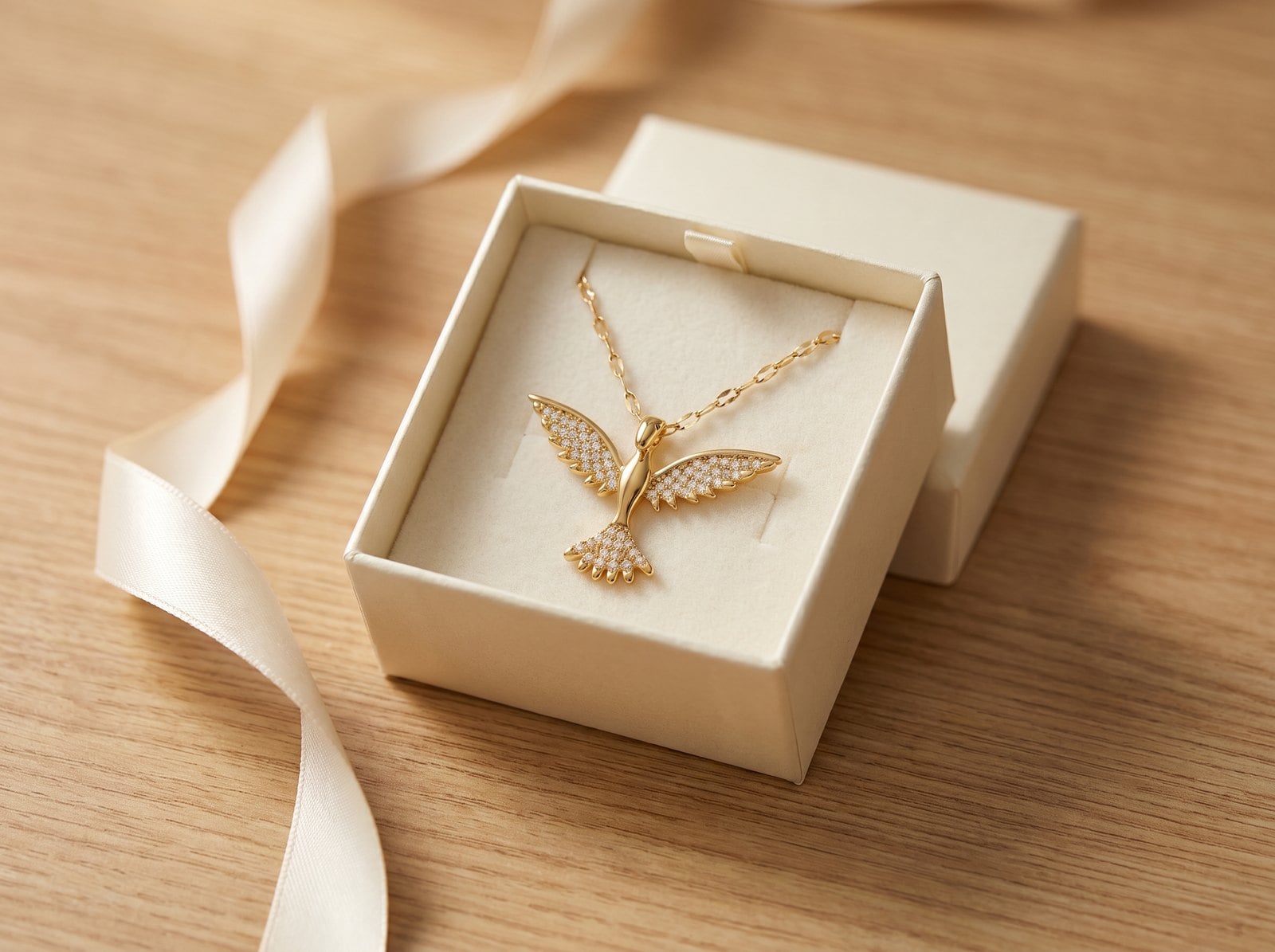
A small, wearable version of a symbol almost always beats a large one as a gift — it's easier to wear every day, which is what makes a symbolic piece actually meaningful over time. A pendant or pair of studs they can put on without thinking will get far more wear than a statement piece that only comes out occasionally.
Will a symbolic piece hold up to daily wear?
A symbol only does its job if you can actually wear the piece every day without babying it — so material matters as much as meaning. This is where a lot of fashion jewelry falls down: the motif is cute, but the finish wears off in a few months.
At Glozya, our pieces are 18K gold-plated over a 316L stainless steel core, which is what lets a symbolic piece survive real life — hand-washing, weather, getting dressed in a hurry. The stainless steel base is corrosion-resistant and skin-safe, so a daily-wear pendant or stud won't irritate most people with sensitive skin. If reactive skin is your main concern, our guide on whether stainless steel jewelry is hypoallergenic is the deeper read, and how Glozya jewelry is made shows exactly how the pieces are built and tested.
About the Author

Mohammad Aftab is the founder of Glozya, a Canadian 18K gold-plated jewelry brand he launched in 2023. He has over a decade of experience in e-commerce, email marketing, and brand design across DTC, retail, and digital media. He writes about jewelry care, style, and the everyday details that make a piece worth keeping.